The knowledge and traditional practices of indigenous people and local communities are key to halting biodiversity loss and achieving sustainable development, a United Nations official on 7 October 2014 stressed at a major meeting on biological diversity in Pyeongchang, Republic of Korea.
Indigenous forest-dwelling people of the Republic of Congo. Photo: UNFPA
“The collective work conducted by indigenous groups and local communities represents a major contributor to achieving the CBD’s main objectives and the Aichi biodiversity targets,” said the Executive Director of the Convention on Biological Diversity (CBD), Braulio Souza de Dias.*
“Indigenous people and local communities have been for millennia the custodians of biodiversity but their rights have not always been recognized,” Dias said in a press briefing at the 12th meeting of the Conference of the Parties to the Convention, known as COP-12. “We need to urge governments to recognize this as well as their exclusive rights to land and natural resources.”
Turin, Italy, 6 October 2014 , (ILO)* – More than 120 participants from over 20 countries gather at the ILO International Training Centre for a two-day policy forum and knowledge fair on the green economy.
.
Photo source: ILO
The event marks the beginning of the first ever “Academy on the Green Economy” – a two-week training and learning event organized within the framework of the Partnership for Action on Green Economy (PAGE). The Forum is meant to strengthen partner links and commitment as well as accelerating action on the green economy.
The Academy (6-17 October) offers a unique opportunity to increase the knowledge and understanding on how to actively promote socially inclusive green economies.
Rome, October 2014 — If ever there was a need to prove that we are faced with a total lack of global governance, the U.N. Climate Summit, extraordinarily called by U.N. Secretary-General Ban Ki-moon on Sep. 23, makes a very good case.
Aftermath of the 2004 tsunami. Meulaboh, Sumatra, Indonesia | Source: United States Navy | Public Domain | Wikimedia Commons
The convocation of the climate summit – albeit just for one day – appeared to indicate that it had finally dawned on political leaders that there is a problem, in fact an urgent problem, about the impact that climate change is having on our planet.
And yet, the array of leaders gathered together in New York, although full of general platitudes, gave another impressive display of failure to come up with a concrete answer. While acknowledging the problem, many leaders found a way to duck their responsibility, indicating domestic constraints.
By Mairead Corrigan Maguire*, Nobel Peace Laureate, 6 October 2014, TRANSCEND Media Service — On October 4th we celebrated the Feast Day of St. Francis of Assisi. When HH the Pope took the name of St. Francis he declared his desire that we be a church of the poor and a church for the poor. He spoke with passion, calling for justice for the poor, for peace, and an end to violence and war, and gave hope to many people who identify with his ‘Vision of Peace’.
**Photo source: Papa rock star | Author: Edgar Jiménez from Porto, Portugal | Wikimedia Commons.
His spirit of love for the poor and disenfranchised and his courage in listening to the voices of the oppressed has given people hope that he will take on board the desire amongst many for changes in the Church; not merely articulating these hopes but implementing them. Also in Ireland many people desire changes in the Catholic Church.
By Johan Galtung*, 6 Oct 2014, TRANSCEND Media Service — Beijing should listen to its own excellent mantra: “One Country, Two Systems”. A part of that other system is democracy. England never practiced that during 150 years of conquest and colonialism–also fearing Hong Kong might vote themselves into independence from UK–but that low standard is no excuse. And democracy today rides on an expanding agenda, much more than periodic fair and free multi-party national elections which China does not practice, for its own reasons.
Police separate a clash between Occupy protesters and anti-Occupy groups in Mong Kok | Author: Wing1990hk | Wikimedia Commons
China experiments with local democracy and Hong Kong is local. Democracy today moves in favor of direct election of the Chief Executive; in the Hong Kong case governor, in 2017. That means having a choice among candidates with different visions, not a governor appointed, be that by Beijing or by the governing council of Hong Kong.
New York, 6 October 2014 — Over the past decade, efforts under the Millennium Development Goals have cut the proportion of people living in slums by more than half. Yet, over the same period, rapid urbanization, especially in the developing world, has seen overall slum populations rise. In some parts of sub-Saharan Africa, as many as 70 per cent of urban dwellers live in slums and informal settlements, said UN Secretary-General Ban Ki-moon’s in his message on World Habitat Day, observed on 6 October
Source: UN Habitat
Slums are often located on the least desirable and appropriate land, such as flood plains and steep hillsides, and are inherently vulnerable to the increasingly severe weather events that climate change is causing.
Many of the people who inhabit slums were pushed to migrate by the lack of opportunities in rural areas or their countries of origin. They regularly lack basic services such as water, sanitation, electricity and street lighting. Crime is often endemic, with women and girls particularly at risk. Unemployment, underemployment and the cost of transport to distant places of work add further hardship.
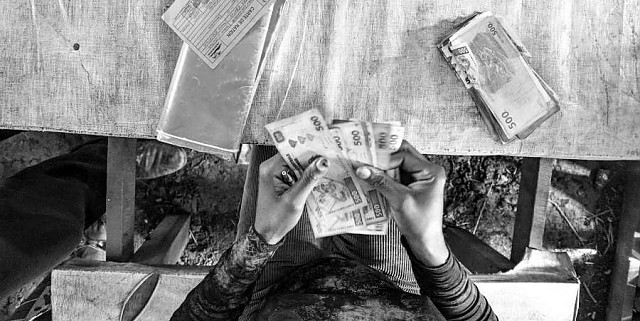
By Céline Schmitt in Mole Refugee Camp, Democratic Republic of the Congo (UNHCR)*–The market in Mole refugee camp was buzzing on a recent Saturday morning, with stalls selling everything from fish, goat meat, cassava and vegetables to clothes, cosmetics, household items and electronic equipment.
Just two months earlier, the place had been half empty. That all changed when the World Food Programme (WFP) decided to end food distributions and introduced cash grants for the 13,000 refugees from Central African Republic, transforming life in Mole in northern Democratic Republic of the Congo (DRC).
“Food distribution was always chaotic; some food was missing. Now [with the grants], everyone receives their cash without any problem,” noted Patrick N’Gocko, a 25-year-old refugee representative. The funds are distributed by UNHCR.
Investing in teachers is urgently needed to provide the best possible opportunities for millions of children, youth and adults worldwide, the heads of various United Nations agencies on 5 October 2014 said in a joint statement marking World Teachers’ Day.
Photo: UNESCO
“An education system is only as good as its teachers,” the agency chiefs said, calling for more rigorous training, better conditions for employment, quality-based teacher recruitment, thoughtful deployment and attracting new teachers and talents, especially young people and women from under-represented communities.*
“Innovative, inclusive and results-focused teaching is crucial for 2015 and beyond,” they added in their message for the Day, which this year marks its 20th anniversary.
The illegal trade in wildlife is the world’s fourth largest illicit trade, topped only by the trade in narcotics, counterfeiting and human trafficking.
Photo source UNEP
October 4, 2014 – Today, citizens in over 120 cities across the world are campaigning to save the world’s elephant and rhino populations which have fallen victim to an illegal wildlife trade now worth up to US $213 billion each year.*
The recent move by many countries to destroy their ivory stockpiles, the landmark 2014 London Declaration, and a recently adopted UN resolution has put the illegal trade in wildlife under a renewed spotlight and high on the agenda of the international community.
The Global March for Elephants and Rhinos will carry the voice of an ever-growing number of people on all continents who are calling for further concerted international action to end the senseless slaughter of these two iconic species.
The number of killed elephants in Africa is in the range of 20 – 25,000 per year, out of a population of 420,000 – 650,000, and poached African ivory may represent an end-user street value in Asia of an estimated US $165-188 million of raw ivory, in addition to ivory from Asian sources.
By Stephen Graham, Nairobi, 2 October 2014 (IRIN)* – The failure of peace talks and the end of South Sudan’s wet season could unleash fresh fighting between government forces and rebel factions, propelling millions of people in the world’s youngest nation back towards a man-made famine, analysts and humanitarian workers warn.
**Photo: Stephen Graham/IRIN | Delivering food by air is prohibitively expensive
Nine months of bad-tempered negotiations have yet to produce a firm ceasefire, let alone a political deal to end a conflict punctuated by atrocities. Skirmishes have continued in areas close to where thousands of civilians are crammed into UN bases. There are fears that both sides have used the seasonal lull to re-arm.
Surging violence would roil plans by the UN and humanitarian partners to use the dry season to patch up roads and other infrastructure and pre-position critical supplies before the meagre returns from the current disrupted harvest run out in early 2015. The rains usually begin to ease by late October.
“It is going to be a combination of a quieter environment for the people of this country, plus the continuation of a large aid operation, that will help people get through the dry season,” Toby Lanzer, the UN humanitarian coordinator in South Sudan, told IRIN. “If either of those two are absent, disaster will occur.”





 HUMAN WRONGS WATCH