The spread of violent attacks across the border from northern Nigeria into Niger is causing widespread displacement and hampering efforts to provide humanitarian assistance in the area, a spokesperson for the United Nations food relief agency reported on 10 February 2015 .
A family in Diffa, Niger, after fleeing violence in northern Nigeria. Photo: OCHA/Franck Kuwonu
The second half of 2014 saw a major increase in the number of new arrivals in the Diffa region. While only 15,000 people had crossed the border in October, the total estimated number now stands at 125,000 people, spread out over more than 140 sites and villages, said Elisabeth Byrs of the World Food Programme (WFP)*.
The arrival of displaced people has seen the population of Diffa almost double, putting enormous pressure on people’s livelihoods and food stocks, in a region that had been struggling with drought for several years in a row.
09 February 2015 (RT)* — Kofi Annan, the former UN secretary general, said the US-led invasion of Iraq was a mistake and helped to create the Islamist State militant group. He also blamed regional powers for making the conflict worse.
.
The aftermath of a bombing attack in Iraq (file photo). Photo: IRIN
“I was against this invasion and my fears have been founded. The break-up of the Iraqi forces poured hundreds if not thousands of disgruntled soldiers and police officers onto the streets,” Kofi Annan told the Munich Security Conference on Sunday. He added that some of these former security force members went on to join the Islamic State.
“The aim of creating democracy without the existing institutions ushered in corrupt sectarian governments,” Annan said. He added that the country has been unstable ever since and this has proved the perfect breeding ground for Sunni radical Muslims, who have become affiliated with the Islamic State.
08 February 2015 — Austerity has been served notice to leave Greece with immediate effect.
Alexis Tsipras | Source: Pressenza
Greek Prime Minister, Alexis Tsipras, addressed parliament on 8 February 2015 to outline a number of measures that seek to end the enormous suffering inflicted on the population over the five years of austerity imposed by the troika of institutions.
Included in the first wave of policies are:
Reinstatement of public sector workers who were made redundant unconstitutionally
Collective wage bargaining will be reintroduced
Where there is evidence of irregularity, State contracts will be investigated
Evictions as a result of inability to repay mortgages will be halted
There will be no more privatizations of state assets and privatizations in progress will be frozen
A fund will be launched into which will go profits from the development of the country’s natural resources and state property
Children of immigrants will be granted immediate citizenship
A new tax on high value property will be introduced
7 February 2015 — EVERYBODY KNOWS what the Israeli elections are about.
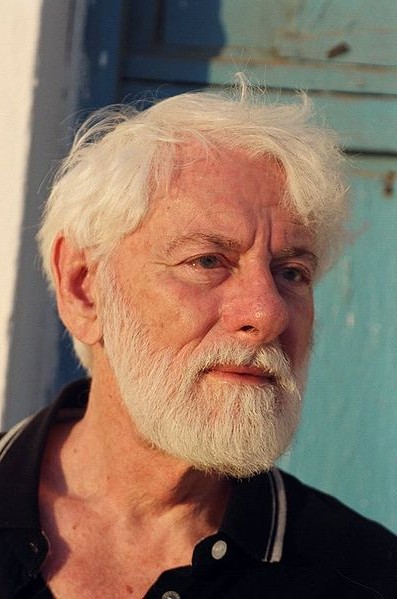
Uri Avnery
The choice is stark: on the one side, the dream of a Greater Israel “from the sea to the river”, which would in practice be an apartheid state; on the other side, an end to the occupation and peace.
Some would add a social choice: on the one side, the existing neoliberal state with the widest inequality in the industrialized world; on the other side, a social-democratic state of social solidarity.
So is the country plastered with posters about war and peace, occupation and settlements, wages and the cost of living? Are TV programs full of them? Are they occupying the front pages of the newspapers?
Far from it. Five weeks to election day, and all these subjects have practically disappeared.
War, peace, social justice – they just raise a collective yawn. There are far more interesting matters which electrify the public mind.
8 February 2015 (RT)* — Over 500 rabbis from Israel, Britain, the US and Canada have called on the Israeli prime minister to stop demolishing Palestinian homes. Rabbis for Human Rights (RHR) say Benjamin Netanyahu’s stance is against “international law and Jewish tradition.”
Photo source: Rabbis for Human Rights (RHR)
RHR’s open letter came after the Israeli PM announced the destruction of over 400 Palestinian homes in the Israel-controlled part of the West Bank, the territory known as Area C.
“Thousands have been forced to build without permits, and great human suffering is caused when hundreds of homes are demolished each year in Area C alone,”RHR stated in their letter, adding that Israeli planning and zoning laws “severely restrict the ability of Palestinians to build homes, even on the lands that the State recognizes as belonging to them.”
World leaders will meet in September to agree upon new goals for all of humanity: the Sustainable Development Goals. And, in December in Paris, another attempt will be made to deliver a global climate agreement.
London, 6 February 2015 (IRIN)* – This month, the UK parliament is due to release findings of aninquiry into the detention of migrants and asylum seekers, prompted by high profile incidents of sexual abuse and deaths. Unlimited immigration detention contributes to – and can even cause – lasting mental health problems among detainees, according to IRIN interviews with former detainees, aid and advocacy groups and UK court decisions.
**Photo: UK Home Office | Too tough inside: The inquiry is looking into the need to lock up so many migrants | Source: IRIN
Several studies have examined the impact of immigration detention on mental health. A review of 10 of these studies by specialists who gave evidence to the inquiry found that they all “reported high levels of mental health problems in detainees. Anxiety, depression and post-traumatic stress disorder were commonly reported, as were self-harm and suicidal ideation. Time in detention was positively associated with severity of distress.”
On the International Day , marked every year on 6 February, and this year focused on ending the ‘medicalization’ of the procedure, United Nations Secretary-General Ban Ki-moon called on health workers around the world to eliminate what he called a ‘deeply harmful’ practice.
No To FGM is the message greeting visitors of the Islamic Gathering Association, an NGO in Siflaq, Sohag Governorate, Upper Egypt. The UNFPA-supported NGO provides counselling to the residents of Siflaq and the surrounding villages, both Muslim and Christians, on the detrimental effects of FGM. Photo: Omar Gharzeddine/UNFPA
“Change is coming from within the communities. Breaking the silence and disproving the myths around female genital mutilation are the first steps along the way to eliminating it altogether,” said Ban in his message on the Day.*
“If everyone mobilized – women, men and young people – it is possible, in this generation, to end a practice that currently affects some 130 million girls and women in 29 countries where we have data,” said Ban. “I call for all people to end FGM and create the future we want where every girl can grow up free of violence and discrimination, with full dignity, human rights and equality.”
6 February 2015 – Jaha was just a week old when she was infibulated. Infibulation, or type 3 female genital mutilation (FGM), entails narrowing of the vaginal opening through the creation of a covering seal. The seal is formed by cutting and repositioning the inner, or outer, labia, with or without removal of the clitoris.
Jaha Dukureh, activist and FGM survivor speaks to journalists at a press conference on Engaging Health Workers to End Female Genital Mutilation. UN Photo/Mark Garten
Born in The Gambia and sent to the United States at 15 for an arranged marriage, Jaha Dukureh was too young to remember her FGM procedure but she has never been able to shake the feeling that something is not quite right.*
“I’m not whole. I’m not intact. Something was taken away from me,” she says.
Jaha was at the United Nations this week to share her story on the International Day of Zero Tolerance for Female Genital Mutilation. Marked every year on 6 February, the Day aims to raise awareness of the risks of FGM, with this year’s theme focused on urging health workers to mobilize against the “medicalization” of the deeply harmful practice.
Nearly 1 million people may have now been displaced by the conflict in eastern Ukraine, with the recent upsurge in violence causing massive destruction of buildings and infrastructure, the collapse of basic services and a spike in the numbers fleeing fighting, the United Nations refugee agency on 6 February 2015 reported.
A young displaced Ukrainian boy finds shelter from the cold in a tent in Slovyansk. His family hope to move to Kyiv after leaving the conflict-torn town of Debaltseve. Photo: UNHCR/B. Kinashchuk
“As more homes and other civilian infrastructure is damaged or destroyed, the Office of the UN High Commissioner for Refugees (UNHCR) expects more people to be displaced to areas in central, southern and western Ukraine under the control of the Ukrainian Government, but also to non-government controlled areas in the Donetsk and Luhansk regions,” said spokesperson Adrian Edwards.




 HUMAN WRONGS WATCH