16 November 2015 (RT)*– President Vladimir Putin says he’s shared Russian intelligence data on Islamic State financing with his G20 colleagues: the terrorists appear to be financed from 40 countries, including some G20 member states.
.
Putin also spoke of the urgent need to curb the illegal oil trade by IS.
“I’ve shown our colleagues photos taken from space and from aircraft which clearly demonstrate the scale of the illegal trade in oil and petroleum products,” he said.
“The motorcade of refueling vehicles stretched for dozens of kilometers, so that from a height of 4,000 to 5,000 meters they stretch beyond the horizon,” Putin added, comparing the convoy to gas and oil pipeline systems.
Rome, 16 November 2015 – The media everywhere are now unanimous in their condemnation of the Paris massacre three days ago, calling for unity of the West and intensification of military action against the Islamic States (IS). But would that solve the problem of terrorism? And it is not also time to make reflect on the responsibilities of the West in the rise of terrorism?
Roberto Savio
Of course, the slaughter in Paris can only cause horror and mourning. But why can some very young people act so atrociously?
The commune of Courcouronnes, the ghetto from which identified kamikaze killer Ismail Mostafa came, was also home to Asata Diakitè, one of the victims. Let then us make three reflections.
.
The first is that relations between the Arab world and the West have a heavy past. They started when, in 1916 during the First World War, an agreement was made to divide the Ottoman Empire among France, Britain, Russia and Italy.
Geneva, 16 November 2015 (IPS)– South-South cooperation is usually seen as a poor second fiddle to North-South aid in the world of development assistance. Indeed, developing countries’ policy makers themselves insist that South-South cooperation can only supplement but not replace North-South cooperation.
However, this widespread view received a jolt recently when China announced it was setting up two new funds totalling a massive 5.1 billion dollars to assist other developing countries.
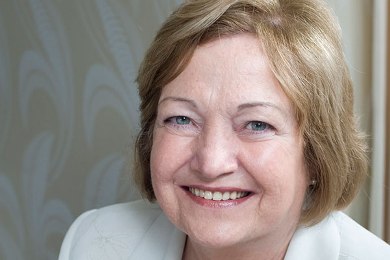
15th World Summit of Nobel Peace Laureates – Barcelona, 13-15 November 2015
I would like to thank the Major of Barcelona, Ada Colau I Ballano, the Permanent Secretariat of the World Summit, and all those who have worked so hard to make this great event possible.
It is wonderful to see so many people here and in particular to see so many young people.
I hope you will enjoy the next few days making new friends and leave feeling joyful and enthusiastic about the great tasks and challenges ahead of you.
There are enormous challenges which will require all your energy, and enthusiasm, and above all, your creativity and imagination to dream of, and to build a disarmed, peaceful world starting with ending militarism and wars…
But in order to build a disarmed world, we need to analysis the root causes of the increasing violence and conflict, and take ownership of what has gone wrong.
The current El Niño, a weather pattern of devastating droughts and catastrophic floods that can affect tens of millions of people around the globe, is expected to strengthen further by year’s end, on track to be one of the three strongest in 65 years, according to the latest update from the United Nations weather agency.
.
Enter a caption
Starting in 2011, drought-hit northern and eastern Kenya suffered especially from an already poor food security situation, exacerbated by high food and fuel prices. Credit: Jaspreet Kindra/IRIN
16 November 2015 – With record numbers of child refugees and migrants – 700 a day seeking asylum in Europe –the United Nations Children’s Fund (UNICEF) said it has identified five groups of vulnerable children and is mobilizing tailored actions to meet their needs.
.
Enter a caption
A young child, wearing a sweater and a knitted cap, eats a sandwich, next to a tarpaulin serving as a makeshift shelter, beside a railroad track on a rainy day, near the town of Gevgelija, Former Yugoslav Republic of Macedonia, on the border with Greece. September 2015. Photo: UNICEF/NYHQ2015-2191/Georgiev
These include babies and small children, children with disabilities and special needs, lost children, children who have been left behind, and unaccompanied adolescents on the move.
16 November 2015 – More than five years since the unrest in Syria began, senior United Nations officials today stressed to the Security Council that the status quo in the war-torn country cannot continue, highlighting the effects of the conflict on civilians, especially women and children.
“The Syria crisis is a chronicle of missed opportunities by the Security Council, Member States with influence on the parties, and the broader international community to bring the conflict to an end,” Stephen O’Brien, the Under-Secretary-General for Humanitarian Affairs, told the 15-member Council.
The meeting, which opened with a moment of silence in honour of the victims of the terrorist attacks Friday in Paris, also heard from UN special representatives dealing with sexual violence in conflict and children and armed conflict.
16 November 2015 – While recognizing Israel’s “serious security challenges,” a senior United Nations official today called its punitive demolition of the homes of alleged attackers “inherently unjust” and against international law, noting that 20 Palestinians, eight of them children, were made homeless in the past three days.
In operations to “deter others,” the family homes of five alleged perpetrators of attacks against Israelis in 2015 have been demolished by Israeli security forces since 14 November.
At least nine additional adjacent apartments have been damaged and rendered unsafe. The deaths and injuries occurred during the most recent operation this morning in Qalandiya refugee camp.
13 November 2015 (EurActiv) – With its Better Regulation agenda, the European Commission talks big about making EU decisions more transparent and increasing public participation. But the reality is very different, writes Anaïs Berthier.
European Commission meeting room [EurActiv]
With its Better Regulation agenda, the Commission talks big about making EU decisions more transparent and increasing public participation. But the reality is very different and ClientEarth’s case is a striking example.
In 2014, we took the Commission to court. We wanted to see the thinking behind a decision not to adopt a Directive underpinning the Aarhus Convention, despite a legal requirement to implement it.



 HUMAN WRONGS WATCH
