Seeking $150 million for aid efforts in Afghanistan, the top United Nations relief official on 7 September 2016 called on the international community to urgently scale up its support for the war-torn country so that it can meet the rising humanitarian needs of more than one million people who are on the move, either internally displaced or returning from neighbouring countries.
UN Emergency Relief Coordinator, Stephen O’Brien, has urged the donor community to contribute around $150 million to respond to the escalating humanitarian needs of more than 1.1 million people, displaced by conflict in Afghanistan over the last 15 years.
“Now more than ever the international community must remain steadfast in support of the people of Afghanistan to provide for displaced families, new returnees and work to tackle the alarming malnutrition crisis to prevent more than 126,000 children from dying this year,” the Under-Secretary-General for Humanitarian Affairs and Emergency Relief Coordinator, Stephen O’Brien, told a news conference in the Afghan capital of Kabul as he concluded his two-day visit to the country, according to a news release from the UN Office for the Coordination of Humanitarian Affairs (OCHA), which O’Brien heads.
ROME, 7 September, 2016 (IPS) – Lentils, beans, chick peas, and other pulses often produce negative “collateral social effects” on people hanging around, just a couple of hours after eating them. But, believe it or not, they contribute to reducing greenhouse gas emissions. How come?
A key message of the 2016 International Year of Pulses is that pulses are highly nutritious—the little seeds are packed with nutrients, and are a fantastic source of protein. Photo: Courtesy of FAO
See the facts: it is estimated that globally, some 190 million hectares of pulses contribute to five to seven million tonnes of nitrogen in soils. As pulses can fix their own nitrogen in the soil, they need less fertilizer, both organic and synthetic and, in this way, they play a part in reducing greenhouse gas emissions.
5 September 2016 (RT)– Btaaboura is a tiny village in the mountains of northern Lebanon. It is connected to the main motorway by a narrow winding road. It could be just anywhere in the Christian part of this country: white stone houses, olive groves, wine grapes, bare hills.
**Dilma Rousseff with her running mate for the 2010 Brazilian presidential election, Michel Temer. | Agência Brasil (direct link) | Creative Commons Attribution 3.0 Brazil license.
Like elsewhere, the wealth is hardly backed by hard work. It is mainly sustained by remittances flowing from abroad. There are grotesquely luxurious cars everywhere – Audis, BMWs. And there is Western Union office on the main street. All doors are closed; nothing moves.
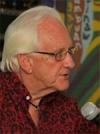
5 September, 2016 – TRANSCEND Media Service – Watching Christianity nearly a century–fundamentalist Christians fighting ritualistic Christians fighting secularism, generally moving fundamentalism–>ritualism–>secularism–maybe the same for Islam? Their similarities make “Islam right now” a repetition of Christianity; their differences shout, Watch Out! Let us see where this leads us.
Johan Galtung
Violence-prone fundamentalist evangelical Christians are still on top of the USA and some Nordic countries; but much less in ritualistic Catholic-Orthodox Christianity, meaning by far most of Europe.
Beauty of worship, the psychology of confession, less verbalism; all help.
Secularism makes faith so metaphorical for many that Christianity becomes only a ritual for Christmas-Easter, baptism-marriage-funeral (if there are no secular alternatives). Result: empty churches.
Our secular age makes literal faith in dogmas difficult, and that tears at the faith. But this is where two major differences enter:
HONOLULU, Hawaii, USA , Sep 5 2016 (IPS) – “You don’t convert your own house in a tourist site,” said Oussou Lio Appolinaire, an activist from Benin, wearing a traditional outfit in vivid yellows and greens. He was referring to opening up to tourists places that are sacred to indigenous people.
.
Srewe Xerente, an indigenous man from Brazil, performs a ritual during a forum on ancestral rights at the World Conservation Congress in Honolulu, Hawaii, where native peoples are demanding greater participation in conservation policies. Credit: Emilio Godoy/IPS
Appolinaire, who belongs to the Gun people in the West African country of Benin, heads the indigenous-led sustainable rural development NGO GRABE-Benin.
DAYLESFORD, Australia, 6 September, 2016 – As I read of the latest coup in Brazil, once again removing a democratically elected leader from power, my anger surged. Not again!
Robert J. Burrowes
However, as I see and read about the ongoing massive protests, as well as calls by prominent community leaders to mobilize in defense of your country’s democracy, I feel great hope for Brazil.
Having been a nonviolent activist for many years, I would like to support Brazilian activists to develop a nonviolent strategy that will increase your chances of success.
On 31 August 2016, the Brazilian elite executed a political coup to remove your democratically elected president Dilma Rousseff from office in a desperate attempt to halt corruption investigations in which they are clearly implicated.
Behind the scenes, of course, the United States elite was heavily involved. With vast quantities of highly profitable fossil fuels, mineral and forest resources, as well as fresh water at stake, the US elite (and its allied elites) is not going to stand aside while Brazil and BRICS endeavour to create a more just world for at least some of its human inhabitants.
Lund, Sweden, 5 September, 2016 ((TFF–Transnational Foundation for Peace and Future Research) – How did Western Europe survive the much stronger Soviet Union & Warsaw Pact 30-40 years ago? A pact that had about 70per cent of NATO’s military expenditures where today’s Russia has 8 cent? How did we get on after the Soviet invasion of Hungary and Czechoslovakia – and a Union with much more global military and political influence?
Jan Oberg
Europe did so through a well-maintained military capacity, or superiority, technical superiority and, of fundamental importance to security – confidence-building measures (CBM).
And through a political leadership by personalities who knew what the 2nd World War had implied and why it must never happen again.
One towering figure of course being Willy Brandt, the German chancellor who had himself been a refugee in Norway during the war.
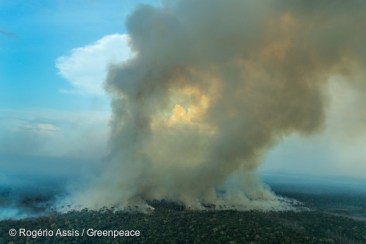
1 September, 2016 (Greenpeace) – The Amazon is being burned. Here’s what you need to know.
From July to November, it is fire season in the Amazon rainforest. But while fires can be a normal part of the life cycle in forests, most of the flames in the Amazon are far from natural – and damaging.
Each year, people burn rainforest to clear the land for farming and pasture, as well as illegal logging. What’s worse, these practices make the forest even more vulnerable to future blazes and contribute to climate change.
Here are five alarming facts you should know about fires in the Amazon rainforest:
HONOLULU, Hawaii, Sep 4 2016 (IPS)– Our closest cousin in the animal world, the Eastern Gorilla, is sliding towards extinction because of illegal hunting, the IUCN announced today in the latest update of its Red List of Threatened Species.
Four out of six great ape species are now listed as Critically Endangered. Photo courtesy of IUCN
“Today is a sad day as the Red List shows we are wiping out our closest relative,” Inger Andersen, director general of the International Union for Conservation of Nature, told a news conference in Honolulu where the IUCN is holding its World Conservation Congress.
RIO DE JANEIRO, Sep 1 2016 (IPS) – The dismissal of now ex-president Dilma Rousseff brings to a close a turbulent chapter of Brazil’s crisis, but does nothing to clear up the doubts that threaten the political system and the economy of Latin America’s powerhouse.
Michel Temer (third from the left) in his swearing-in ceremony in the Senate shortly after Dilma Rousseff was impeached. Credit: Beto Barata/PR
The Senate voted 61-20 on Wednesday Aug. 31 to impeach Brazil’s first female president for budget irregularities, putting an end to 13 years of rule by her left-wing Workers’ Party (PT).






 HUMAN WRONGS WATCH