The United Nations refugee agency on 5 December 2016 proposed far-reaching reforms of Europe’s management of refugees, including the asylum system, recalling that scenes of chaos at borders last year led to a breakdown in the public’s trust in the capacity of governments to manage the refugee challenge and played into the hands of those wishing to turn those fleeing for their lives into scapegoats.
A young refugee from Afghanistan holds his young son and looks at the sea after reaching safely the shores of Lesbos island, having crossed the Aegean sea from Turkey in an inflatable boat full of Afghan refugees. Photo: UNHCR/Achilleas Zavallis
The world is facing a humanitarian crisis that will require a record $22.2 billion in funding for 2017 to support nearly 93 million of the most vulnerable and marginalized people, the UN Office for the Coordination of Humanitarian Affairs (OCHA) on 5 December 2016 said as it launched a relief aid appeal.
.
Thousands of internally displaced people gather at Emmanuel Church Compound in Yei, South Sudan. Photo: UNHCR/Rocco Nuri
.
“The scale of humanitarian crises today is greater than at any time since the United Nations was founded,” said UN Emergency Relief Coordinator Stephen O’Brien, launching the Global Humanitarian Overview 2017 in Geneva, Switzerland, according to a press release from OCHA.
Rome, 5 December 2016 (FAO)*– The agricultural traditions and food culture of the Mediterranean region have long been looked to as an example of a healthy approach to eating, underpinned by vibrant rural economies.
.
Croatia: A pile of pest-damaged oranges, destined for disposal.
But demographic and environmental pressures — coupled with a changing climate and social and economic challenges — are now raising questions about the future of the region’s much-heralded food systems and the implications for sustainable development.
6 December, 2016 (RT)* –The need for a new edition of Moscow’s doctrine on information security is the result of foreign states intensifying their efforts in information and psychological operations to affect Russia’s internal affairs, their bias against Russia, and cyber-attacks against its key infrastructure, the document says.
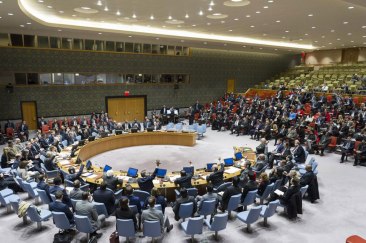
The United Nations Security Council on 5 December 2016 failed to adopt a resolution calling for a seven-day ceasefire in Aleppo that would allow humanitarian aid to reach people trapped in the war-ravaged Syrian city.
Security Council votes on resolution calling for a seven-day ceasefire in Aleppo, Syria. UN Photo/Rick Bajornas
The draft resolution proposed by Egypt, New Zealand and Spain was rejected because it received negative votes by permanent members Russia and China. Any negative vote, known as veto, from the Council’s five permanent members means a failed resolution.*
The text received 11 in favour, to three against (China, Russian Federation and Venezuela), with Angola abstaining.
Marking World Soil Day on 5 December 2016 , UN Secretary-General Ban Ki-moon stressed the importance of healthy soils, adding that “sustainable management systems and practices will unlock the full potential of soils to support food production, store and supply clean water, preserve biodiversity, sequester more carbon and increase resilience to a changing climate.”.
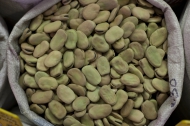
Sprouting fava beans at FAO Headquarters, Rome. Photo: FAO/Claudia Nicolai
In his message on the Day, Ban encouraged the international community to optimize the use of soil now and preserve and protect it in the long-term, because the sustainable soil management can also contribute to achieving the 2030 Agenda and its Sustainable Development Goals (SDGs), as well as the Paris Agreement on climate change.
Rome, 5 December 2016 (FAO)* – Soil and pulses can make major contributions to the challenge of feeding the world’s growing population and combating climate change, especially when deployed together, according to Soils and Pulses: Symbiosis for Life, a new report by the UN Food and Agriculture Organization released on World Soil Day.
Fava beans have been a mainstay of food and agriculture around Rome for millennia. | FAO
“Soils and pulses embody a unique symbiosis that protects the environment, enhances productivity, contributes to adapting to climate change and provides fundamental nutrients to the soil and subsequent crops,” said FAO Director-General José Graziano da Silva.
Pulses are environmentally resilient crops that deliver high-nutrition foods to people and critical nutrients to biological ecosystems.
5 December 2016 (UNEP)* – A new, USD $60 million global initiative launched at the International Nitrogen Initiative Conference in Melbourne, Australia, aims to spearhead integrated management of the nitrogen cycle for clean water and air, reduced greenhouse gas emissions, and better soil and biodiversity protection.
Photo: UNEP
Almost 80% of the air we breathe is made of nitrogen in the form of unreactive N2. This gas stabilizes the atmosphere by ensuring that the oxygen is limited to a safe amount to sustain life on earth.
4 December 2016 – More than 190 countries at a major United Nations conference in Mexico have pledged to step up efforts to integrate biodiversity into the policies of their forests, fisheries, tourism and agriculture sectors.
Tehuacán-Cuicatlán has one of Mexico’s highest rates of biodiversity and endemic species. Photo: Tehuacán-Cuicatlán Reserva de la Biósfera
On 3 December, countries adopted the Cancun Declaration, named after the Mexican city where the 13th meeting of the Conference of the Parties to Convention on Biological Diversity (CBD), known as ‘COP13,’ is being held.
Ceuta, Spain (Pressenza)* – Pressenza editor and reporter presented the following communication with the title “Immigration in the media from a perspective of peace and nonviolence” during the VII International Congress on Immigration, Interculturality and Coexistence in the autonomous city of Ceuta.
Juana Pérez Montero during her presentation | Photo: Antonio Sempere, Pressenza
Before we start, we would like to make clear that we will not be speaking as “objective” journalists, as we do not believe that such a thing exists. We know that this idea of objectivity that they teach us at journalism school does not exist – and not just because we might have to work with our employer’s best interests in mind, but because we ourselves are subjects.





 HUMAN WRONGS WATCH