20/01/2017
By John Scales Avery*
The duty of individuals living under an unjust government.
OSLO, 20 January 2017 – There are many governments today that can be described unjust, and some that even deserve to be called fascist.
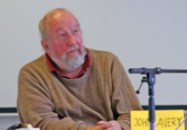
John Scales Avery
What is the duty of the individual citizen, living under such a government?
What was the duty of a German, living under Hitler?
The thoughts of Thoreau, Tolstoy, Gandhi and Martin Luther King can help us to answer this question. The Nuremberg Principles can also help us to answer it.
Henry David Thoreau and Civil Disobedience
We usually think of Thoreau (1817-1862) as a pioneer of ecology and harmony with nature, but he was also a pioneer of non-violent civil disobedience.
Thoreau refused to pay his poll tax because of his opposition to the Mexican War and to the institution of slavery. Because of his refusal to pay the tax (which was in fact a very small amount) he spent a night in prison.
read more »
Posted in Africa, Asia, Latin America & Caribbean, Market Lords, Middle East, Mother Earth, Others-USA-Europe-etc., The Peoples, War Lords |
Leave a Comment »
20/01/2017
UNITED NATIONS, Jan 19 2017 (IPS) – The 193-member UN General Assembly has been dragging its feet on a proposal that has been kicked around the corridors of the United Nations for over 10 years: a Freedom of Information Act (FOIA) providing journalists the “right to information” in a sprawling bureaucracy protective of its turf.
 Ironically, nearly 100 countries – all of them UN member states – have approved some form of national legislation recognizing the right to information (RTI) within their own borders but still seem unenthusiastic in extending it to the press corps at the United Nations.
The US Freedom of Information Act (FOIA), which dates back to 1967, has provided the public and the press the right to request access to records from any federal agency—and has been described as “the law that keeps citizens in the know about their government”.
read more »
Posted in Africa, Asia, Latin America & Caribbean, Market Lords, Middle East, Others-USA-Europe-etc., The Peoples, War Lords |
Leave a Comment »
20/01/2017
With agricultural land thirsty and water increasingly scarce, the United Nations agricultural agency on 19 January 2017 hosted an international event to discuss the use of municipal liquid waste for farming.

A trickling filter at a wastewater treatment plant in Danbury, Connecticut, in the United States. UN Photo/Evan Schneider
“Properly managed, wastewater can be used safely to support crop production – directly through irrigation or indirectly by recharging aquifers – but doing so requires diligent management of health risks through adequate treatment or appropriate use,” the Food and Agricultural Organization said in a press release.
read more »
Posted in Africa, Asia, Latin America & Caribbean, Market Lords, Middle East, Mother Earth, Others-USA-Europe-etc., The Peoples |
Leave a Comment »
20/01/2017
The United Nations refugee and migration agencies along with a host of partners on 19 January 2017 unveiled a new strategy and appeal to help address the challenges confronting hundreds of thousands of refugees and migrants in Europe.

Syrian refugee children looking out from their new home in the small town of Gänserndorf, Austria. They are on a resettlement program for Syrian refugees, in cooperation with UNHCR. Photo: UNHCR/Mark Henley (file)
Posted in Africa, Asia, Latin America & Caribbean, Market Lords, Middle East, Mother Earth, Others-USA-Europe-etc., The Peoples, War Lords |
Leave a Comment »
20/01/2017
19 January 2017 – Obesity and overweight are on the rise throughout Latin America and the Caribbean, and are prevalent particularly among women and children, according to a new United Nations-backed report.

Countries should promote the sustainable production of fresh, safe and nutritious foods to counter overweight and obesity, which have greatly increased, especially among women and children, in Latin America and the Caribbean. Photo: FAO
read more »
Posted in Africa, Asia, Latin America & Caribbean, Market Lords, Middle East, Others-USA-Europe-etc., The Peoples |
Leave a Comment »
20/01/2017
An independent United Nations expert on 19 January 2017 urged Saudi officials to use their bold new plan for economic transformation to improve the human rights of women and the poor.
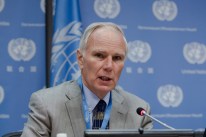
Special Rapporteur Philip Alston. UN Photo/Loey Felipe
Known as Vision 2030, the plan, which was announced in April 2016, is meant to reduce Saudi Arabia’s reliance on oil and develop other service sectors, such as tourism.
“Despite the plethora of serious human rights issues in Saudi Arabia […] Vision 2030 recognizes that Saudi women represent ‘a great asset’ which is currently under-utilized, and the need to recognize women’s rights points in the same direction,” said the UN Special Rapporteur on extreme poverty and human rights, Philip Alston, at the end of his official visit to the country.
read more »
Posted in Asia, Market Lords, Middle East, The Peoples |
Leave a Comment »
20/01/2017

Participants in the 2015 New York March for Gender Equality and Women’s Rights. Credit: UN Photo/Devra Berkowitz.
Starting out as a social media post by a handful of concerned women, the Women’s March on Washington quickly transformed, amassing over 400 supporting organisations representing a range of issues including affordable and accessible healthcare, gender-based violence, and racial equality.
“It’s a great show of strength and solidarity about how much women’s rights matter—and women’s rights don’t always take the front page headlines,” Nisha Varia, Advocacy Director of Human Rights Watch’s Women’s Rights Division told IPS.
read more »
Posted in Africa, Asia, Latin America & Caribbean, Market Lords, Middle East, Mother Earth, Others-USA-Europe-etc., The Peoples, War Lords |
Leave a Comment »
18/01/2017
Article III of of this three-part series on inequality tackles the issue of the future and quality of jobs. Part II focused on the impact of inequality on women. Part I dealt with the alarmingly deepening inequality worldwide.

Cost of a plate of beans in Switzerland: 0.4 per cent of daily income. Cost of same meal in Malawi: 41 per cent of daily income, according to new World Food Programme (WFP) data. Photo: WFP West Africa
ROME, Jan 18 2017 (IPS) – While just eight men are enjoying their huge wealth, equivalent to that of half the world, new forecasts project darker shadows by predicting rising unemployment rates, more precarious jobs and worsening social inequality. To start with, there will be more than 1.4 billion people employed in vulnerable working conditions.
read more »
Posted in Africa, Asia, Latin America & Caribbean, Market Lords, Middle East, Mother Earth, Others-USA-Europe-etc., The Peoples |
1 Comment »
18/01/2017
By Johan Galtung*
16 January 2017 – TRANSCEND Media Service – Two closely related points, as a starter.

Johan Galtung
This column has argued Lifting the Bottom Up as economic approach in all weathers, bad, fair, good, to mitigate any suffering, and for them to enter the economy as producers and consumers, not as “cases”.
This column has also argued judging Trump not by his poisoning words, nor by commentators’ words, but by his deeds.
White-male-workers-no college is not the US bottom, but they were heading down. Now lifted up the Trump way, by keeping/bringing back industry to the “Rust Belt”. Ford Motor Company just did that, GM may be next.
If outsourcing to Mexico–under the euphemism “trade” served poor Mexican workers, maybe–but it serves rich elites in both countries.
45 percent tariff on Chinese goods: a non-starter. US homes are filled with affordable “Made in China”.
To de-industrialize was US stupidity; to re-industrialize will take time. Keep what is, bring back what was. Other countries may learn from Trump and not trade themselves away.
read more »
Posted in Africa, Asia, Latin America & Caribbean, Market Lords, Middle East, Mother Earth, Others-USA-Europe-etc., The Peoples, War Lords |
Leave a Comment »
17/01/2017
By Uri Avnery*
14 January 2017
The Arab taxi driver who brought me to Ramallah had no trouble with the Israeli border posts. He just evaded them.
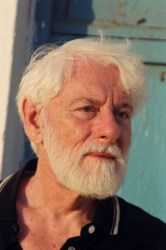
Uri Avnery
Saves a lot of trouble.
I was invited by Mahmood Abbas, the President of the Palestinian National Authority (as well as of the PLO and the Fatah movement) to take part in joint Palestinian-Israeli consultations in advance of the international conference in Paris.
Since Binyamin Netanyahu has refused to take part in the Paris event side by side with Mahmood Abbas, the Ramallah meeting was to demonstrate that a large part of Israeli society does support the French initiative.
SIMPLE AS it sounds, the Ramallah meeting was not simple at all.
Before the death of Yasser Arafat in 2004, such meetings were almost routine. Since our groundbreaking first meeting in Beirut in 1982, during the Israeli blockade, Arafat met many Israelis.
read more »
Posted in Africa, Asia, Market Lords, Middle East, Others-USA-Europe-etc., The Peoples, War Lords |
Leave a Comment »


 HUMAN WRONGS WATCH