Human Wrongs Watch
Countries in the Near-East and North Africa, where chronic water shortages are sure to worsen due to climate change, must take pro-active steps to become more resilient against droughts, the United Nations agriculture agency on 15 June 2018 said.

Fertile land dried and cracked due to lack of rain, Morocco. | Photo from FAO
Even though drought is a familiar phenomenon in the region, over the past four decades, droughts have become more widespread, prolonged and frequent – likely due to climate change. Though the region is not highly prone to drought, desert makes up three quarters of its territory, which stretches from Morocco to Iraq.
Even as farmers and herders face mounting challenges as water becomes scarcer, land more degraded and eroded, and soils more fragile there is still too much focus on recovering from drought rather than being less susceptible to it, the agency said.
“We need to perceive and manage droughts differently, and shift from emergency response to more pro-active policy and long-term planning to reduce risks and build greater resilience,” saidRene Castro, FAO’s Assistant Director-General, Climate, Biodiversity, Land and Water Department.
Released ahead of the World Day to Combat Desertification, marked annually on 17 June, the report assesses gaps in current drought management and provides a solid base to help governments rethink policies and reformulate preparedness and response plans by offering solutions that take into account each country’s specific context.
Drought solutions
Along with the development and implementation of national drought management policies consistent with the country’s development objectives, the report also recommends establishing early warning systems, sharing technologies to combat drought, and supporting policies and incentives to use land and water resources rationally.
Growing drought-tolerant, fast maturing and watershed crops, and encouraging advanced methods of irrigation (including drip and spray irrigation) are some of the measures that should be adopted at larger scale to combat climate change, added the report, which was co-authored by the Water for Food Daugherty Global Institute at the University of Nebraska.
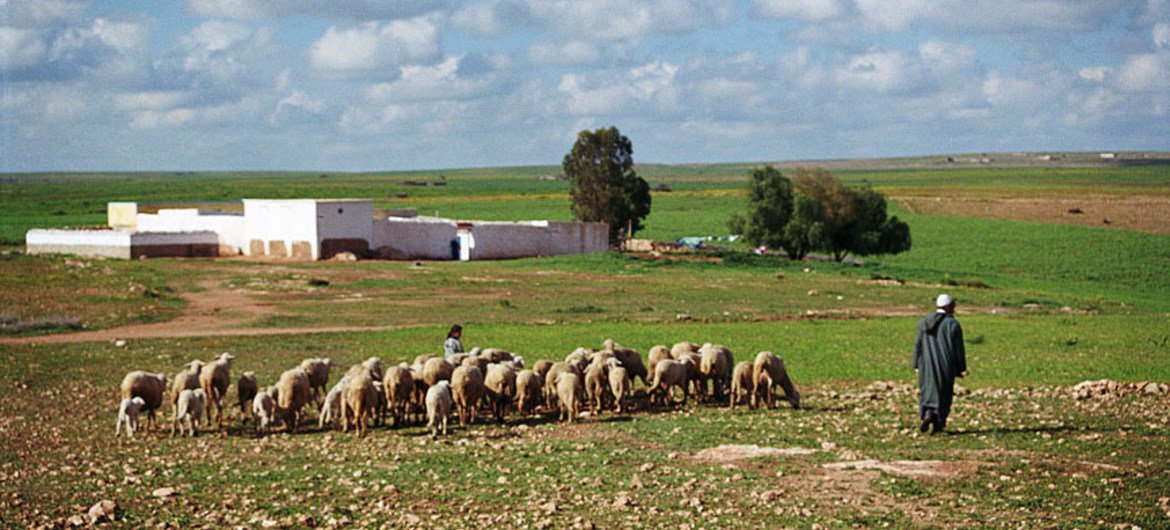
It also notes that traditional livestock herding practices – keeping stocking rates low and moving herds when forage is low – can reduce the risk of overgrazing and land degradation. (SOURCE: UN).
Discover more from HUMAN WRONGS WATCH
Subscribe to get the latest posts sent to your email.
 Baher Kamal
 HUMAN WRONGS WATCH
Leave a comment