The need for aid in the occupied Palestinian territory has increased, following a year that has seen a “serious deterioration in the humanitarian situation,” said Jamie McGoldrick, UN Humanitarian Coordinator for the region, in a statement on 17 December 2018.
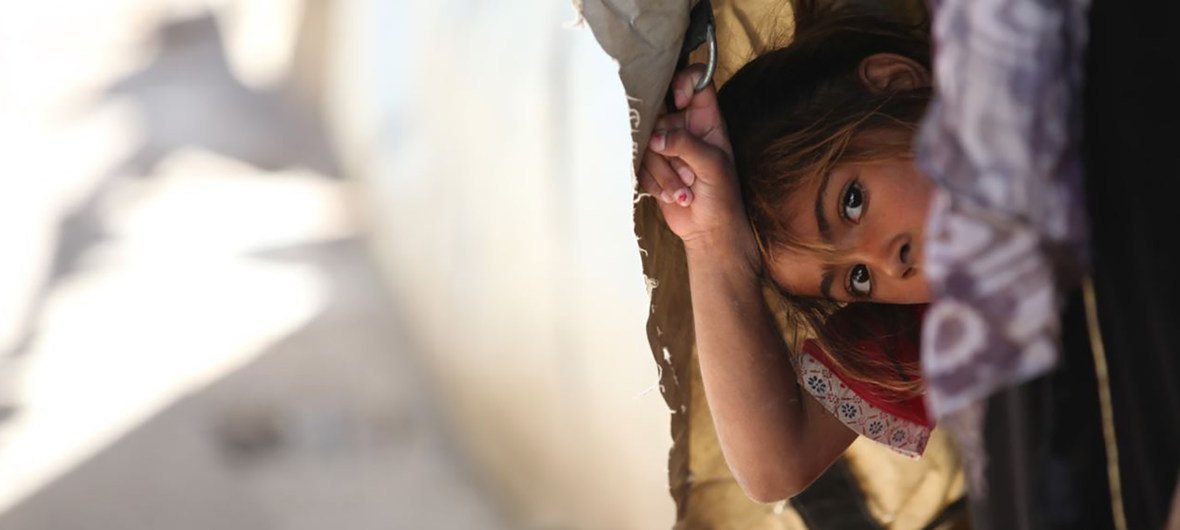
UNRWA/Taghrid Mohammad | Palestinian refugee residing at UNRWA ciollective shelter at Khan Dunoun Camp, Syria (2015).
McGoldrick’s comments were released as part of the 2019 Humanitarian Response Plan for the occupied Palestinian territory, which calls for $350 million to assist 1.4 million people, the maximum number of people that the UN can, he said, realistically reach in the current “non-conducive political and resource climate.”
An anti-globalist wave is breaking out around the world. This is perhaps one of the most regressive and absurd things in the world today. There was certain anti-globalism, fruit of the protectionism of several countries, but it was not a threat to the general and irreversible process of globalization.
Leonardo Boff
That wave was adopted for his political platform by Donald J. Trump who, according to Economics Nobel laureate Paul Krugman, is one of most stupid Presidents in North American history.
The same can be said of our recently elected President, the former captain Bolsonaro and his secretaries of State and of Education, deniers of this phenomenon, which only prejudiced and uninformed persons cannot see.
Why is this a senseless blunder? Because it contravenes the logic of an uncontrollable historical process. We have reached a new phase in the history of the Earth and Humanity.
So let’s see: thousands of years ago, human beings, who arose in Africa, (all of us are Africans) began to disperse throughout the vast world, beginning with Eurasia and ending in Oceania.
Thousands of Hungarians take to the streets to protest a new labor law which allows employers to request between 250-400 overtime hours from workers annually.
10,000 People Protest in Budapest Against Government ‘Slave Law’ | Photo: Reuters | Photo fromteleSur.
17 December 2018 (teleSur)* — On Sunday [17 December 2018], close to 10,000 people took to the streets of Budapest to protest the Hungarian government’s new labor law as well as the right-wing orientation of president Viktor Orban’s administration.
The crisis of the left around the world has opened up a vacuum for extreme right movements to gain traction and threaten our democracies. How does Boaventura de Sousa Santos make sense of this in Brazil?Español
Neofascism is on the rise around the world. Image from Pink Floyd concert. Wikimedia Commons.
17 December 2018 (openDemocracy)* — The crisis of the left around the world has opened up a vacuum for extreme right movements to gain traction and threaten our democracies.
Today we are faced with multiple interrelated crises, for example the threat of catastrophic climate change or equally catastrophic thermonuclear war, and the threat of widespread famine. These threats to human existence and to the biosphere demand a prompt and rational response; but because of institutional and cultural inertia, we are failing to take the steps that are necessary to avoid disaster.
John Scales Avery
Only Immediate Climate Action Can Save the Future
Immediate action to halt the extraction of fossil fuels and greatly reduce the emission of CO2 and other greenhouse gasses is needed to save the long-term future of human civilization and the biosphere.
At the opening ceremony of United Nations-sponsored climate talks in Katowice, Poland, Sir David Attenborough said “Right now, we are facing a man-made disaster of global scale. Our greatest threat in thousands of years. Climate change.
I was pleased and encouraged to learn about your initiative of convening the unprecedented Agora of the Inhabitants of the Earth.
In the present troubled times when many hardly gained achievements of humanity on its road towards peace and security as well as in promoting the social progress are threatened, while the immediate future of the world looks troublesome and uncertain, it is important that all the human beings raise their voice of concern and alert.
The far-right president-elect uploaded a video criticizing “strict” environmental regulations that are obstructing development in Brazil.
Brazil’s President-elect Jair Bolsonaro reacts next to Rosa Weber, the President of the Superior Electoral Tribunal (TSE) before receiving a confirmation of his victory in the recent presidential election in Brasilia, Brazil December 10, 2018. | Photo: Reuters | Photo fromteleSur.
15 December 2018 (teleSur)* — Jair Bolsonaro, Brazil’s far-right president-elect, announced he will lift environmental restrictions to allow logging and other economic ventures in the Amazon, posing a serious threat for Latin America’s colossal rainforest and indigenous communities living in it.
The current environmental policies implemented by the Brazilian Institute of Environment and Renewable Natural Resources (IBAMA) will be changed by Bolsonaro once he takes office on Jan. 1, for considering them “too strict” in protected areas.
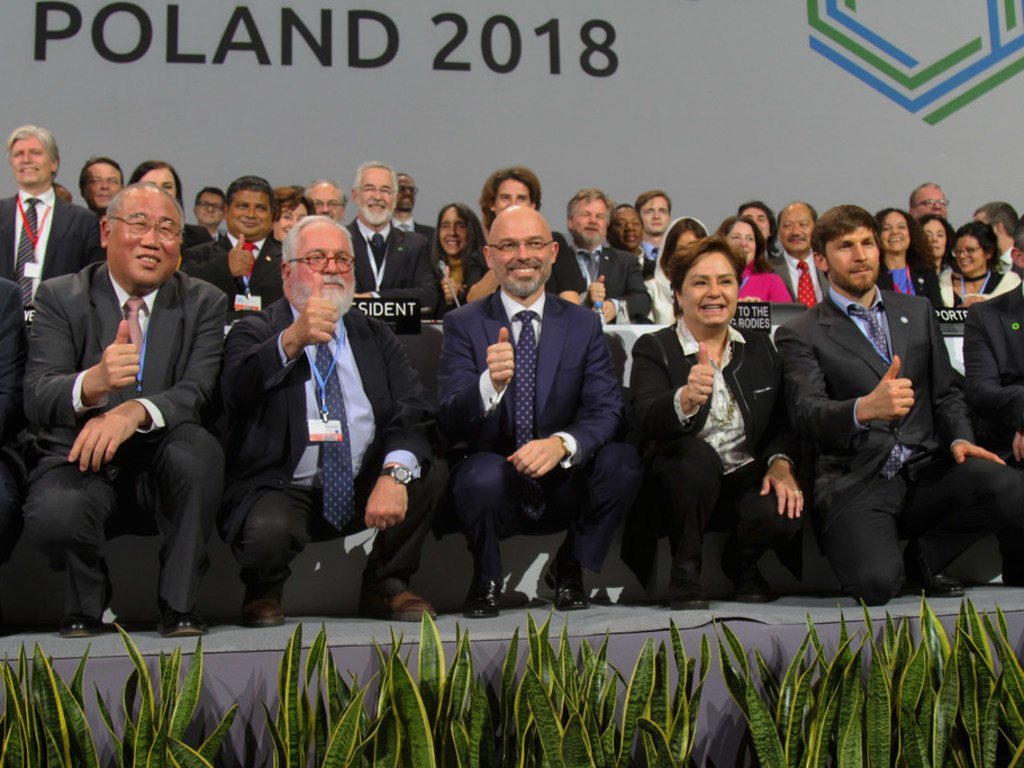
After two weeks of crunch negotiations – with overtime – the almost 200 parties gathered in Katowice, Poland, for the United Nations COP24 two-week climate change conference, adopted on Saturday [15 December 2018] a “robust” set of implementing guidelines for the landmark 2015 Paris Agreement, aimed at keeping global warming well below 2°C compared to pre-industrial levels.
UNFCCC/James Dowson | COP24 closing plenary meeting in Katowice, Poland, 16 December 2018.
Following several sleepless nights, cheers and applause welcomed the COP24 President, Michal Kurtyka, as he opened the conference’s closing plenary meeting, which had been postponed close to a dozen times.
Years ago, the Colombian armed conflict left them with nothing. Today, displaced neighbours in Las Delicias are hosting more than 150 Venezuelans. | Español | Français | عربي
14 December 2018 (UNHCR)* – When Graciela Sánchez first arrived in Las Delicias looking for safety, she only carried her two children and a small bundle of clothes with her. The armed conflict in Caquetá, western Colombia, took everything she had.
14 December 2018 – The terms ‘refugee’ and ‘migrant’ have been used interchangeably to describe the millions of people worldwide that are either fleeing conflict or seeking better living conditions. As the United Nations sets out to secure global compacts to better protect them, it’s critical to understand the differences between the two.
A new international agreement to forge a stronger, fairer response to large refugee movements known as the Global Compact on Refugees is expected to be endorsed by members of the UN General Assembly on Monday, 17 December to provide greater support for those fleeing their homelands, and for the countries that take them in, which are often among the poorest in the world.


 HUMAN WRONGS WATCH