Nairobi, 13 March 2019 (UN Environment)* – Even if the world were to cut emissions in line with the Paris Agreement, winter temperatures in the Arctic would rise 3-5°C by 2050 and 5-9°C by 2080, devastating the region and unleashing sea level rises worldwide, finds a new report by UN Environment.
Meanwhile, rapidly thawing permafrost could even accelerate climate change further and derail efforts to meet the Paris Agreement’s long-term goal of limiting the rise in global temperature to 2°C, warns Global Linkages – A graphic look at the changing Arctic.
14 March 2019 (FAO)* — “Before, our food was like poison in our bodies, but now it is like medicine,” says Eunice Wango Manga, a farmer in Kitui County in Eastern Kenya.
Her family and community are among the beneficiaries of an FAO project to make smallholder households eat better and grow foods that are more nutritious.
In Tanzania, a peaceful country hosting 335,000 refugees, the lack of funding is so dire that aid agencies are struggling to meet even the most basic needs. NRC needs all the support we can get to make a difference.
“There just isn’t enough food. We eat the same things every single day,” says Kiza, 59, a refugee from the Democratic Republic of the Congo in Nyarugusu refugee camp, Tanzania. Photo: Guri Romtveit/NRC
“There is no area where we’re meeting the standards,” says the Norwegian Refugee Council’s (NRC) area manager Fred Magumba.
13 March 2019 (UN Women)* — At a side event during the 63rd session of the Commission on the Status of Women, youth leaders from 100 countries urged political leaders and senior UN officials to make strong commitments that safeguard and improve access to social protection, public services and sustainable infrastructure for women and girls, including young women and girls, worldwide. Equally important, they said, was to engage young people in shaping the solutions that affect their lives.
Youth called on policy-makers to make commitments to gender equality and empowering youth at the “Take the Hot Seat: A High-level Intergenerational Dialogue”. Photo: UN Women/Ryan Brown
14 March 2019 (UN Environment)* — Many people across the world, including schoolchildren, are demanding bolder action on climate change by governments, businesses and investors. There are tremendous opportunities here to “think beyond, solve different,” transform our economies, and change the way we live.
.
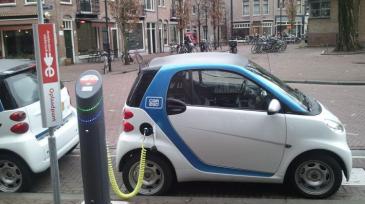
Electric car charging, Amsterdam 2011, Ludovic Hirlimann | Photo from UN Environment.
.
Climate change actions are key to sustainability, and part and parcel of globally agreed efforts in line with the Paris Climate Agreement and the Sustainable Development Goals.
GENEVA, 13 March 2019 (The Geneva Centre)* – Multilateralism must be people-driven. The current rise of populism around the world is inextricably linked to a feeling of being excluded and kept out of decision-making processes broadly shared by ordinary people.
These were the main conclusions of a joint event between the Geneva Centre for Human Rights Advancement and Global Dialogue and the UNOG Library entitled Leadership in Modern Multilateralism.
The debate was held on 12 March 2019 at the United Nations Office in Geneva in the Library Events Room at Palais Des Nations.
At a time when the UN and other international organizations in Geneva are actively celebrating “100 years Anniversary of Multilateral Diplomacy in Geneva” to mark the Centenary of the founding of the League of Nations, multilateralism is under important strain.
After hearing from many of the world’s top women politicians on Tuesday [13 March 2019] in a session on “Women in Power”, Secretary-General António Guterres, held a Town Hall meeting for civil society activists where he underscored the importance of women seizing the initiative in the struggle for gender equality.
UN Women/Amanda Voisard | UN Women Executive Director Phumzile Mlambo-Ngcuka moderates United Nations Secretary-General António Guterres’ Townhall for civil society on topics pertaining to gender equality and the work of the UN.
Despite a decline in new HIV infections globally, a UN report launched on Wednesday [13 March 2019] highlights that nearly all people who inject drugs live in countries that do not provide suitable harm-reduction service coverage, meaning they are denied adequate access to essential health services.*
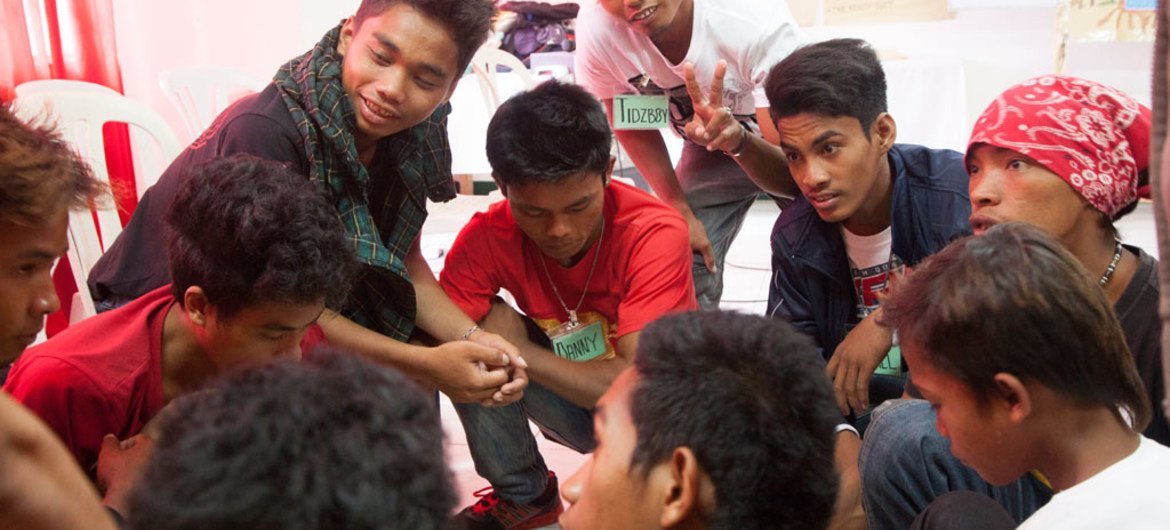
UNICEF/UNI177053/Palasi | Youth volunteers and counsellors discussing protection against HIV through correct knowledge and skills, with a group of adolescent boys in Zamboanga City, Philippines. Photo: UNICEF/UNI177053/Palasi
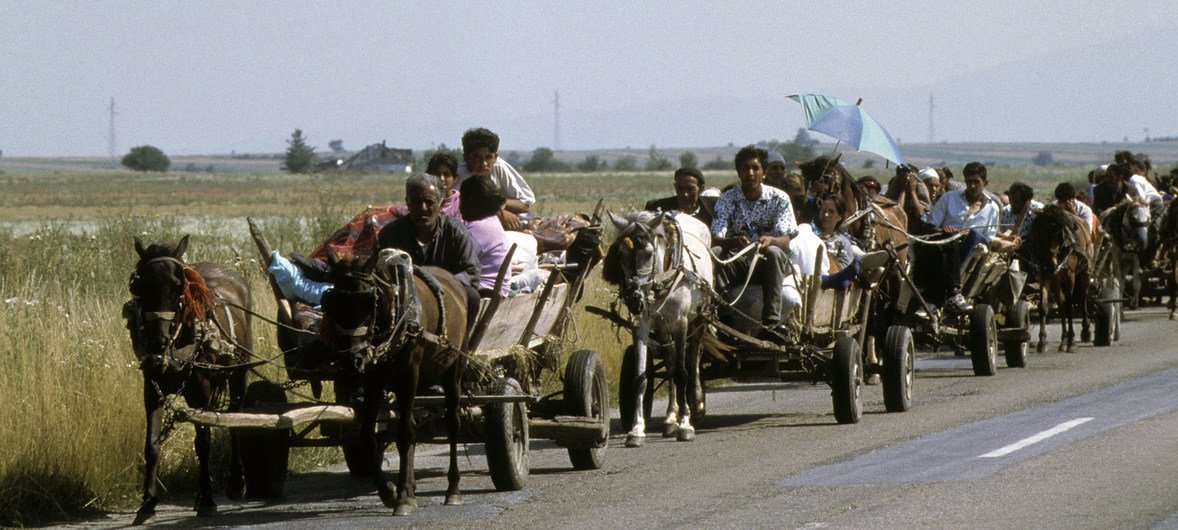
An independent rights expert appointed by the Human Rights Council has called on the United Nations to “provide justice and remedies” to displaced people who suffered lead poisoning after being housed in UN camps on toxic wasteland in Kosovo.
UN Photo/UNHCR/Roger LeMoyne | Roma civilians on the move in search of safety, inside Kosovo.
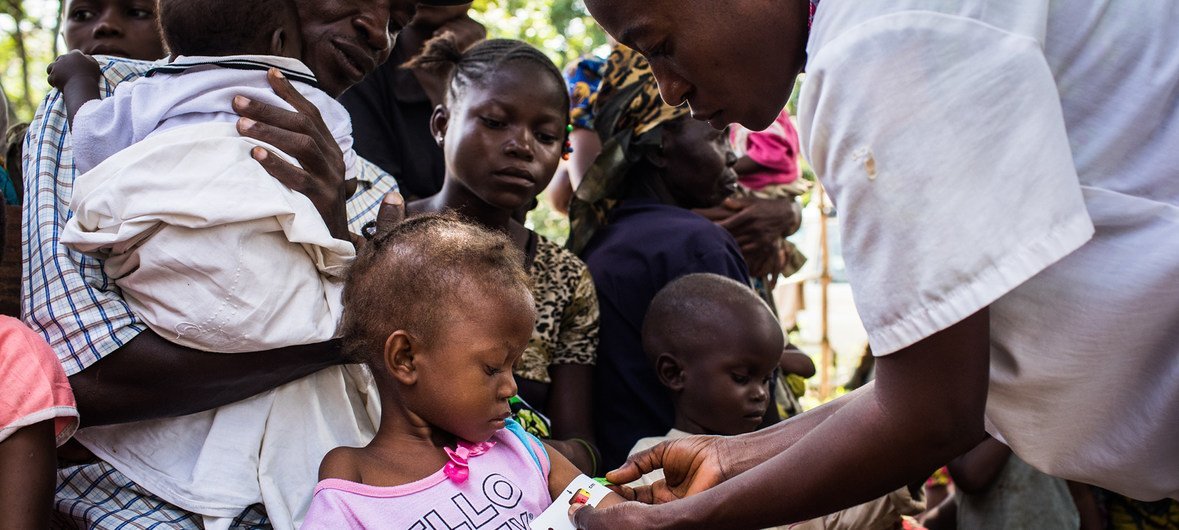
More than a quarter of a million children in the Kasai region of the Democratic Republic of the Congo (DRC) – and thousands of others who have fled with their families to nearby provinces – are suffering severe and acute malnutrition, and need lifesaving treatment, said the UN Children’s Fund (UNICEF) on Wednesday [13 March 2019].
.
UNICEF/Tremeau | Saint Martyr Health Clinic, in Kananga, Kasaï region, Democratic Republic of Congo, during a malnutrition screening (January 2018)



 These were the main conclusions of a joint event between the Geneva Centre for Human Rights Advancement and Global Dialogue and the UNOG Library entitled Leadership in Modern Multilateralism.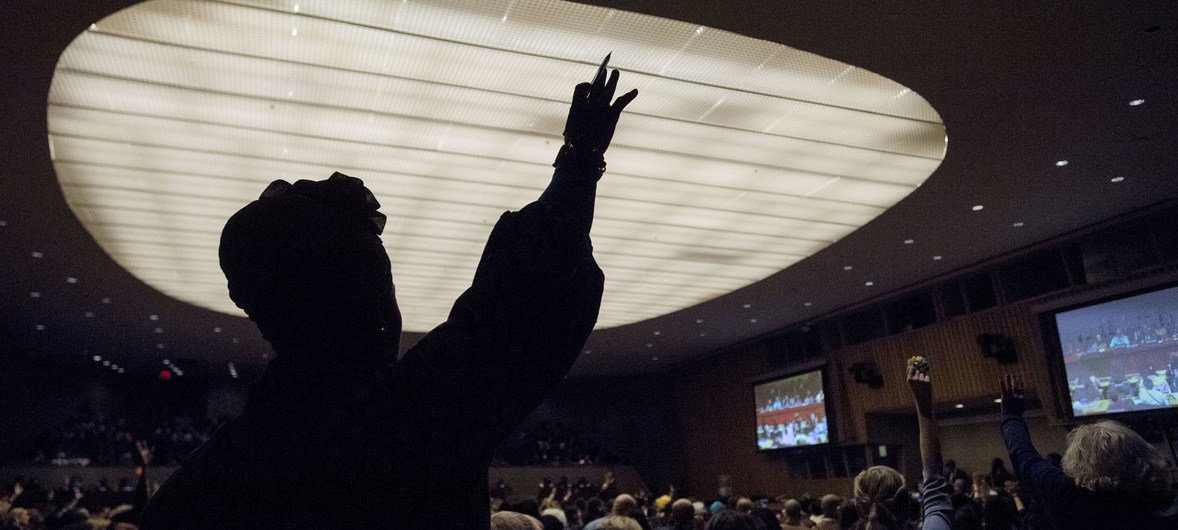
 HUMAN WRONGS WATCH