21/07/2019
By Olga Sarrado Mur in Maicao, Colombia*
A UNHCR survey finds that half of Venezuelans who have fled are particularly vulnerable due to their age, health issues, or the choices they had to make to survive. | Español

Domingo, 72, a former university librarian from Venezuela, stands outside a temporary shelter near Colombia’s northern La Guajira region. © UNHCR/Olga Sarrado Mur
19 July 2019 (UNHCR)* — Recurring blackouts in the Venezuelan city of Maracaibo took a terrible toll on the whole population. But they were particularly rough on Adrianna,* a 24-year-old woman with a cognitive impairment that stopped her intellectual development at around age six.
Without power, her mother Carolina* could no longer play Adrianna the music or TV shows she had long relied on to soothe her.
read more »
Posted in Latin America & Caribbean, Market Lords, Migrants and Refugees, Others-USA-Europe-etc., The Peoples, War Lords |
Leave a Comment »
21/07/2019
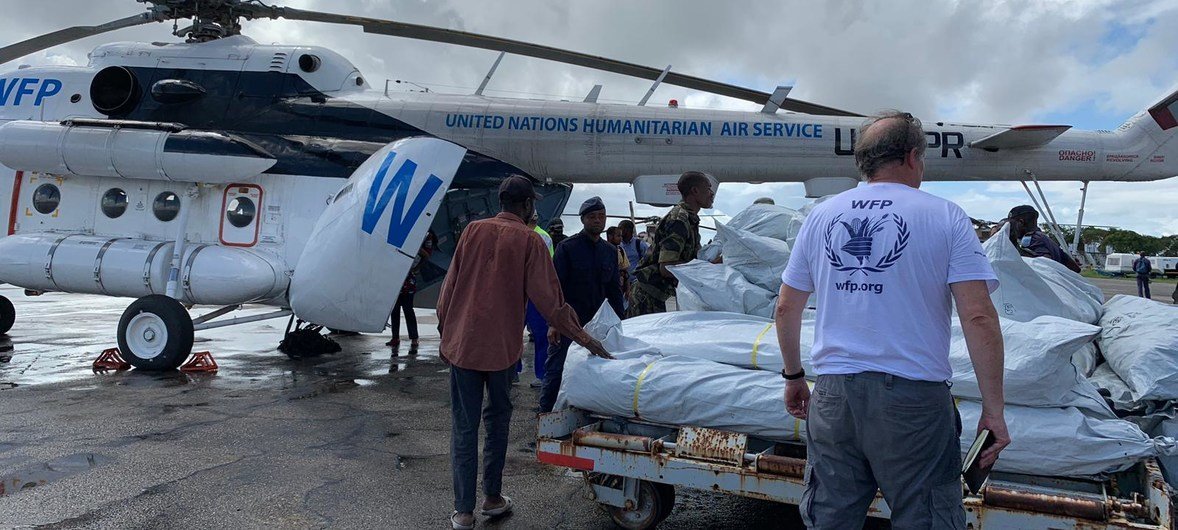
Severe drought has rendered more than a third of rural households in Zimbabwe – or around 3.5 million people – dangerously food insecure, the UN World Food Programme (WFP) on 19 July 2019 revealed.
WFP/Deborah Nguyen | The World Food Programme (WFP) speeds up food distributions in the cyclone-ravished city of Beira, Mozambique.
Citing the Zimbabwe Vulnerability Assessment Committee’s recently concluded Rural Livelihood Assessment, WFP Spokesperson Herve Verhoosel, said that the situation was likely to last from now until September with a further deterioration into December that will widen the impact to more than 4.7 million people.
read more »
Posted in Africa, Market Lords, Migrants and Refugees, Mother Earth, Others-USA-Europe-etc., The Peoples |
Leave a Comment »
20/07/2019
16 July 2019 (UN Environment)* — “Walk along the Bagmati river in the Nepalese capital, Kathmandu, and you are hit by a pervasive stench, underlining the fact that poor wastewater management worsens air pollution,” says Birguy Lamizana, a UN Environment specialist on wastewater and pollution.
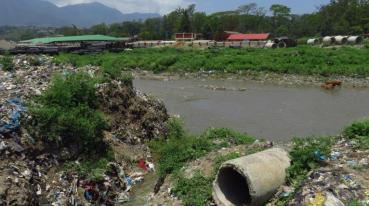
.
“The other thing you notice is that it’s the poorest of the poor living along the banks of the river in makeshift shacks: the world over it’s usually the poorest people who are worst affected by pollution,” she adds.
read more »
Posted in Africa, Asia, Latin America & Caribbean, Market Lords, Middle East, Mother Earth, Others-USA-Europe-etc., The Peoples |
Leave a Comment »
20/07/2019
19 July 2019 (UN Environment)* — Half of the world’s population is directly engaged in agriculture and nearly 40 per cent of land is devoted to agriculture and livestock. Food production sustains us all, but it also comes at a cost: water sources are being depleted and contaminated by food production, and unhealthy diets are burdening our health care systems.
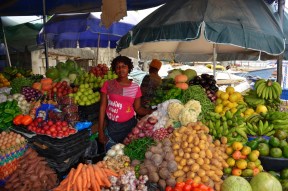
Photo by Pallab Helder/Pexels (from UN Environment).
Despite the huge challenges faced by the agriculture sector, food production also offers a tremendous opportunity to realize the Sustainable Development Goals and the Paris Climate agreement targets while stemming environmental degradation and biodiversity losses. But we need to change the way we feed ourselves. And we need to do it quickly.
read more »
Posted in Africa, Asia, Latin America & Caribbean, Market Lords, Middle East, Migrants and Refugees, Mother Earth, Others-USA-Europe-etc., The Peoples |
Leave a Comment »
20/07/2019
12 July 2019 (WMO)* — Unusually hot and dry conditions in parts of the northern hemisphere have been conducive to fires raging from the Mediterranean to – in particular – the Arctic. Climate change, with rising temperatures and shifts in precipitation patterns, is amplifying the risk of wildfires and prolonging the season.
WMO’s Global Atmosphere Watch Programme has released a short animation which highlights the risks and explains how advances in satellite technology make it possible to detect and monitor fire dangers. Improving forecasting systems is important for predictions and warnings around fire danger and related air pollution hazards.
read more »
Posted in Africa, Asia, Latin America & Caribbean, Market Lords, Middle East, Migrants and Refugees, Mother Earth, Others-USA-Europe-etc., The Peoples |
Leave a Comment »
20/07/2019
NAIROBI, Jul 18 2019 (IPS)* –
Kenya’s getting hotter. Much hotter than the 1.5˚C increase that has been deemed acceptable by global leaders, and it is too hot for livestock, wildlife and plants to survive. Thousands of households, dependent on farming and livestock, are at risk too.
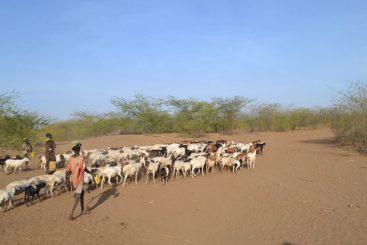
Research shows goats and sheep populations in Kenya have increased as the country’s temperatures have increased, in some places above 1.5˚C. Credit: Isaiah Esipisu/IPS
read more »
Posted in Africa, Asia, Latin America & Caribbean, Market Lords, Middle East, Migrants and Refugees, Mother Earth, Others-USA-Europe-etc., The Peoples |
Leave a Comment »
19/07/2019
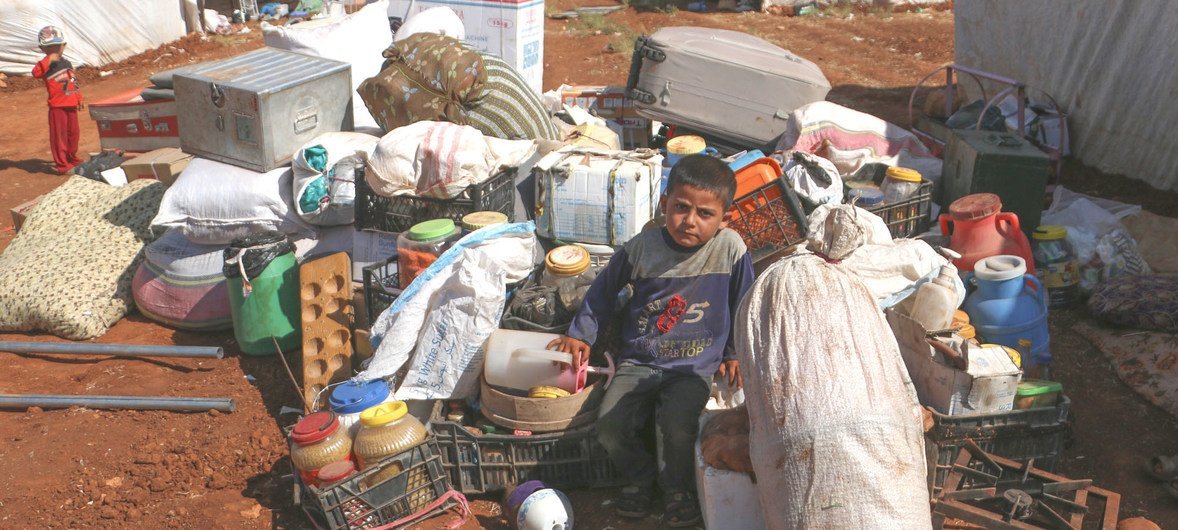
After 80 days of intensifying attacks, many on health facilities, “the carnage must stop” in northwest Syria, said the UN relief chief on Thursday [18 July 2019], noting that more than 70 civilians had been killed this month alone across the last rebel-held enclave of the country.
UNICEF/Aaref Watad | Families take shelter in a makeshift camp, 50 kilometers north of Idlib, in Syria. Since the beginning of September 2018, thousands of people have been displaced, following an escalation of hostilities in the country’s northwest.
“People around the world have watched in horror as war planes and artillery shelling kill and injure civilians and destroy civilian infrastructure.
read more »
Posted in Asia, Market Lords, Middle East, Migrants and Refugees, Mother Earth, Others-USA-Europe-etc., The Peoples, War Lords |
Leave a Comment »
19/07/2019
19 July 2019 (UN)* — Human trafficking is a crime that exploits women, children and men for numerous purposes including forced labour and sex.

Artwork from the Global Report on Trafficking in Persons 2018, UNODC.
Since 2003 the UN Office on Drugs and Crime (UNODC) has collected information on about 225,000 victims of trafficking detected worldwide.
Globally countries are detecting and reporting more victims, and are convicting more traffickers. This can be the result of increased capacity to identify victims and/or an increased number of trafficked victims.
read more »
Posted in Africa, Asia, Latin America & Caribbean, Market Lords, Middle East, Migrants and Refugees, Mother Earth, Others-USA-Europe-etc., The Peoples, War Lords |
Leave a Comment »
19/07/2019
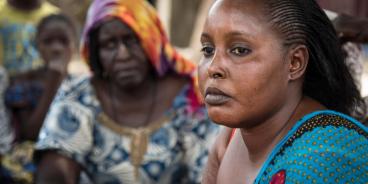
Adjana Mohamed is one of many people who have fled from the clutches of Boko Haram and found safety north in Cameroon. Photo: NRC/Tiril Skarstein
“The current lack of funding is alarming. Despite increasing needs, substantially less money is available for humanitarian assistance compared to the same period last year. We are deeply concerned for those people already feeling the hard consequences of cuts,” said Jan Egeland, Secretary General of the Norwegian Refugee Council (NRC).
read more »
Posted in Africa, Asia, Latin America & Caribbean, Market Lords, Middle East, Migrants and Refugees, Mother Earth, Others-USA-Europe-etc., The Peoples, War Lords |
Leave a Comment »


 HUMAN WRONGS WATCH