October 2019 (Wall Street International)* — The World Health Organization (WHO), the United States Department of Agriculture (USDA), the Food and Agricultural Organization (FAO) and others have been issuing dietary guidelines for decades1-4. The first guidelines were issued in 1916 by the USDA4.
The initial goals were to improve public health by preventing deficiencies in nutrients that are essential for good health4. That is, a lack of these nutrients can cause malnutrition and/or non-communicable diseases (NCDs).
DHAKA, Oct 17 2019 (IPS)* – After his father passed away two years ago, the burden of caring for a six-member family rested on the shoulders of the now 19-year-old Farhad Hossain. He had no clue how he would support his family and pay for the education of his four younger siblings.
The International Organisation for Migration says that in Bangladesh victims of human trafficking are either abducted or lured with promises of a better life. Credit: Rafiqul Islam Sarker/IPS
Capitalising on Hossain’s plight, a neighbour offered him a “promising job” abroad in Iraq.
19 October 2019 (UN News)* — Tensions around global trade and technology continue to rise and the international community needs to “do everything possible” to prevent the world being split into two competing spheres, led by the United States and China.
.
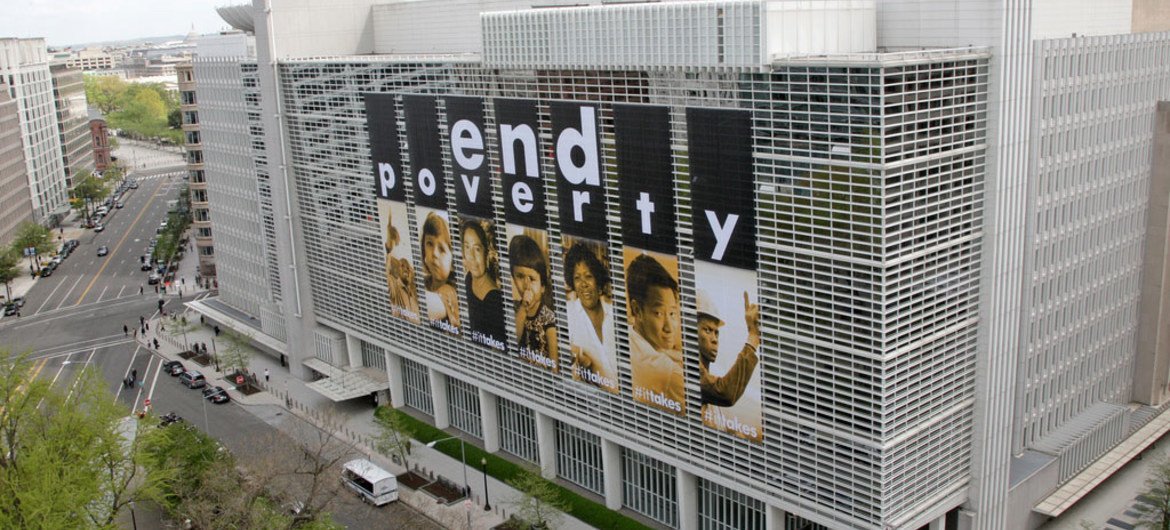
World Bank/Simone D. McCourte | World Bank Headquarters, Washington DC. Photo: World Bank/Simone D. McCourte
Hondurans called for the resignation of Juan Orlando Hernandez after a U.S. federal court convicted his brother of drug trafficking.
Hondurans demand the resignation of President Juan Orlando Hernandez in Tegucigalpa, Honduras, Oct. 19, 2019. | Photo: EFE | Photo posted here fromteleSUR.
19 October 2019 (teleSUR)* — Hondurans on Friday [18 October 2019 ]took to the streets to demand the resignation of President Juan Orlando Hernandez (JOH) after the New York Federal Court found his brother, Tony Hernandez, guilty on charges of drug trafficking, use of weapons and lying to authorities.
10 October 2019 (UN Environment)* — Life has always been hotter in cities. Concrete soaking up and radiating sunlight, and the concentration of people, cars and machinery crank up the temperatures, making them on average 5–9°C warmer than rural areas.
This has led to fast growth of power-hungry air conditioning units delivering cooling. The problem is that this cooling has been pumping out excess heat and greenhouse gas emissions, which warm the planet and so lead to an ever-greater need for cooling.




 HUMAN WRONGS WATCH