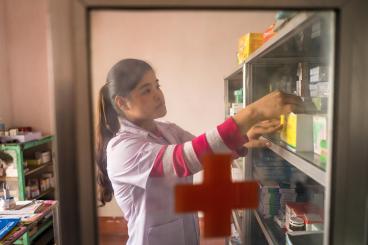
Geneva, 2 June 2020 (WHO)* — A record number of countries are now monitoring and reporting on antibiotic resistance – marking a major step forward in the global fight against drug resistance. But the data they provide reveals that a worrying number of bacterial infections are increasingly resistant to the medicines at hand to treat them.
WHO/Q. Mattingly
“As we gather more evidence, we see more clearly and more worryingly how fast we are losing critically important antimicrobial medicines all over the world,” said Dr Tedros Adhanom Ghebreyesus, Director-General of the World Health Organization (WHO).
This is a summary of what was said by UNHCR spokesperson Andrej Mahecic – to whom quoted text may be attributed – at today’s press briefing at the Palais des Nations in Geneva. | Español | Français | عربي
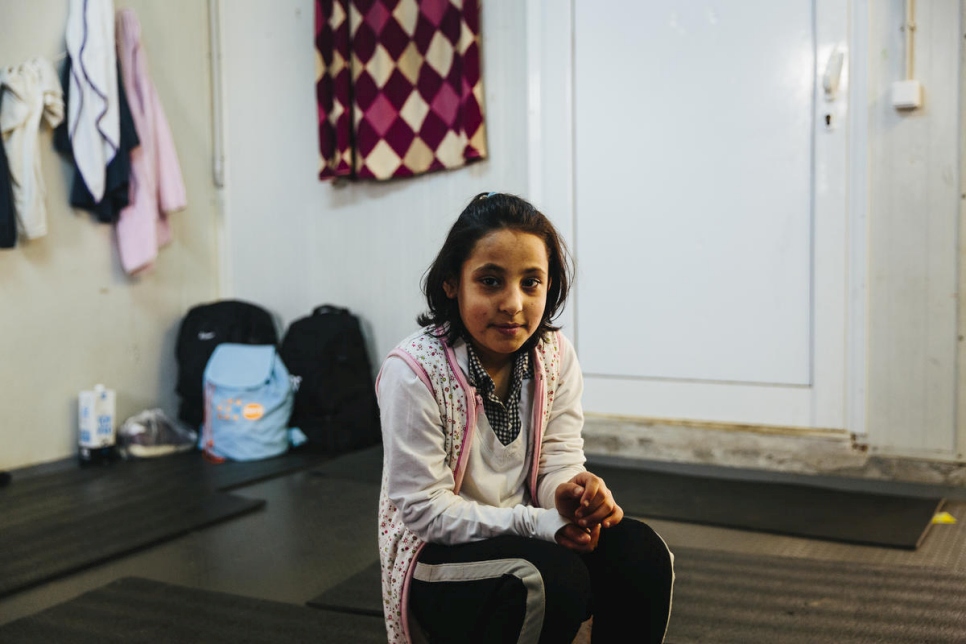
2 June 2020 (UNHCR)* — UNHCR, the UN Refugee Agency, is deeply concerned over government-arranged exit of some 9,000 recognized refugees from Greece’s reception system which began yesterday (1 June).
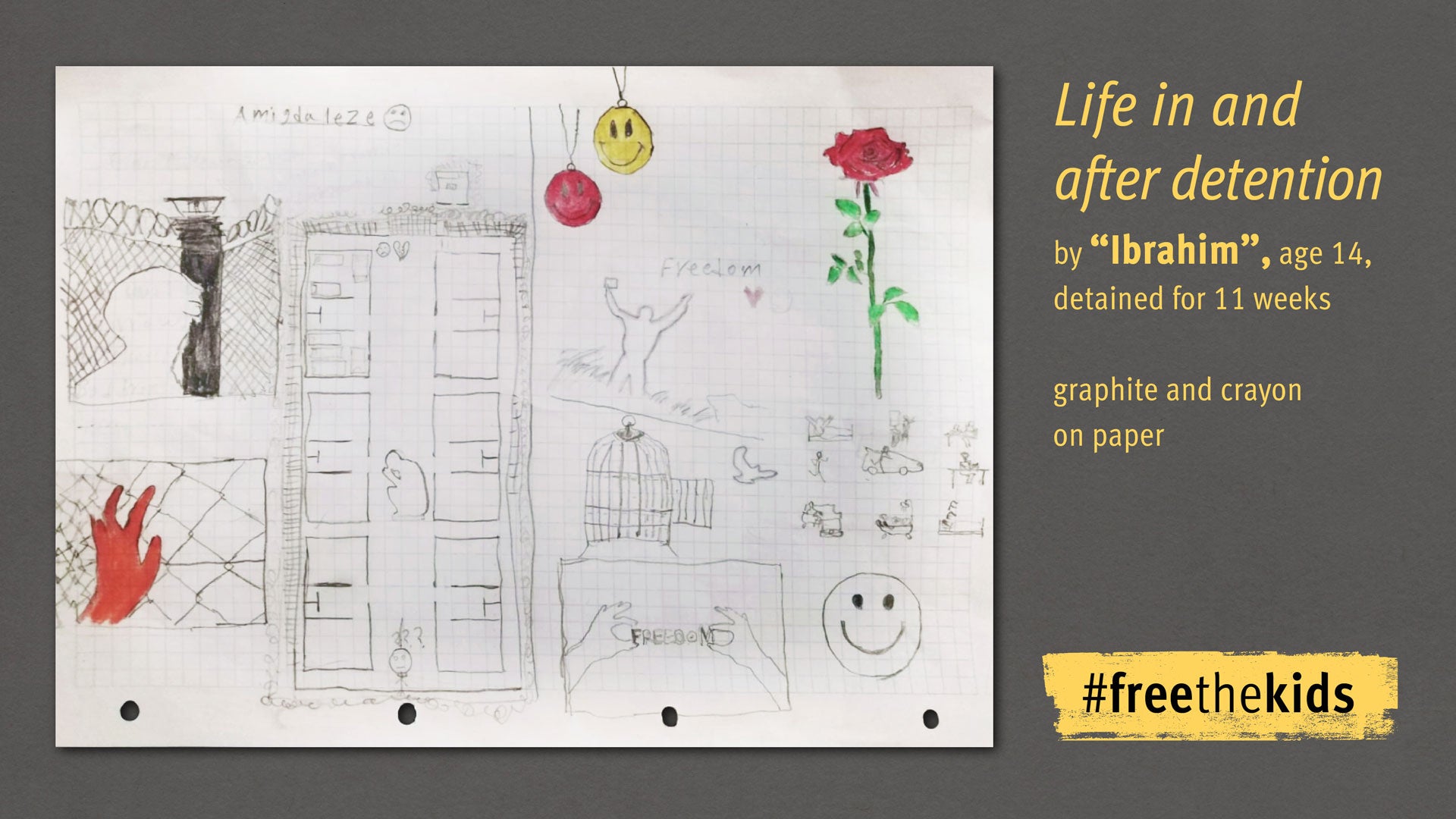
Plight of Unaccompanied Migrant Children Is Focus of New CampaignClick to expand Image
Ibrahim, a 14-year-old boy from Somalia, was detained by Greek police for almost three months at a detention center in Amygdaleza, a police-run detention facility on the outskirts of Athens, which houses adults but has a dedicated section for unaccompanied migrant children.
If the poorest countries are not provided with more assistance, their leaders will be forced to put the economy first
While Western countries are about to come out of the woods, many poor countries are in the middle of the Corona crisis | Image from Wall Street International.
2 June 2020 (Wall Street International)* — While Western countries are about to come out of the woods, many poor countries are in the middle of the Corona crisis.
Many of them have had to make an impossible choice: closing down their economy to prevent the spread of the disease or risk a health disaster, while lacking essential health services to handle it. Whether they choose one or the other the poorest will bear the brunt of the crisis.
Why the United States bears responsibility for Yemen’s humanitarian crisis.
Kathy Kelly
An entire generation of Yemeni children has suffered the traumas of war, many of them orphaned, maimed, malnourished, or displaced.
The United Nations reports a death toll of 100,000 people in that nation’s ongoing war, with an additional 131,000 people dying from hunger, disease, and a lack of medical care.
A report from Save the Children, issued in November 2018, estimated at least 85,000 children had died from extreme hunger since the war began in 2015.
Since then, 3.65 million people have been internally displaced and the worst cholera outbreak ever recorded has infected 2.26 million and cost nearly 4,000 lives.
Attacks on hospitals and clinics have led to the closure of more than half of Yemen’s prewar facilities.
(UN News)* — More than five years of conflict have left Yemenis “hanging on by a thread, their economy in tatters” and their institutions “facing near-collapse”, the UN chief told a virtual pledging conference on Tuesday [2 June 2020], calling for a demonstration of solidarity with some of the world’s poorest and most vulnerable.
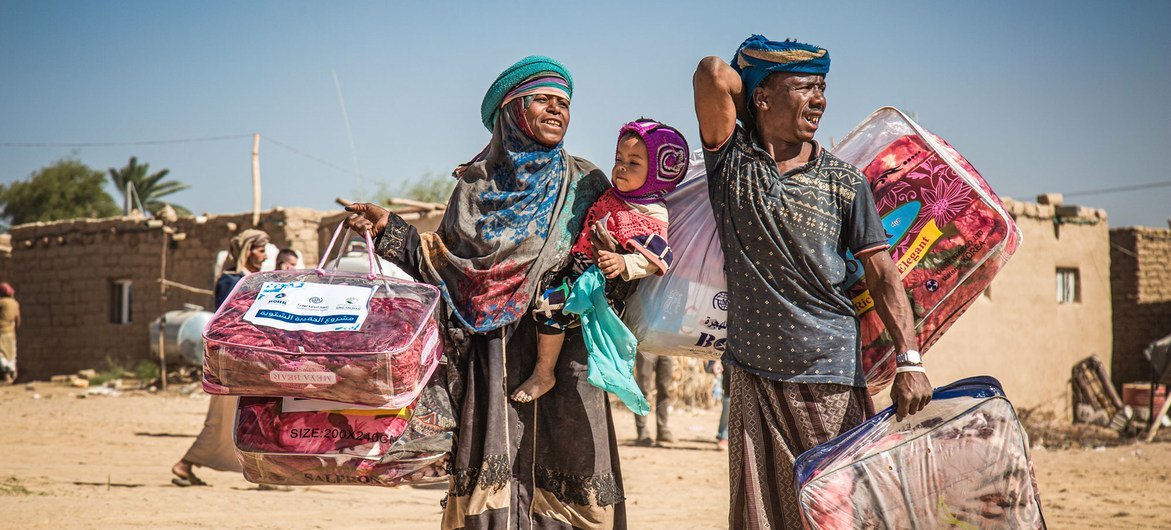
IOM | A displaced family in Marib, Yemen, carries a winter aid package back to their shelter.
“Four people out of every five, 24 million people in all, need lifesaving aid in what remains the world’s largest humanitarian crisis”, said UN Secretary-General António Guterres.
1 June 2020 (UN Environment)* — How were you planning to spend summer this year? Seeing your favourite band under a moonlit sky? Dancing at your beloved bar? Going to a festival with friends? Unfortunately, COVID-19 has made all those impossible. Like with other industries, the live music sector has been hard hit, as concerts and festivals are postponed because of social distancing measures and artists forced to take their gigs online.
But it’s not all bad. Virtual concerts can be a more sustainable way of enjoying music as the entertainment industry consumes an enormous amount of energy and concert-goers produce tons of waste.
As shows leave the arena and enter the livestream, the music world is transforming the industry. In a post-pandemic world, this raises questions about what entertainment itself could be as we work to build back better.
As Covid-19 accelerates in Latin America, now the global epicentre of the pandemic, the fierce extractivism agenda doesn’t stop.Português,Español
Victor Moriyama/DPA/PA Images
1 June 2020 (openDemocracy)* — Latin America is facing the worst health crisis in its recent history, the consequences of which cannot yet be measured or imagined.
Beyond the human cost, the countries of the region are dealing with economic, migratory and political crises, particularly in Brazil, where the government of Jair Bolsonaro has been criticized internationally for its denialist behaviour in the face of the Covid-19, pandemic, which according to official figures of May 26th, has already caused more than 25,500 deaths.
UNITED NATIONS, Jun 2 2020 (IPS)* – The deadly coronavirus pandemic, which has claimed the lives of over 372,000 people worldwide, has reinforced the concept of “social distancing” which bars any gathering of over 10 or 20 people – whether at a social event, a wedding, a political rally or even a funeral.
Black Lives Matter protest in London May 31. Credit: Tara Carey / Equality Now




 But it’s not all bad. Virtual concerts can be a more sustainable way of enjoying music as the entertainment industry consumes an enormous amount of energy and concert-goers produce tons of waste.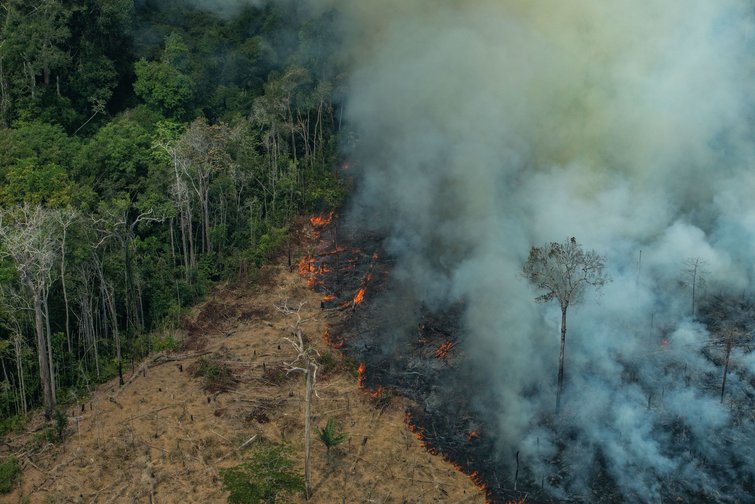

 HUMAN WRONGS WATCH