28/06/2020
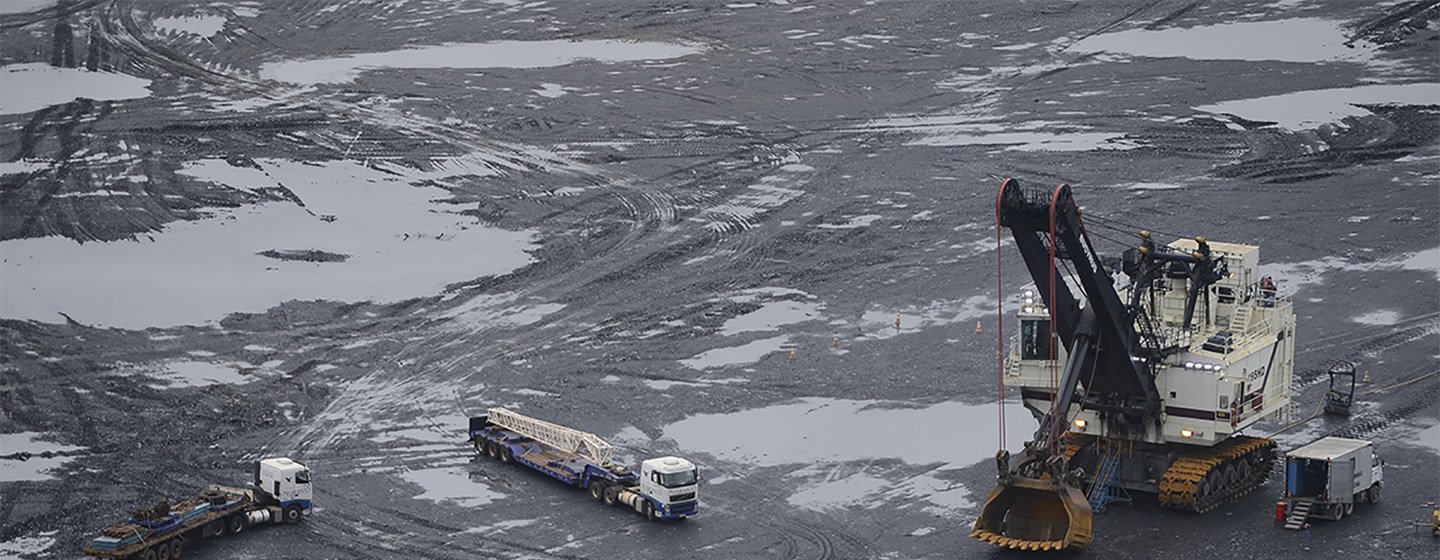
28 June 2020 (UN News)* — Demand for raw materials used in the production of electric car batteries is set to soar, prompting the UN trade body, UNCTAD, to call for the social and environmental impacts of the extraction of raw materials, which include human rights abuses, to be urgently addressed.
.
Electric cars are rapidly becoming more popular amongst consumers, and
UNCTAD predicts that some 23 million will be sold over the coming decade: the market for rechargeable car batteries, currently estimated at $7 billion, is forecast to rise to $58 billion by 2024.
Posted in Africa, Asia, Latin America & Caribbean, Market Lords, Middle East, Mother Earth, Others-USA-Europe-etc., The Peoples |
Leave a Comment »
28/06/2020
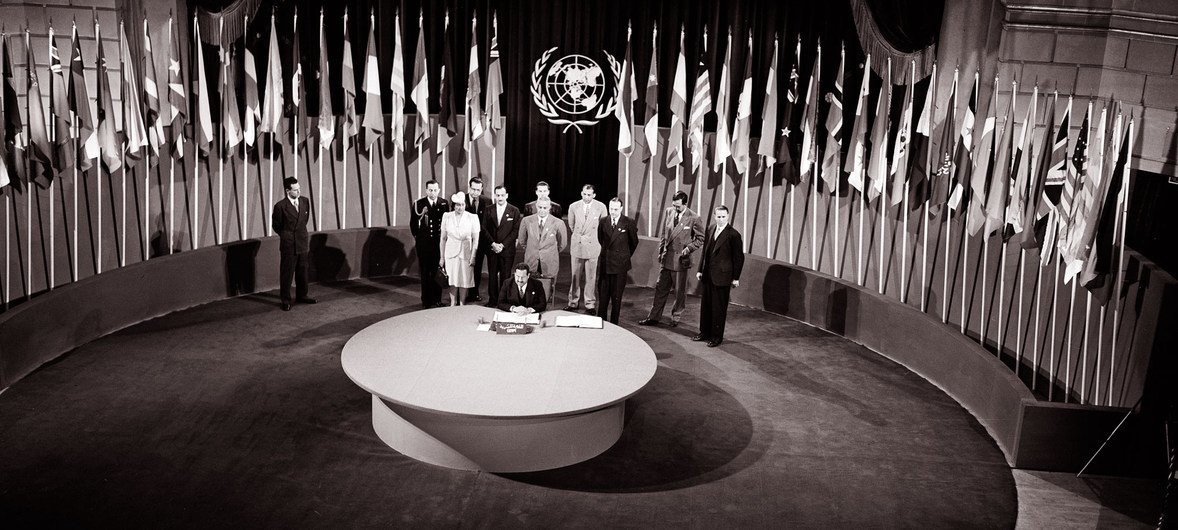
(UN News)* — The UN Charter “brought rules and hope to a world in ruins”, Secretary-General António Guterres told a virtual ceremony on 26 June 2020, commemorating 75 years since the Organization’s foundational text was signed.
UN Photo/Yould | The UN Charter being signed by a delegation at a ceremony held at the Veterans’ War Memorial Building on 26 June 1945.
Adopted by Member States as the Second World War was coming to a close, the UN chief
noted that the world today was marking the milestone anniversary “as global pressures are spiraling up”. The Charter was signed in San Francisco on 26 June 1945 and came into force on 24 October 1945.
Posted in Africa, Asia, Latin America & Caribbean, Market Lords, Middle East, Migrants and Refugees, Mother Earth, Others-USA-Europe-etc., The Peoples, War Lords |
Leave a Comment »
27/06/2020
To mark Micro-, Small- and Medium-sized Enterprises Day, which falls on 27 June, we are profiling entrepreneurs who are helping to tackle some of the planet’s most pressing environmental issues.
 When Leroy Mwasaru was in his teens, he noticed a major problem at his Kenyan boarding school. Ageing pipes were leaking sewage directly into a nearby stream, which was a source of water for a neighbouring community.
read more »
Posted in Africa, Asia, Latin America & Caribbean, Market Lords, Middle East, Migrants and Refugees, Mother Earth, Others-USA-Europe-etc., The Peoples |
Leave a Comment »
27/06/2020
Martha Maocha runs a detergent manufacturing company but has recently started making hand sanitising gel, which protects against COVID-19. Bulawayo, April 2020. Photo: KB Mpofu / ILO.
To continue playing their crucial role in creating decent jobs and improving livelihoods, small businesses depend more than ever on an enabling business environment, including support for access to finance, information, and markets.
Let’s not forget that these enterprises, which generally employ fewer than 250 persons, are the backbone of most economies worldwide and play a key role in developing countries.
read more »
Posted in Africa, Asia, Latin America & Caribbean, Market Lords, Middle East, Migrants and Refugees, Mother Earth, Others-USA-Europe-etc., The Peoples |
Leave a Comment »
27/06/2020
To mark Micro-, Small- and Medium-sized Enterprises Day, which falls on 27 June, we are profiling entrepreneurs who are helping to tackle some of the planet’s most pressing environmental issues.
Agricultural technician at a plantation in Cameroon, Ollivier Girard/CIFOR
27 June 2020 (UN Environment)* — Tabi Joda grew up in the forest, spending hours playing with his friends among the trees that lined the Mambila Plateau between Cameroon and Nigeria. But as they got older, there were fewer trees to climb amid a widespread and ruinous deforestation that turned trees into timber and agricultural land into deserts.
read more »
Posted in Africa, Asia, Latin America & Caribbean, Market Lords, Middle East, Migrants and Refugees, Mother Earth, Others-USA-Europe-etc., The Peoples |
Leave a Comment »
27/06/2020
The Tropics account for 40 per cent of the world’s total surface area and are host to approximately 80 per cent of the world’s biodiversity and much of its language and cultural diversity. Photo: FAO/IPPC
The Tropics are a region of the Earth, roughly defined as the area between the tropic of Cancer and the tropic of Capricorn. Although topography and other factors contribute to climatic variation, tropical locations are typically warm and experience little seasonal change in day-to-day temperature.
read more »
Posted in Africa, Asia, Latin America & Caribbean, Market Lords, Middle East, Mother Earth, Others-USA-Europe-etc., The Peoples |
Leave a Comment »
27/06/2020
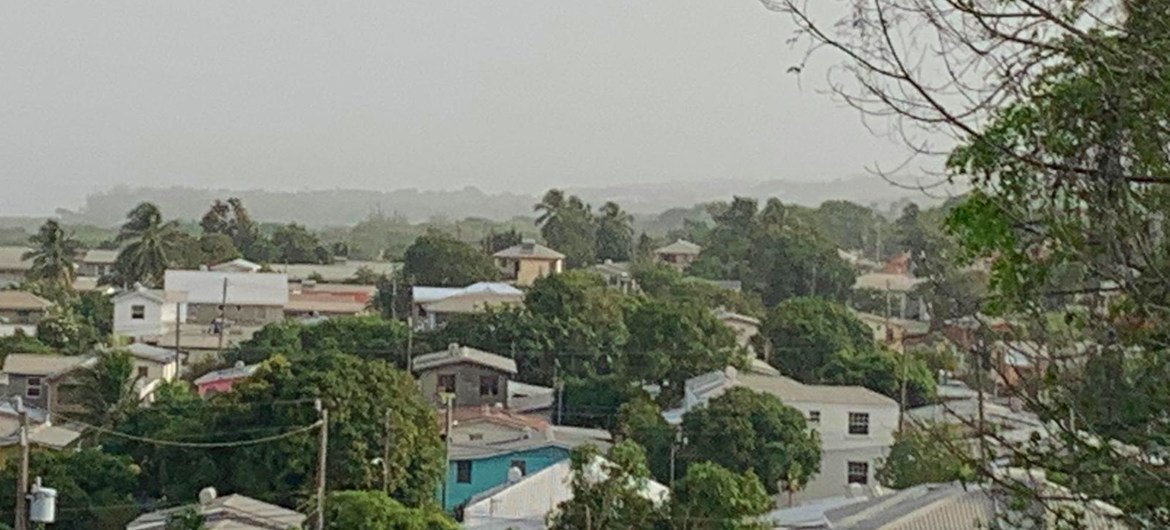
A massive dust storm currently blanketing many parts of the Caribbean, posing a significant threat to regional health, has revealed the importance of having effective warning systems in place, the World Meteorological Office (WMO) said on Friday [26 June 2020]. (*)
WMO | A dust storm which originated in the Sahara in Africa has arrived in the Caribbean.
The storm arrived in the Eastern Caribbean from North Africa last week, affecting a wide area so far, spanning from the northern coast of South America to the Yucatan Peninsula in Mexico.
Posted in Africa, Latin America & Caribbean, Middle East, Mother Earth, Others-USA-Europe-etc., The Peoples |
Leave a Comment »
26/06/2020
(UN News)* — The decision by the United States to authorize sanctions targeting staff at the International Criminal Court (ICC) is “a direct attack to the institution’s judicial independence”, UN human rights experts said on Thursday [25 June 2020].
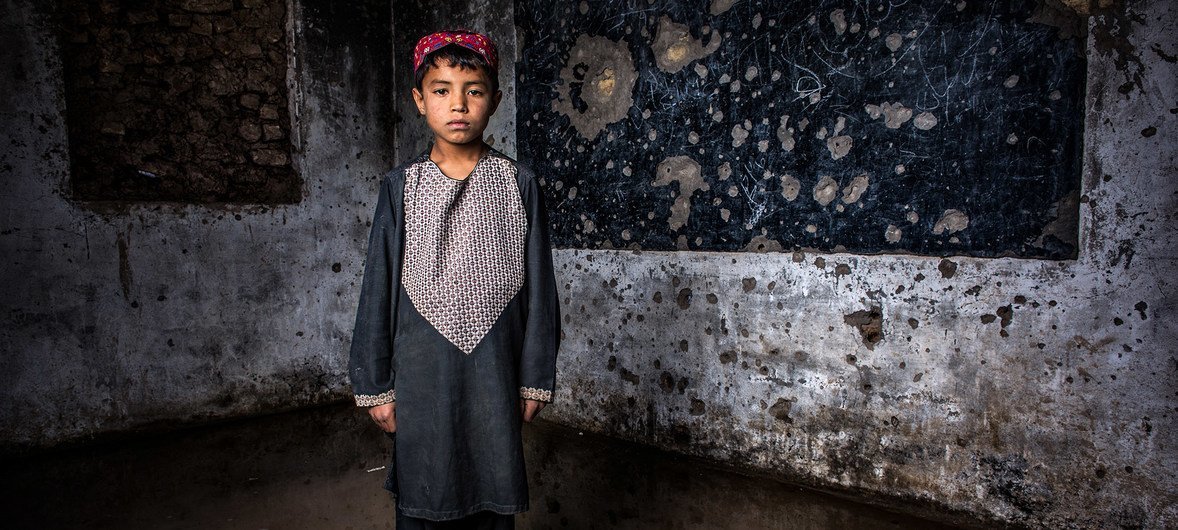
©UNICEF/Marko Kokic | Many schools in Afghanistan have suffered the effects of long-term conflict.
Washington announced this month that it would launch an economic and legal offensive against ICC officials investigating alleged war crimes committed by all sides in the conflict in Afghanistan, including US troops.
“The implementation of such policies by the US has the sole aim of exerting pressure on an institution whose role is to seek justice against crimes of genocide, war crimes, crimes against humanity, and the crime of aggression”, saidDiego García-Sayán, UN Special Rapporteur on the independence of judges and lawyers, speaking on behalf of the 34 experts.
read more »
Posted in Africa, Asia, Climate Crisis, Latin America & Caribbean, Market Lords, Others-USA-Europe-etc., The Peoples, War Lords |
Leave a Comment »
26/06/2020
KUALA LUMPUR, Malaysia, Jun 25 2020 (IPS)* – Katharina Pistor’s recent book, The Code of Capital: How the law creates wealth and inequality shows how law has been crucial to the creation of capital, and how capital continues to survive, evolve and enhance its ability to ‘make money’, or secure wealth legally, i.e., through the law.
Legal coding makes capital
In her magnum opus, the Columbia Law School professor explains how legal systems create capital and how law enables wealth creation through what she terms ‘legal coding’.
Notions of property and property rights have changed over the ages, reflecting and redefining social and economic relations more generally.
Pistor sees ‘legal coding’ — e.g., via collateral, trust, corporate governance, bankruptcy, contracts and other property laws — as means for assets to become capital, creating wealth for their holders. When “coded in law”, even “dirt” can become a valuable asset, capable of enriching its owners.
read more »
Posted in Africa, Asia, Climate Crisis, Latin America & Caribbean, Market Lords, Middle East, Migrants and Refugees, Mother Earth, Others-USA-Europe-etc., The Peoples, War Lords |
Leave a Comment »




 HUMAN WRONGS WATCH