By producing soap, treating the sick and shopping for the vulnerable, these refugees from around the world are taking action to fight the coronavirus. | Español | Français | عربي
19 June 2020 (UNHCR)* — For almost two months now, Carmen Parra has been working 12- and 24-hour shifts as part of an ambulance crew in Peru that visits suspected COVID-19 patients in their homes and transports those who are critically ill to hospital.
(UN News)* — UN Secretary-General António Guterres has reminded countries of their fundamental obligation to protect the nearly 80 million people worldwide forced to flee their homes due to conflict, persecution and other crises.
In his message to mark World Refugee Day [20 June], the UN chief also praised those nations and communities hosting refugees and internally displaced people, often amid their own economic and security challenges.
“We owe these countries our thanks, our support and our investment,” he said.
19 June 2020 (UN Environment)* — After a five-hour journey by boat and an inland journey on a ranger´s backpack, Diego, the giant tortoise who helped save his species from extinction, finally arrived his native Española Island, in the emblematic Ecuadorian archipelago of Galápagos.
Diego will finally be able to wander in this native island, 87 years after he left to participate in breeding programmes in captivity. Photo by Galapagos National Park...
Diego, now over 100 years old, will have the chance to live in the wild after eight decades of residing in a zoo and in a conservation center, where he fathered at least 800 offspring.
Only through an understanding of the historical impact of colonialism can we begin to heal the wounds caused by centuries of slavery, violence, and oppression.
Pro-Mosaddegh protests in Tehran, 16 August 1953 | Wikimedia Commons. Public domain
18 June 2020 (openDemocracy)* — In August 1619, a ship called the White Lion arrives in Virginia, a year before the Mayflower, the ship that was transporting the first English Puritans. It carries with it the first load of African slaves, captured in West Africa, starting the enslavement of Africans in the North American colonies.
A woman living in Kassab Camp for Internally Displaced People in Kutum, North Darfur, expresses her sorrow over the increase in rapes in the area. Photo: UN Photo/Albert González Farran
.
Already a dramatically under-reported crime, CRSV has been further obscured by this pandemic. COVID-19 hampers the possibility of survivors to report sexual violence and further exacerbates the existing structural, institutional and sociocultural barriers to reporting such crimes.
(UN News)* — Conflict-related sexual violence (CRSV) is “a brutal crime” that is being exacerbated by the COVID-19 pandemic, the UN chief underscored on Friday [19 June 2020], the International Day for the Elimination of Sexual Violence in Conflict. Mainly perpetrated against women and girls, CRSV also affects men and boys.
“It reverberates throughout communities and societies, perpetuating cycles of violence and threatening international peace and security”, Secretary-General António Guterres said in his message for the day.
Fifty years ago this year, I published my first book, entitled Rebels in Eden – an exploration of mass political violence in America focusing on the uprisings that had by then incinerated substantial portions of the inner city communities of Los Angeles, New York, Newark, Detroit, Chicago, Baltimore, and Washington, as well as scores of smaller towns and cities.[i]
Richard E. Rubenstein
Those riots were far more destructive than anything experienced in the protests following the recent killings of George Floyd, Breonna Taylor, and Ahmaud Arbery by police and ex-police officers.
The sixties uprisings killed several hundred people (almost all Black civilians), injured more than 12,000, and caused billions of dollars in property damage.
What Hasn’t Changed
Rebels in Eden was reviewed in popular journals like TIME and Newsweek and was widely read, along with a small flood of similar publications. But, what difference did any of this make?
Important Coastal Barrier at Risk from Increased Pollution
18 June 2020 – Cyclone Amphan, the most powerful to strike in the Bay of Bengal in 20 years, made landfall on the India-Bangladesh coast last month. Amphan ripped off roofs, washed away homes, and flooded farms. Crucially, Bangladesh was able to mitigate impact and save lives because of its robust emergency response system with early warnings and mass-evacuations.
BANGKOK, Thailand, Jun 18 2020 (IPS)* – The world before COVID-19 looks very attractive right now. In light of the disease, mass unemployment and social distancing, a return to pre-pandemic normality seems appealing. Yet we should remember what normal was.
Credit: Marcin Jozwiak on Unsplash
Normal was obtaining 85 per cent of our energy fossil fuels and losing 7 million people a year to air pollution. Normal was careening toward a global temperature rise of over 3.5 C by the end of the century, with island nations facing obliteration. Normal was 1 in 8 species threatened with extinction, continued squeezing of wild spaces into smaller and smaller corners, and the rampant illegal trade in wildlife.
Unusually high temperatures in Siberia region linked to wildfires, oil spill and moth swarms.
A map showing places warmer (red) or cooler (blue) in May than the long-term average. | Photo: Nasa
(teleSUR)* — A prolonged heatwave in Siberia is “undoubtedly alarming,” climate scientists said Thursday [18 June 2020].
In May, surface temperatures in parts of Siberia were up to 10 degrees C above average, according to the EU’s Copernicus Climate Change Service (C3S).
Martin Stendel, of the Danish Meteorological Institute, said the abnormal May temperatures seen in north-west Siberia would be likely to happen just once in 100,000 years without human-caused global heating.
 From health workers to educators, to broadcasters and volunteers, many refugees are finding ways to play a part in fighting the coronavirus pandemic and caring for those who fall ill.© UNHCR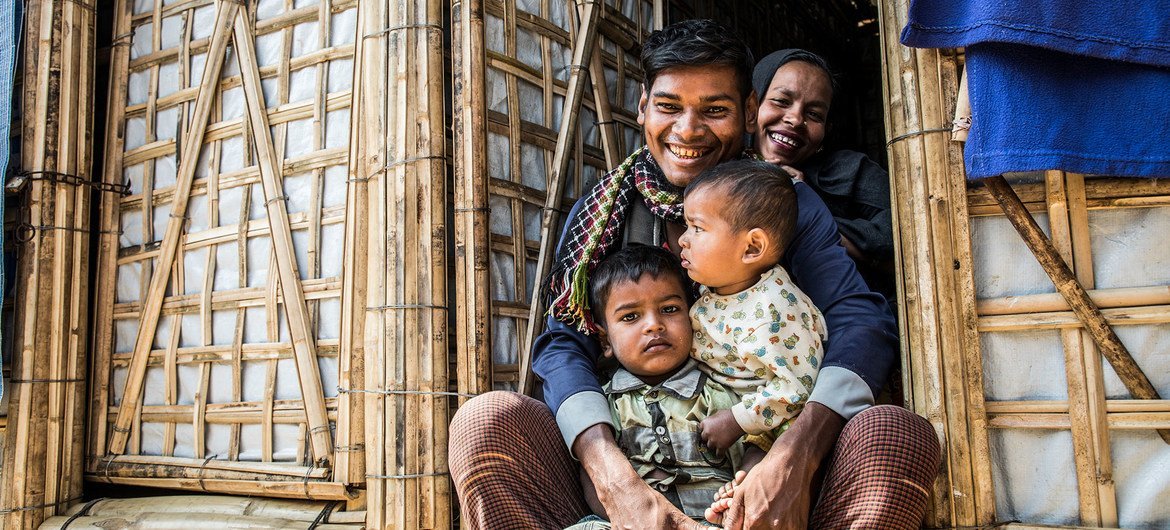








 HUMAN WRONGS WATCH