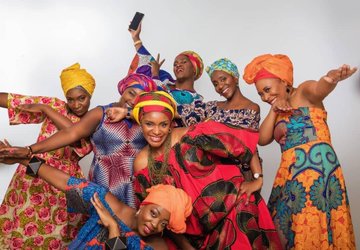
The Teal Sisters, Zambia, survivors and advocates for cervical cancer elimination
(WHO)* — WHO‘s Global Strategy to Accelerate the Elimination of Cervical Cancer, launched today [17 November 2020], outlines three key steps: vaccination, screening and treatment.
Successful implementation of all three could reduce more than 40% of new cases of the disease and 5 million related deaths by 2050.
Black women are mobilising to win seats at the table in this month’s municipal elections – amid death threats and COVID-19 restrictions. Português. Español.
Taina Rosa (left) and Lauana Nara, candidates in this week’s municipal elections, want more Black women in office. | Credit: Dokttor Bhu Bhu and Allan Calisto
13 November 2020 (openDemocracy)* — “When she was murdered, the Black women’s movement dealt with this collective trauma by turning it into institutional political action,” says Ana Carolina Lourenço, co-founder of Mulheres Negras Decidem (Black Women Decide).
ABIDJAN, Côte d’Ivoire, Nov 16 2020 (IPS)* – As a 10 year-old newly arrived in Lagos from England, I recall listening intently to how the Yoruba language – my father’s language – was spoken. I would constantly repeat in my head or verbally repeat what I thought I had heard. I was not always successful. Many times, what would come out of my mouth would throw my friends into fits of laughter.
Victor Oladokun
Yoruba is a tonal language. Some three-letter words pronounced wrongly or with the accent on the wrong syllable, can get you into a whole lot of trouble.
I am indebted to the Canadian Catholic boarding School I attended in Ondo – St. Joseph’s College. At the time, the high school was well known for academic rigor and discipline.
But one thing I’ve come to really appreciate over the years, was the mandatory learning of the Yoruba language in the first two years of a five-year study. In addition, while Mass was in Latin and English, the music also had a generous sprinkling of uplifting Yoruba hymns backed by traditional drums.
As I look back, I owe my love of the Yoruba language to this cultural exposure.
On 14 July 2020, Ruksana Begum fetches water near the raised homestead where her family has been living since floodwaters submerged their house in Amtola Char in Chilmari Upazila, Kurigram, Bangladesh. UN Water
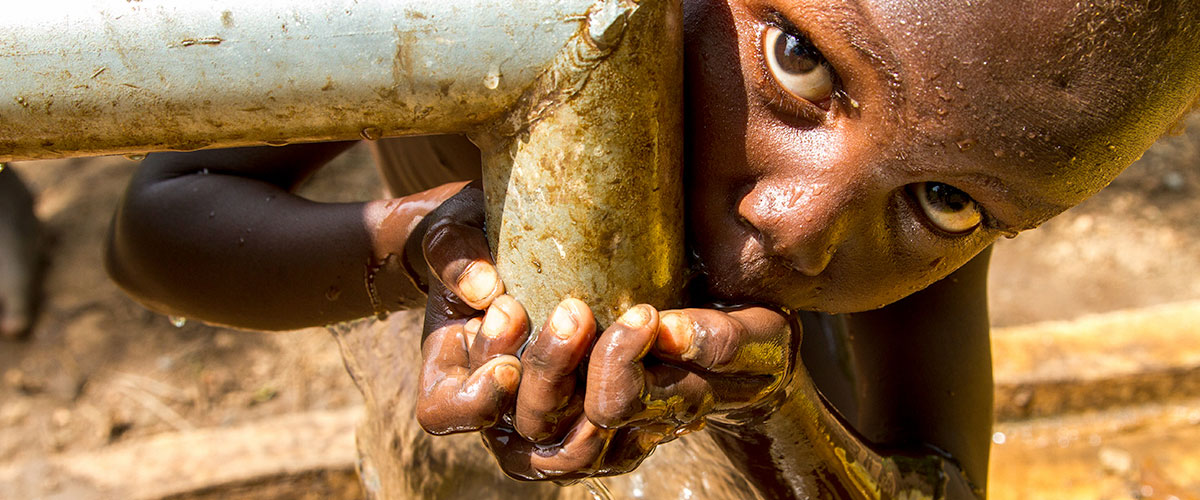
(United Nations)* — Over half of the global population or 4.2 billion people lack safe sanitation and around 297,000 children under five – more than 800 every day – die annually from diarrhoeal diseases due to poor hygiene, poor sanitation or unsafe drinking water.
Without safely managed, sustainable sanitation, people often have no choice but to use unreliable, inadequate toilets or practise open defecation.
Eriam Sheikh,7 year old comes out after using the toilet on stilts or floating toilet built over a drain passing by Rafiq Nagar in Mumbai. PHOTO:UN Water
16 November 2020 (United Nations)* — World Toilet Day celebrates toilets and raises awareness of the 4.2 billion people living without access to safely managed sanitation. It is about taking action to tackle the global sanitation crisis and achieve Sustainable Development Goal 6: water and sanitation for all by 2030.
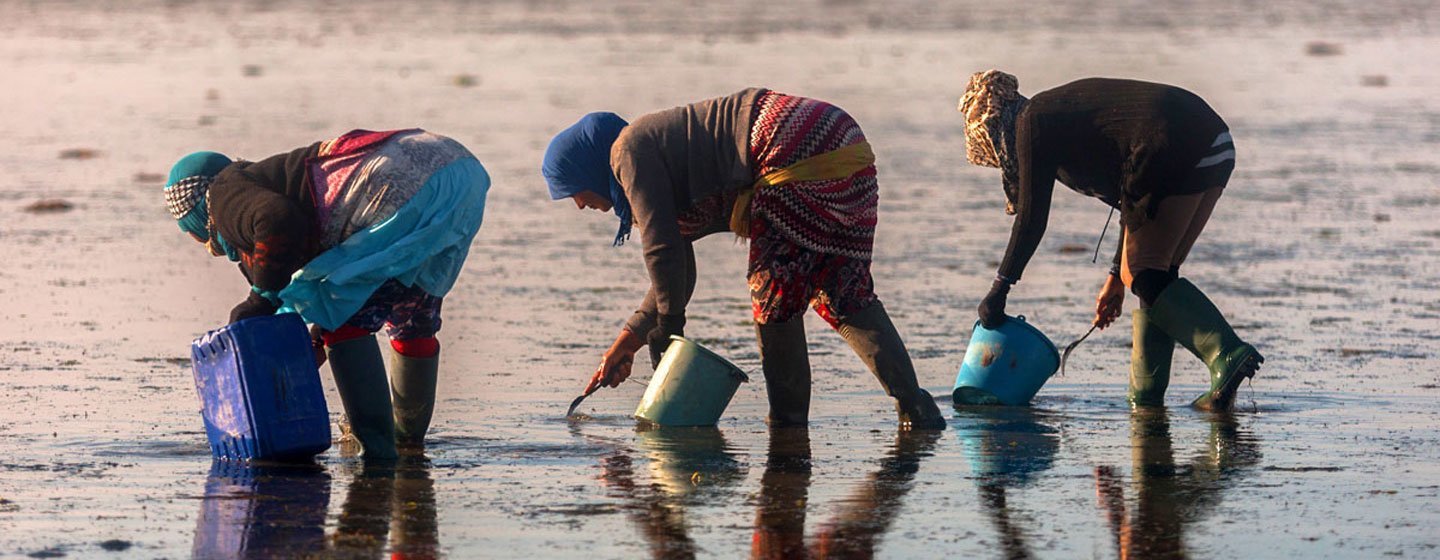
15 November 2020 (UN News)* — With the world population expected to rise to 9.7 billion by 2050, food production will need to keep pace, and experts believe the Ocean can provide much of the sustenance we need. The second story in our two-part series on aquaculture focuses on the opportunities for significantly scaling up fish farming.
Aquaculture, or fish farming, is one of the fastest growing food-production sectors in the world, according to the Food and Agriculture Organization (FAO), reaching an all-time record high of 114.5 million tonnes in 2018.
(United Nations)* — Access to water and sanitation is a precondition to life and a declared human right. Water is vitally important to sustainable development – from health and nutrition, to gender equity and economics.
Over the coming years, our water-related challenges will become more urgent. The increasing demands of a growing population and rapidly developing global economy, combined with the effects of climate change, will exacerbate lack of access to water and sanitation for domestic uses.
“What is tolerance? It is the prerogative of humanity. We are all full of weakness and errors; let us mutually pardon each other our follies – it is the first law of nature.” -Voltaire
Fostering mutual understanding among cultures and peoples
The United Nations is committed to strengthening tolerance by fostering mutual understanding among cultures and peoples.
International Day for Tolerance – 16 November 2020
15 November 2020 (UNESCO)* — “Tolerance is respect, acceptance and appreciation of the rich diversity of our world’s cultures, our forms of expression and ways of being human.” UNESCO’s 1995 Declaration of Principles on Tolerance.
In 1996, the UN General Assembly adopted Resolution 51/95(link is external) proclaiming 16 November as International Day for Tolerance. This action followed the adoption of a Declaration of Principles on Tolerance by UNESCO’s Member States on 16 November 1995. Among other things, the Declaration affirms that tolerance is neither indulgence nor indifference.
Civil war broke out in Ethiopia, the French government doubled down on Islamophobia and Tanzania returned to ‘de-facto one party rule,’ say openDemocracy editors around the world.
Emmanuel Macron with Donald Trump in 2018 | The White House, Public Domain,
13 November 2020 (openDemocracy)* — People across the globe have been mesmerised by the US elections, horrified by Trump’s failure to concede, and entertained by a certain landscape gardening business. I asked my colleagues what we’d all missed in the rest of the world.
 The Teal Sisters, Zambia, survivors and advocates for cervical cancer elimination




 HUMAN WRONGS WATCH