March 2021 (WHO)* — Over 5% of the world’s population – or 430 million people – require rehabilitation to address their ‘disabling’ hearing loss (432 million adults and 34 million children). It is estimated that by 2050 over 700 million people – or one in every ten people – will have disabling hearing loss.
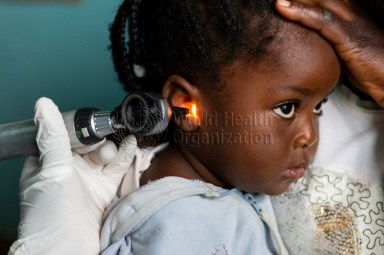
Nurse Carol Sinkende treating Memory Chisenga, 3, for a severe ear infection at the Lukomba Rural Health Centre in Kapiri Mposhii District, Zambia.
‘Disabling’ hearing loss refers to hearing loss greater than 35 decibels (dB) in the better hearing ear. Nearly 80% of people with disabling hearing loss live in low- and middle-income countries. The prevalence of hearing loss increases with age, among those older than 60 years, over 25% are affected by disabling hearing loss.
Geneva (WHO)* — Nearly 2.5 billion people worldwide ─ or 1 in 4 people ─ will be living with some degree of hearing loss by 2050, warns the World Health Organization’s (WHO) first World Report on Hearing, released on 2 March 2021. At least 700 million of these people will require access to ear and hearing care and other rehabilitation services unless action is taken. |
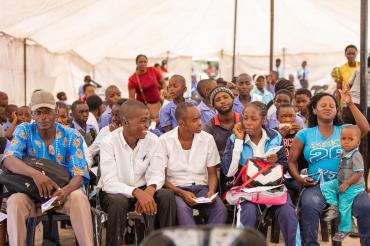
Credit: Starkey Hearing Foundation (Image posted here fromWHO).
“Our ability to hear is precious. Untreated hearing loss can have a devastating impact on people’s ability to communicate, to study and to earn a living. It can also impact on people’s mental health and their ability to sustain relationships,” said Dr Tedros Adhanom Ghebreyesus, WHO Director-General.
(UN News)* — The UN migration agency (IOM) on Monday 8 March 2021 called for “urgent humanitarian access” to an overcrowded migrant detention centre in Yemen’s capital, Sanaa, where a deadly fire reportedly led to multiple deaths at the facility at the weekend.
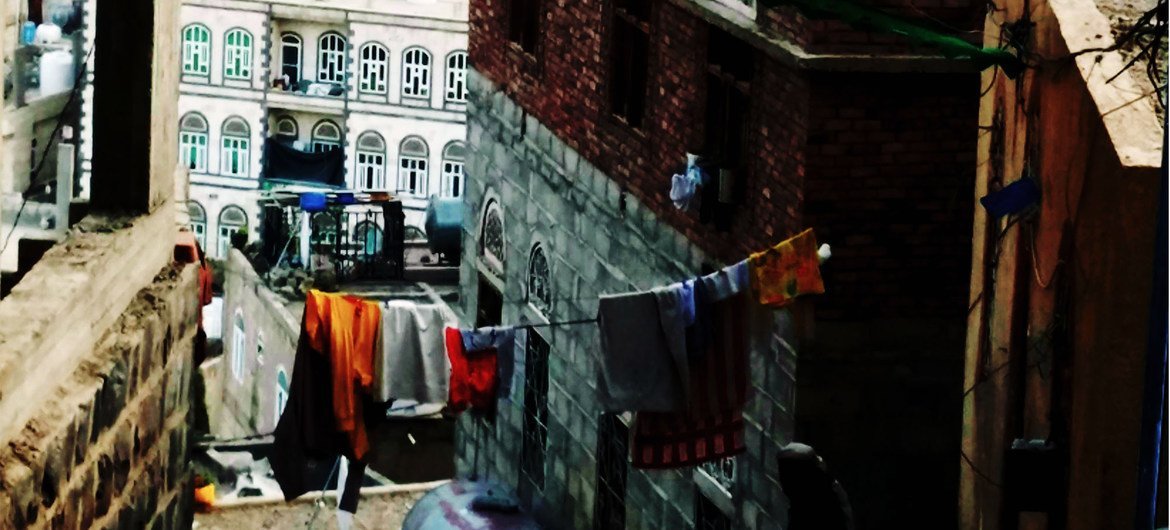
Unsplash/Saif Albadni | A neighbourhood in Sana’a, Yemen. (file)
IOM also called for the release of all migrants from the Immigration, Passports and Naturalization Authority Immigration Holding Facility, where many Ethiopian detainees were being held, along with “renewed commitment to providing safe, predictable movement options for migrants”.
Dozens have reportedly been injured, and IOM tweeted that more than 170 have been treated for injuries “with many remaining in critical condition.” Carmela Godeau, IOM’s Regional Director for the Middle East and North Africa, said “its impact is clearly horrific”.
When climate change dried up their livelihoods — literally — a group of women backed by the World Food Programme turned a traditional craft into a business
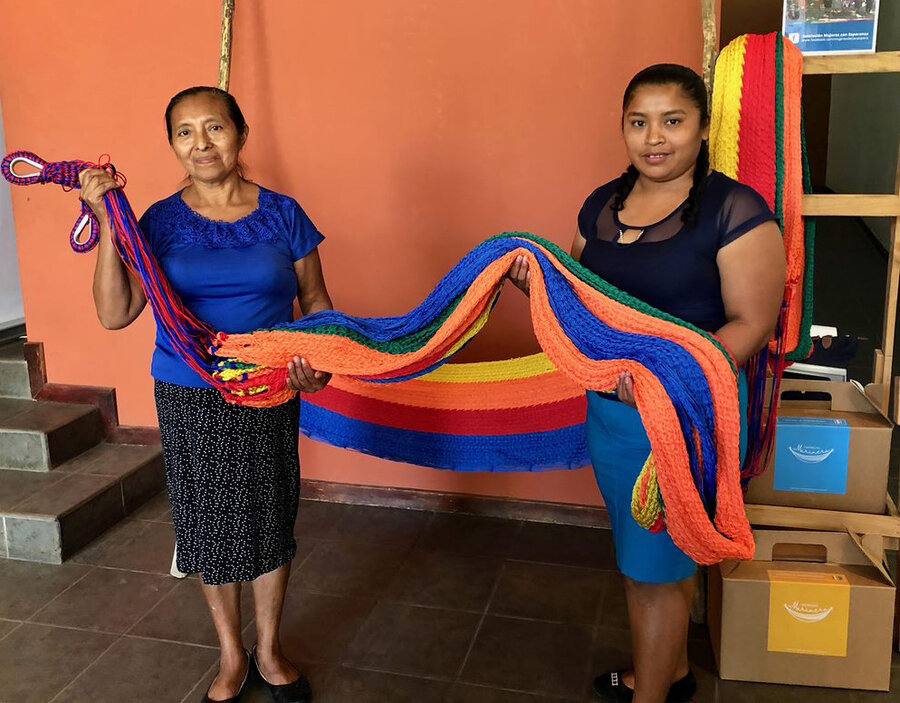
Full swing: Two members of the Women of Hope cooperative in Morazán show off their handiwork — their hammocks have quadrupled in price. Photo: WFP
(WFP)* — “It is a beautiful river — it used to be very large, it had fish, but now the water’s gone down so much,” says Elba. Years of recurring droughts and an erratic climate have taken their toll on the Torola, which courses through the department of Morazán, in eastern El Salvador.
The West-Iran conflict is extremely a-symmetric. It’s the West that historically sought to influence, change, threaten, demand obedience, and punish–with sanctions and more. It liquidated high-level politicians and scholars, shot down a civilian plane, demonised and excluded Iran. Not to speak of giving Saddam Hussein the chemical weapons and the green light for his war on Iran in 1980.
Iran has not done similar harm to the West.
The conflict’s roots go back to 1953 when the US’s CIA and the UK’s MI6 orchestrated a coup d’état, or regime-change, in Tehran and deposed the democratically elected Prime Minister, Dr Mohammad Mossadegh and installed the Shah and made Iran the most militarised country in the region (and gave it nuclear power).
Iran and the West have been on a collision course ever since around various issues. The biggest has been whether or not Iran should be “allowed” to have nuclear weapons. In addition to strong Western political pressure, sanctions and embargo have been imposed since 1987.
8 March 2021 (UN News)* — In Nigeria, where nearly three out of 10 Nigerian women have experienced physical violence by age 15, human rights lawyer Rashidat Mohammed fights for the rights of women, children and other vulnerable groups.
Ms. Mohammed, the only woman to have opened a law firm in the northwestern Nigerian states of Sokoto, Kebbi and Zamfara, is known for fiercely prosecuting rapists and paedophiles, even though such cases are considered highly difficult to win. She spoke to the UN ahead of International Women’s Day which is marked annually on 8 March.
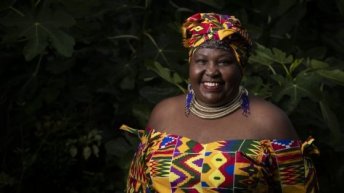
Refugee Rosemary Kariuki has been recognized as Australia’s 2021 ‘Local Hero’ for her work helping other displaced women overcome isolation and gender violence.
8 March 2021 (UNHCR)* — When Rosemary Kariuki arrived in Sydney in 1999 after fleeing violence in Kenya, a year went by without a single neighbour saying hello to her. Alone and longing for the sense of community she had back home, she decided to take action.
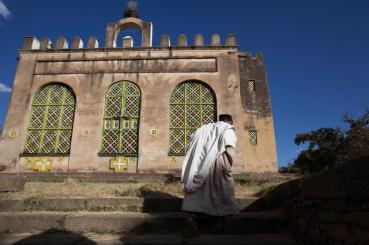
(Nairobi) – Eritrean armed forces massacred scores of civilians, including children as young as 13, in the historic town of Axum in Ethiopia’s Tigray region in November 2020, Human Rights Watch on 5 March 2021 said. The United Nations should urgently establish an independent inquiry into war crimes and possible crimes against humanity in the region to pave the way for accountability, and Ethiopian authorities should grant it full and immediate access.
Dawn was breaking when Akram and around 20 others dragged themselves up the banks of the Glina river, their bodies bruised from beatings by Croatian police officers. Some of them were barefoot and so badly injured they could barely walk.
Akram was back where he had started – Bosnia and Herzegovina – after being pushed back unlawfully from the borders of three European Union countries.
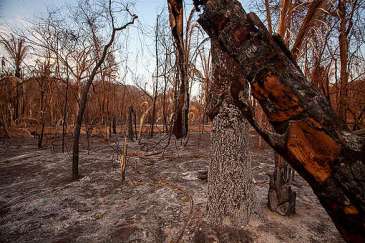
Amsterdam, The Netherlands, 3 March 2021 – The world’s largest meat processor JBS and its leading competitors Marfrig and Minerva slaughtered cattle purchased from ranchers linked to the 2020 fires that destroyed one-third of the world’s largest inland wetland in the Pantanal region of Brazil, according to a new report published by Greenpeace International. The Brazilian meat giants in turn supply Pantanal beef to food giants like McDonald’s, Burger King, French groups Carrefour and Casino, and markets across the world.


 HUMAN WRONGS WATCH