Human Wrongs Watch
By Ileana Exara
(UN News and the UN)* — Member States, UN officials and civil society came together on Wednesday [1 October 2025] to shift the global perspective on ageing, with a call for new policies and action that bring older persons in from the margins of society.
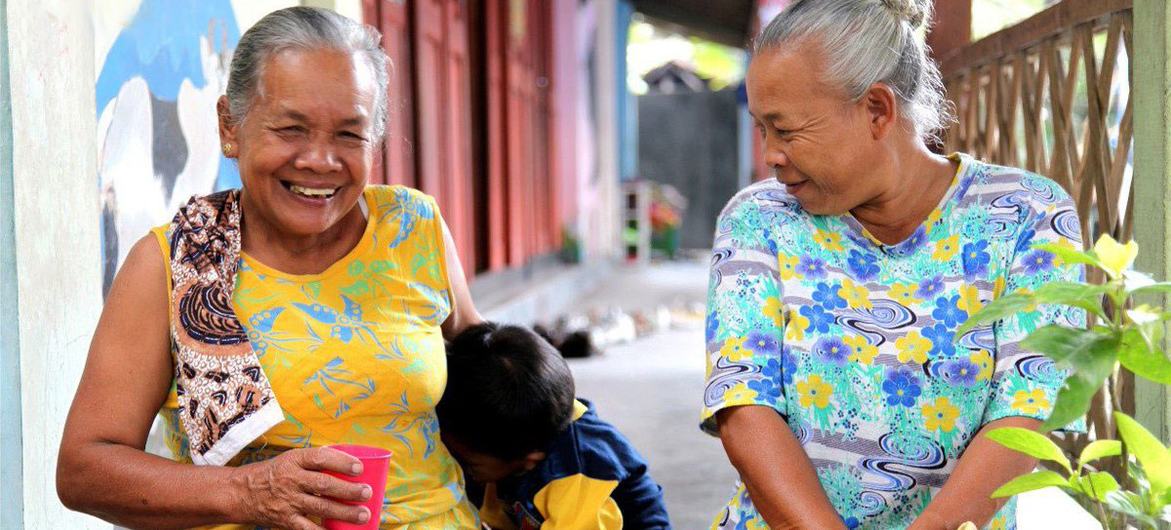
This year’s theme highlighted that older persons must be given agency to play an active role in driving local and global action, aimed at amplifying their voice in policymaking and an effort to build more inclusive societies.
According to the UN International Day of Older Persons:
- The number of people aged 60 years or over has more than doubled, from around 541 million in 1995 to 1.2 billion in 2025 and is projected to reach 2.1 billion by 2050. By 2080, persons aged 65 or older will outnumber children under 18.
- Global life expectancy has reached 73.5 years in 2025, an increase of 8.6 years since 1995. The number of persons aged 80 years or over is growing even faster and is projected to surpass the number of infants by the mid-2030s and reach 265 million.
- As populations age, the demand for healthcare and social support has surged, especially for those with conditions like dementia, a major cause of dependency and disability in older adults. Specialized care is now essential to meet these growing needs.
- Women, who comprise most care recipients and caregivers, contribute roughly 70% of global informal care hours. This is especially true in low- and middle-income countries with limited care services, making women more vulnerable to poverty in old age.
“Older persons carry with them a lifetime of lived experiences, residence and service,” said Ms. Elezaj. “They are the architects of communities, movements and institutions that continue to guide us today. Yet too often, their voices go unheard.”
The world is growing older
The number of people aged 60 or over has more than doubled to 1.2 billion in the past three decades and is projected to reach 2.1 billion by 2050, according to a mission statement by organisers of the event in New York.
With global life expectancy increasing, the number of people aged 80 and over is expected to surpass the number of infants by the mid-2030s.
“We must respond with foresight and action. That means ensuring that the rights of older persons are fully respected, their dignity upheld, and their contributions recognised,” said the UN Secretary-General António Guterres in his message for the day.
‘Urgency’ for an age-inclusive movement
With a smile and an anecdote, professor and Dean Emerita of the Columbia University School of Social Work, Jeanette Takamura, reminded the audience that ageing is a universal phenomenon.
“When I last spoke at this podium my hair was dark brown and I was an inch taller,” she said.
Now, 26 years later, “I am obviously an inch shorter with silver hair,” she added.
In her speech, she emphasised the “urgency of heightened multigenerational outreach and inclusion” to propel forward an age-inclusive, global social movement.
She underlined that social movements are most impactful when they embrace a broad spectrum and emphasised the need for younger and older generations to learn from and about one other.
“The groundwork for a social movement has been laid by all the international years past,” she commended.
“Let us exercise wisdom, be agents of social change and expand our tent to welcome the multiple generations of younger persons we need as partners and co-creators.”
Discover more from HUMAN WRONGS WATCH
Subscribe to get the latest posts sent to your email.
 Baher Kamal
 HUMAN WRONGS WATCH
Leave a comment