29 March 2019 (UNRWA)* — One year after the start in Gaza of demonstrations that became known as The Great March of Return (GMR), scores of people, particularly young men, have been left dead and many others injured, as well as in need of long term medical and psychosocial assistance.
30 March 2019 — While male circumcision is spread mainly among Muslim and Jews communities, and it is apparently accepted by some medical spheres, more than 200 million child-girls have already fallen prey to a dangerous practice, which is carried out in the name of traditions or even religions: Female Genital Mutilation (FGM).
Fatima, 7, sits on a bed in her home in Afar region, Ethiopia. She was subjected to FGM/C when she was 1 year old. Photo: UNICEF/ Holt
Such a human rights violation is not legally typified as a “crime”. Furthermore, it is far from being stopped—in fact some 70 million more girls are right now at risk of being mutilated by the year 2030.
29 March 2019 — A new UN data tool created by the United Nations University’s Centre for Policy Research, has revealed that, worldwide, government aid and policy to end modern slavery is not being effectively directed towards the places where the practice is most prevalent.*
ILO/A. Khemka | Forced labour often means unpaid wages, excessively long work hours without rest days, confiscation of ID documents, little freedom of movement, deception, intimidation and physical or sexual violence. ILO/A. Khemka
.
The release of Modern Slavery Data Stories, a series of easily understandable animated graphics, gives detailed pictures of the ways that factors related to modern slavery have changed over time, and comes during a period when over 40 million people are living in slavery, more than ever before in human history.
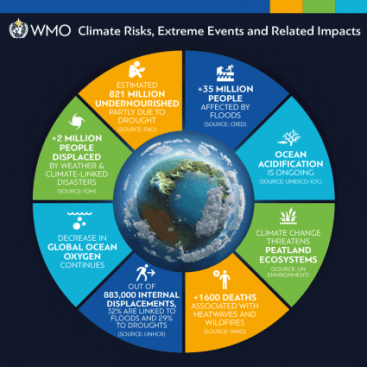
28 March 2019 (WMO–World Meteorological Organization)* — The physical signs and socio-economic impacts of climate change are accelerating as record greenhouse gas concentrations drive global temperatures towards increasingly dangerous levels, according to a new report from the World Meteorological Organization.
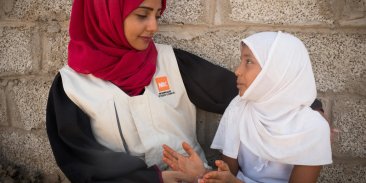
20 March 2019(Norwegian Refugee Council)* — “Every day, I heard stories of how people had been killed. I was particularly afraid during those early morning hours when the airstrikes began.” NRC’s education assistant Malka, 26, tells about delivering aid among landmines and airstrikes in her home country of Yemen.
.
“Education is so important, and that’s why we try to support young Yemenis to create a better life for themselves, and a future,” says Malka Mohammed, 26. As an NRC education assistant in southern Yemen, her job is to make sure children living amid conflict can still access school. Photo: Ingrid Prestetun/NRC
27 Mach 2019 (UN Environment)* — While Member States were adopting a resolution on sustainable infrastructure at the UN Environment Assembly, the Cities Summit reinforced the importance of local action and the need for an integrated approach to urban infrastructure.
The increasing number of natural disasters and dangers linked to climate change, highlighted in a major UN report released on Thursday [28 March 2019], represents “another strong wake-up call” to the world, which must be countered by finding sustainable solutions quickly, UN Secretary-General António Guterres has said.*
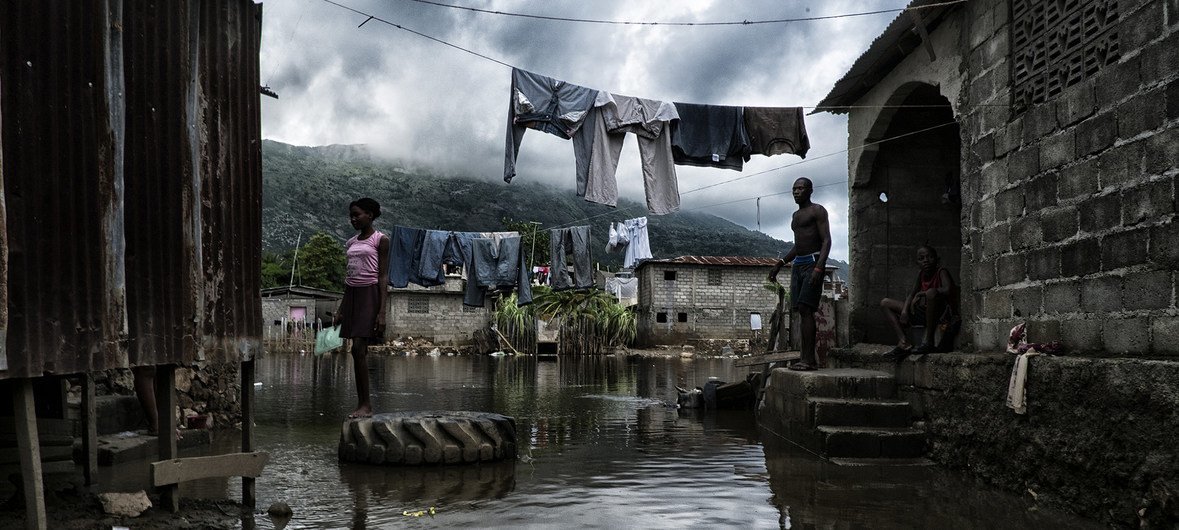
MINUSTAH/Logan Abassi | After days of continuous rains parts of Haiti’s north including Cap Haitian suffered serious flooding leaving more than a dozen dead and thousands homeless. (November 2014)
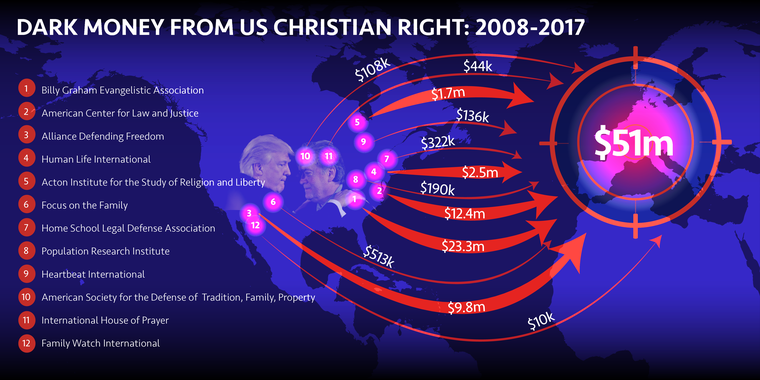
27 March 2019 (openDemocracy)* — US Christian right ‘fundamentalists’ linked to the Trump administration and Steve Bannon are among a dozen American groups that have poured at least $50 million of ‘dark money’ into Europe over the last decade, openDemocracy can reveal today [27 March 2019].
MATUNDO, Mozambique/LILONGWE, Malawi, 25 March 2019 (UNFPA)* – Eleven days ago, Tropical Cyclone Idai made landfall in Mozambique then crossed into Zimbabwe, leaving a wide path of destruction across Eastern Africa. By the time the storm struck, communities throughout Malawi and Mozambique were already reeling from days of fatal downpours and flooding. Humanitarian partners are describing the damage as “massive and horrifying.”
27 March 2019 (Wall Street International)* — Imagine you are in front of a huge and raging bull charging at you, ready to mow you down and destroy you with full force… until somebody press a red button on a small “control” and stop the bull completely in its action.
Well, it has already been achieved by a scientist at Yale in 2013. It was proved that a bull could be “remote controlled” by placing electrodes into its brain that later reacted to electrical stimulations, literally changing the bull’s behaviors and actions.
 Palestinian demonstrators gather in Khuza’a on the Gaza side of the perimeter fence between Israel and the Gaza Strip during the Great March of Return demonstration on 6 April 2018. © 2018 Photo Courtesy of Mahmoud Bassam




 HUMAN WRONGS WATCH