Donors provided lowest aid funding ever in 2025, since country created in 2011.
.
Nadia Zahad, a refugee from the Sudan war stands outside her makeshift home in Renk, South Sudan. (Photo: Herison Philip Osfaldo/Oxfam)
Almost 6 million people – nearly half of the population – in South Sudan are experiencing acute hunger, with little access to clean water or sanitation as funding cuts have stripped away vital humanitarian support just as it is needed the most, Oxfam on 26 November warned.
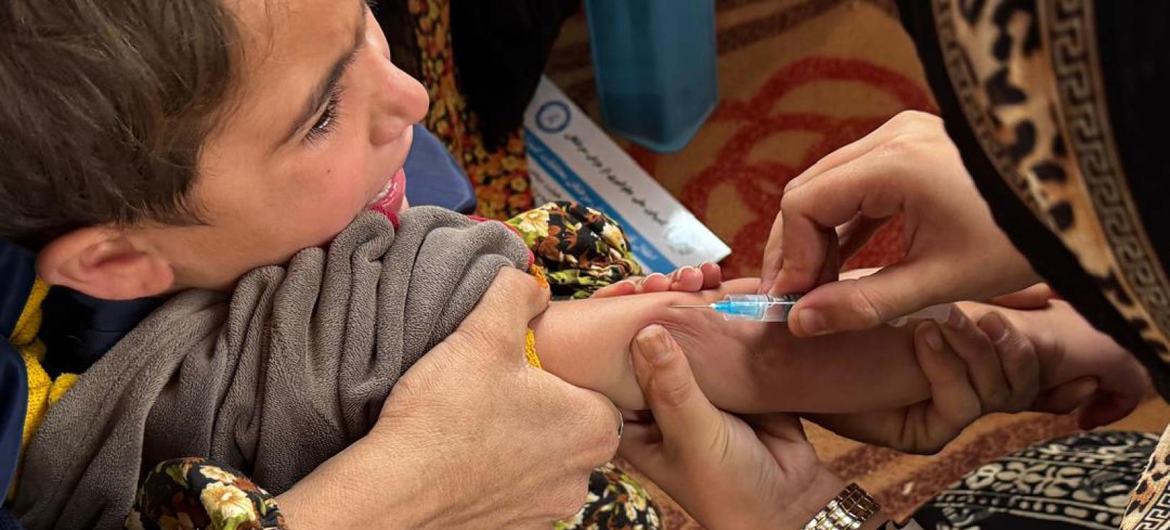
(UN News)* — Measles deaths have dropped by 88 per cent since 2000 – yet an estimated 95,000 people, mostly children, still died from the virus last year, the UN World Health Organization (WHO) warned on Friday [].
Officials said global outbreaks are accelerating as millions of children remain under-immunized following years of COVID-19 pandemic-related disruption.
.
“Measles remains one of the most contagious respiratory viruses,” said Dr. Kate O’Brien, WHO’s Director of Immunization, Vaccines and Biologicals.
(Bangkok) – The Cambodian government is failing to provide support to hundreds of thousands of migrant workers with microfinance debts who returned from Thailandbecause of hostilities in mid-2025,Human Rights Watch on 25 November 2025 said.
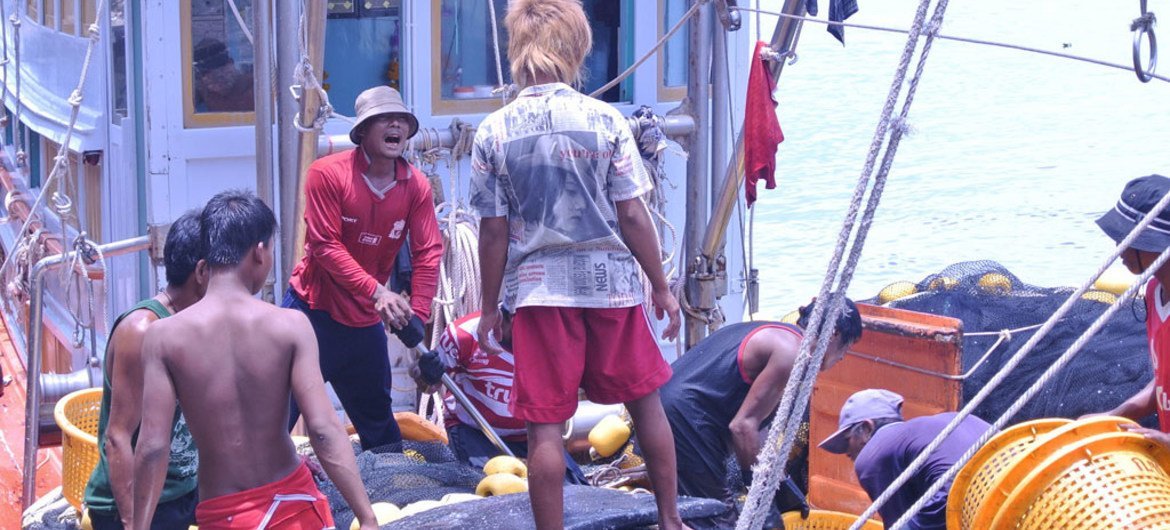
(UN News)* — Soaring inflation, fragile job markets and shrinking access to healthcare and education are pushing millions of people in South and South-East Asia onto risky migration paths, the UN human rights office said on Thursday [], as regional migration reaches historic highs.
.
Photo: ILO | Migrant workers onboard a fishing vessel. While they make an enormous development contribution to both their countries of origin and destination, many migrant workers suffer human and labour rights violations. (file photo)
The office said people across the region are migrating “not by choice, but out of necessity,” driven by the systemic deprivation of economic, social and cultural rights at home.
.
Poverty, unemployment, weak public services and climate stress are eroding livelihoods and leaving millions with few alternatives but to leave.
First-ever regional analysis shows that over half of children in Oceania and around a third in both sub-Saharan Africa and Central and Southern Asia are victims of violence in the home.
UNICEF/UNI790515/Chair
NEW YORK, 26 November 2025 – Children in Oceania, Sub-Saharan Africa, and Central and Southern Asia are most likely to live with a mother who has experienced physical, emotional, or sexual abuse by a partner in the past year, reflecting pervasive inequalities and global patterns of abuse faced by women, according to new UNICEF data.
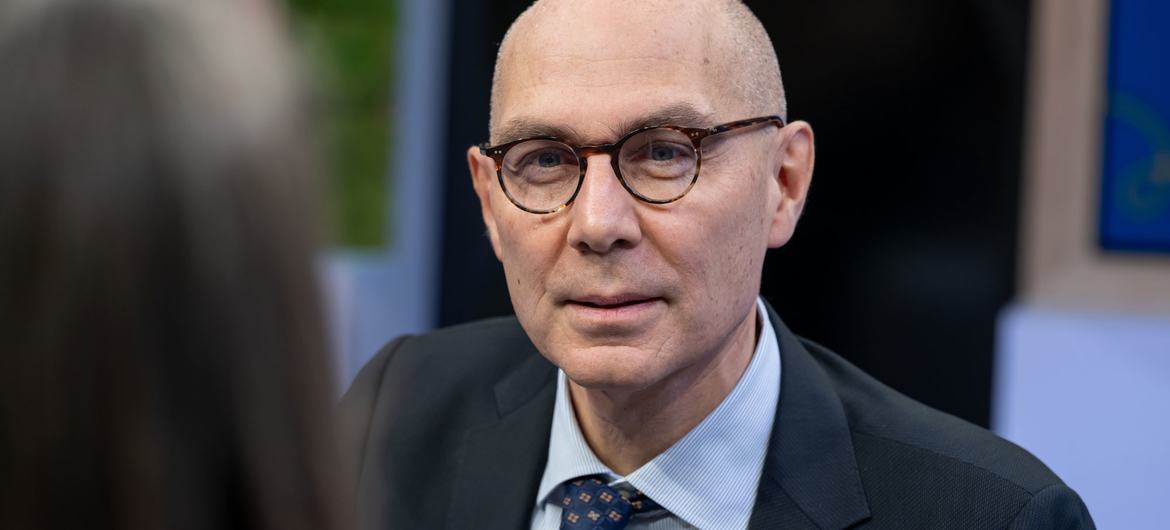
(UN News)* —The UN High Commissioner for Human Rights, Volker Türk, says major companies and fast-moving technologies are creating new challenges for tackling rights abuses – and that governments and businesses need to step up.
UN Photo/Mark Garten | Volker Türk, UN High Commissioner for Human Rights, in an interview with UN News.
Opening the 14th UN Forum on Business and Human Rights in Geneva on Monday [24 November 2025] he said that corporate power has become increasingly influential in terms of social change.
He warned that without proper checks in place, new tools like generative artificial intelligence – or AI – could easily be misused.
“When powerful tech giants introduce new technologies, such as generative artificial intelligence,human rights can be the first casualty,” he said.
–In Belem, Brazil, as the United Nations climate summit (COP30) convened, I marched alongside thousands of activists and Indigenous peoples calling on governments to urgently address climate change and protect human rights.
The Group of Twenty (G20) comprises 19 countries (Argentina, Australia, Brazil, Canada, China, France, Germany, India, Indonesia, Italy, Japan, Republic of Korea, Mexico, Russia, Saudi Arabia, South Africa, Türkiye, United Kingdom and United States) and two regional bodies: the European Union and the African Union (as of 2023).
.
UN Secretary-General Antonio Guterres. Credit: UN Photo/Gustavo Stephan
The G20 members represent around 85% of the global GDP, over 75% of the global trade, and about two-thirds of the world population. South Africa assumed the G20 presidency on December 1 2024 and will step down on November 30 2025. The next G20 summit will be hosted by the US in 2026.
YAOUNDE, Cameroon / BARCELONA, Spain, Nov 24 2025 (IPS)** –– When South Africa assumed the Presidency of the G20, debt sustainability was placed front and centre, with the promise to launch a Cost of Capital Commission.
21 November 2025 — In response to the latest ‘Mutirão’ text, Nafkote Dabi, Oxfam International Climate Policy Lead, said:
.
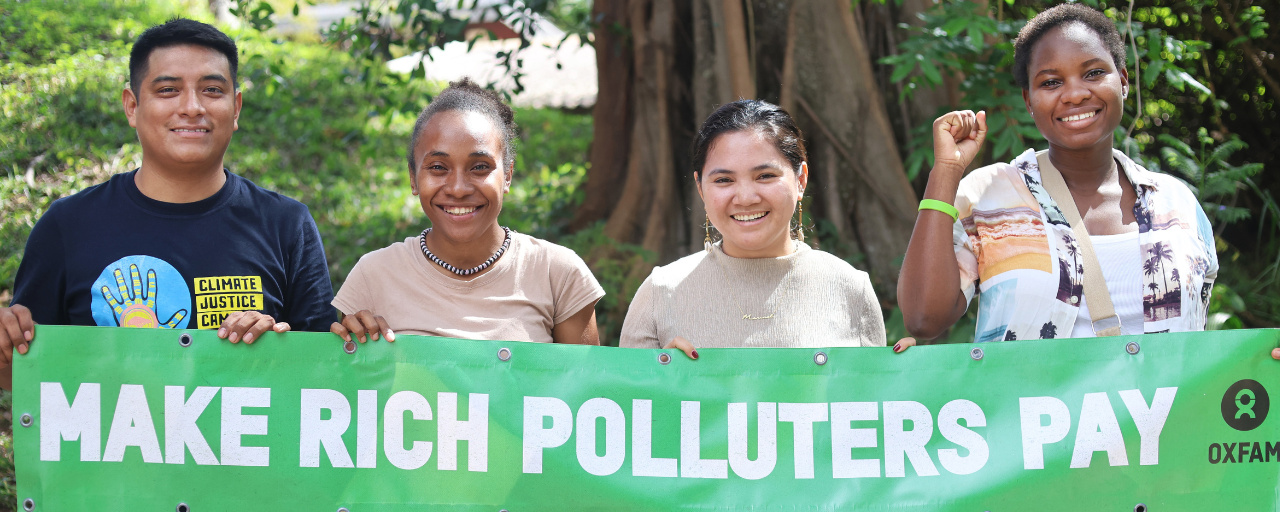
Climate activists Cynthia Houniuhi, Hilda Nakabuye, Marinel Ubaldo, and Pavel Martiarena at the Climate Justice Camp. (Photo: Tim Zijlstra/Oxfam).
“As COP30 races toward its close, world leaders are gambling with the planet — and with the lives of the poorest. Rich countries are treating adaptation finance as a bargaining chip.
Yet adaptation finance is a lifeline for all people, from farmers facing failed harvests to families already uprooted by climate disasters.
Rome –Disasters have inflicted an estimated $3.26 trillion in agricultural losses worldwide over the past 33 years – an average of $99 billion annually, roughly 4 percent of global agricultural GDP – according toa new reportby the Food and Agriculture Organization of the United Nations (FAO).






 HUMAN WRONGS WATCH