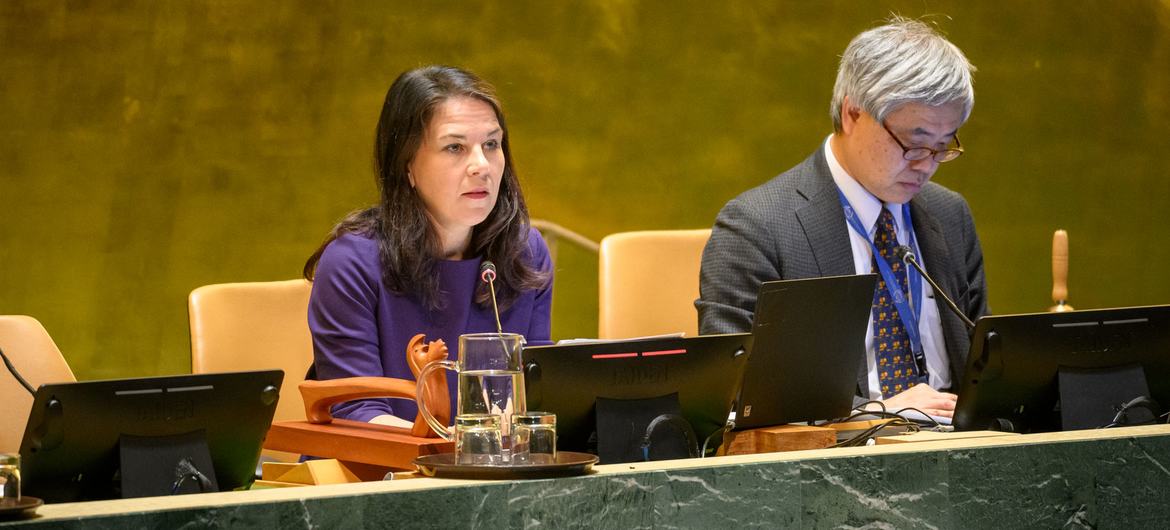
(UN News)* — General Assembly President Annalena Baerbock warned on Thursday [] that repeated deadlock in the Security Council has become the “poster child” for wider global gridlock, undermining trust in multilateral institutions.
UN Photo/Loey Felipe | General Assembly President Annalena Baerbock chairs a meeting on the report of the International Criminal Court.
The UN was founded to “save succeeding generations from the scourge of war,” Ms. Baerbock said, but the world body is struggling to meet that mandate when the Council isblocked by a veto from one of its five permanent members: China, France, Russia, the UK and the US).
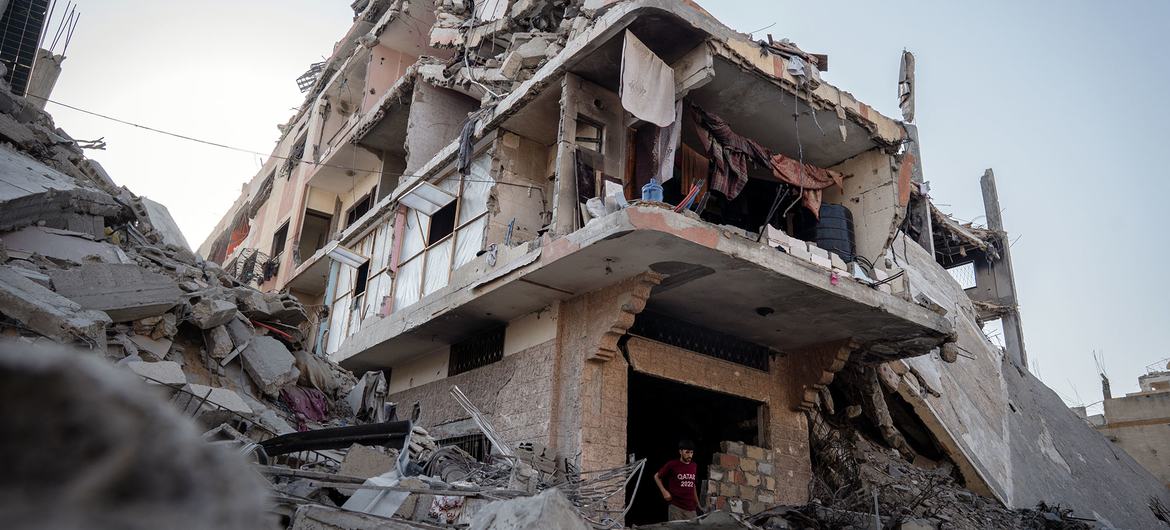
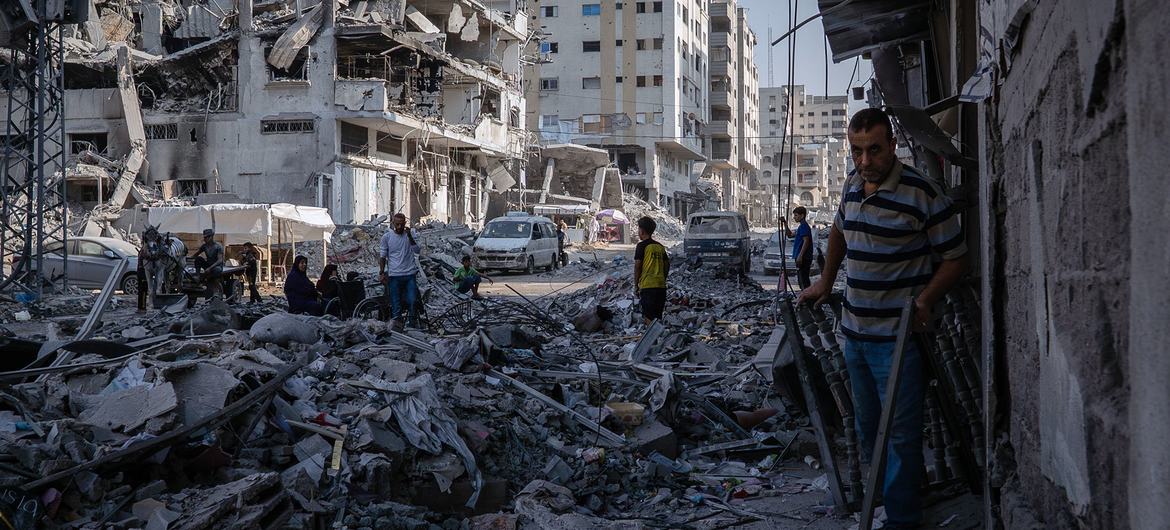
(UN News)* — Living conditions for Gazans – particularly children – are still dire as temperatures drop and families return to bombed-out homes as the fragile ceasefire holds, UN aid workers said on Wednesday [].
Children’s Fund, UNICEF, highlighted the case of six-year-old twins Yahya and Nabeela who were critically injured by an unexploded remnant of war in the north of the wartorn enclave.
They are receiving mental health support from the agency and tarpaulins to protect them from the cold.
When the United Nations Environment Assembly convenes in December, a key topic up for discussion will be the mounting environmental impact of artificial intelligence. Ahead of those talks, here’s a look back a story first published on 21 September 2024.
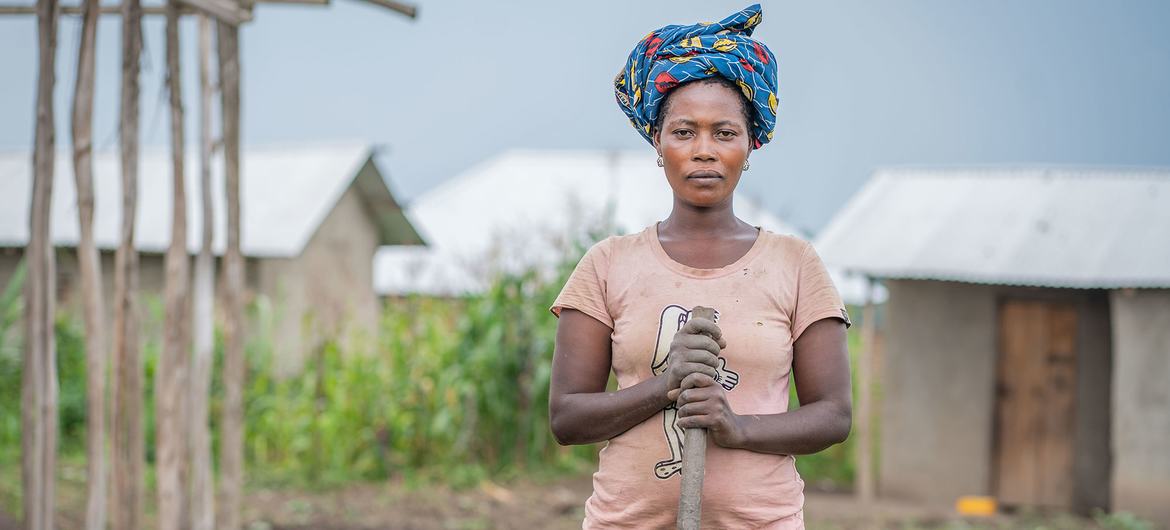
(UN News)* —Ending hunger by 2030 would cost just $93 billion a year — less than one per cent of the $21.9 trillion spent on military budgets over the past decade, according to the UN World Food Programme (WFP).
By 2026 a staggering 318 million people would face crisis levels of hunger or worse, more than double the figure recorded in 2019, the food agency reported in its 2026 Global Outlook.
17 November 2025 — Methane might only stay in the atmosphere for a short time, but its impact is powerful—and cutting it is one of the quickest ways to slow global warming.
Credit: UNEP
The United Nations Environment Programme’s An Eye on Methane: From measurement to momentumreport shows how credible, real-world data is reshaping what governments and companies can do right now.
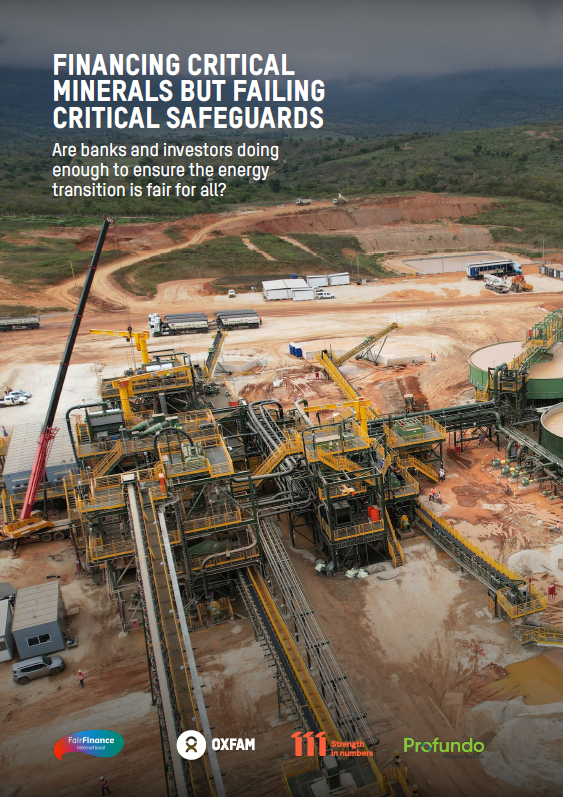
Meanwhile, the EU rolls back and weakens its sustainability and green rules
17 November 2025 — New Oxfam, Fair Finance International and 11.11.11. report exposes how Europe’s banks and investors are blindly investing in mining companies linked to land grabs, pollution and human rights violations.
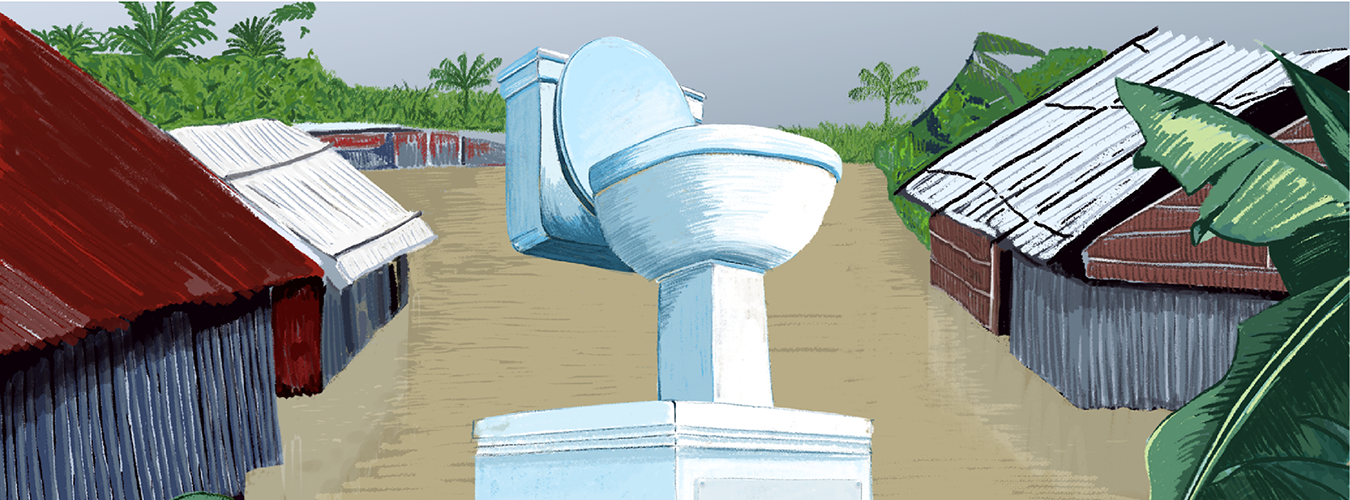
In a changing world, one thing is constant: we’ll always need the toilet.
UN-Water
No matter what lies ahead, we will always rely on sanitation to protect us from diseases and keep our environment clean.
Today, billions of people still live without a safe toilet — with the poorest, especially women and girls, worst affected.
As time goes by, the pressure on sanitation is only increasing. Across the world, ageing infrastructure is failing. Investment hasn’t kept pace with demand.
And climate change is reshaping our world – with glaciers melting, weather worsening, and sea levels rising.
MANILA, 13 November 2025 – More than 1.7 million children are impacted by Super Typhoon Fung-wong, which made landfall in the Philippines on 9th November.
UNICEF/UNI896456/PiojoChildren stay in Reserva Elementary School in Baler, Aurora, as the province braced for the impact of Super Typhoon Uwan (international name: Fung-wong) on November 9, 2025.
The severe storm has wreaked havoc to children’s homes, schools, and access to health services across 16 regions in the archipelago that is already exhausted by multiple climate-related and geophysical shocks this year.
(UN News)* — Images emerged this week of what appear to be mobs of masked Israeli settlers carrying out arson attacks on Palestinian homes and property, the UN human rights office (OHCHR) said on Friday [].




 HUMAN WRONGS WATCH