— That is how experts are describing the findings of a new United Nations Environment Programme (UNEP) report that says that global temperatures are on track to exceed the most ambitious end of the temperature goal of the Paris Agreement.
6 November 2025 — The alarming streak of exceptional temperatures continued in 2025, which is set to be either the second or third warmest year on record, according to the State of the Global Climate Update from the World Meteorological Organization (WMO).
The mean near-surface temperature in January-August 2025 was 1.42 °C ± 0.12 °C above the pre-industrial average, said the WMO report.
UNITED NATIONS, Nov 7 2025 (IPS)* – “Has the world given up fighting climate change?” was a rhetorical question posed recently by the New York Times, perhaps with a degree of sarcasm.
Credit: United Nations
It might look that way, says Christiana Figueres, a founding partner of the nongovernmental organization Global Optimism, “as US president Donald Trump blusters about fossil fuel, Bill Gates prioritizes children’s health over climate protection, and oil and gas companies plan decades of higher production.”
But that’s far from the whole picture, said Figueres, pointing out that the overwhelming majority of the world’s people — 80 to 89%, as Covering Climate Now partner newsrooms have been reporting — want stronger climate action.
(UN News)* — As world leaders gather in Brazil for the COP30 climate summit, UN Secretary-General António Guterres on Thursday ] called for urgent action to drive down global temperatures and keep the 1.5°C goal within reach.
“Every fraction of a degree means more hunger, displacement, and loss – especially for those least responsible. It could push ecosystems past irreversible tipping points, expose billions to unlivable conditions, and amplify threats to peace and security,” Mr. Guterres told leaders in Belém.
Failure to contain global heating amounts to “moral failure and deadly negligence,” he added.
(UN News)* — From Gaza to Ukraine and beyond, conflict has caused widespread death and destruction, but it has also devastated natural resources such as water systems, farmland and forests.
The impacts affect livelihoods, and fuel displacement as well as ongoing instability. Moreover, they can linger even after the fighting has ended.
In Sierra Leone, for example, “when the guns fell silent in 2002 after a decade of conflict, our primary forests and savannahs also fell silent,” deputy foreign minister Francess Piagie Alghali told the UN Security Council on Thursday [].
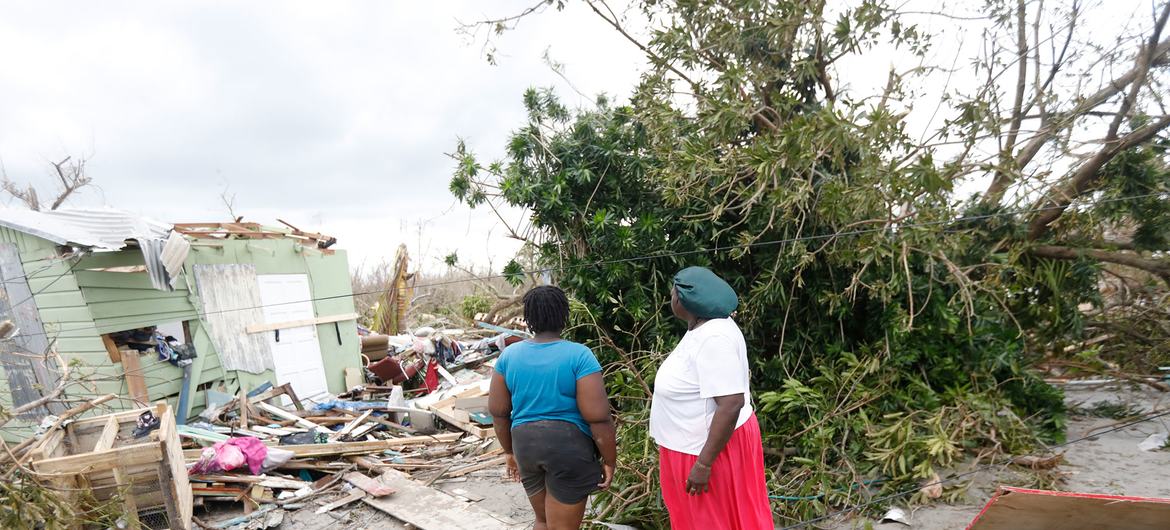
(UN News)* — Around 1.5 million Jamaicans have been impacted by Hurricane Melissa – the worst climate disaster in the Caribbean nation’s history, said the top UN development official in the region on Thursday [].
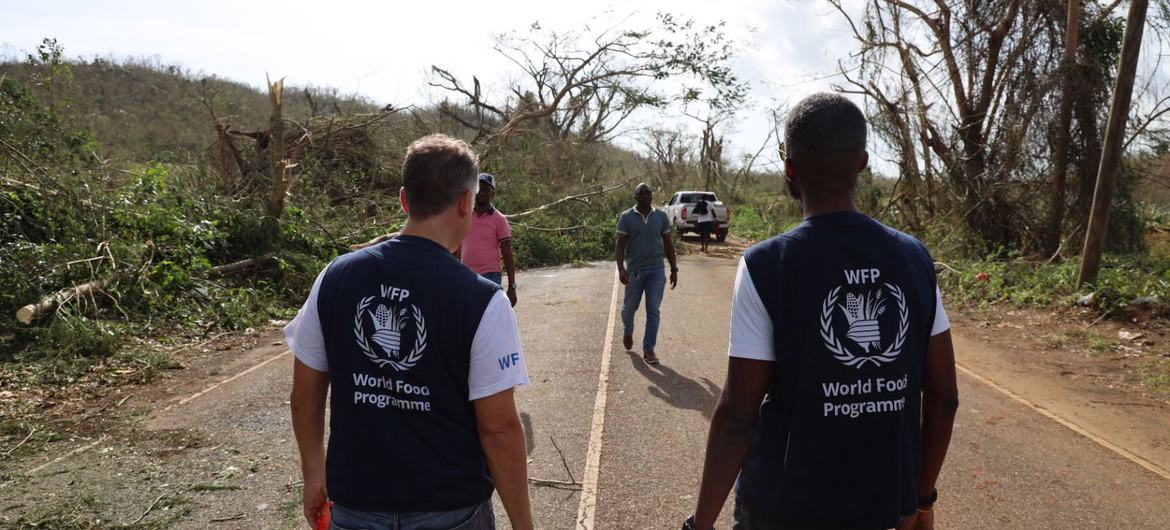
United Nations | Two staff of the World Food Programme assess the logistical challenges of getting aid to isolated communities in Jamaica.
Kishan Khoday, Resident Representative for the UN Development Programme (UNDP), told journalists at UN Headquarters in New York via video conference that initial estimates of the damage added up to 30 per cent of Gross Domestic Product: “a figure that’s expected to rise.”
UNDP estimates that nearly five million metric tonnes of debris have been generated across western Jamaica following the devastating category 5 storm last week – equivalent to roughly 500,000 standard truckloads.
5 November 2025 — On the eve of the UN climate change negotiations in Brazil, a new report delivers a stark assessment of the planet’s climate and an urgent call to step up global action.
.
The 10 New Insights in Climate Sciencehighlights a worrying acceleration in climate change indicators and impacts on health and livelihoods.
It underscores that effective, equitable, and science-informed policy remains the most powerful tool to safeguard both people and the planet.
Decades of progress in protecting the planet’s carbon dioxide-busting forests are at risk as the climate crisis continues to accelerate, UN forestry expertssaid on Wednesday [].
In a call to world leaders to boost protection of forests as they prepare for the COP-30 climate summit in Belem, Brazil, the UN Economic Commission for Europe (UNECE) noted that carbon storage in forests has risen by 11 per cent since 1990.
“The message is clear: what we have achieved over the last three decades is now at serious risk from the climate emergency. We cannot afford to lose the planet’s most powerful natural defence,” said UNECE Executive Secretary Tatiana Molcean.
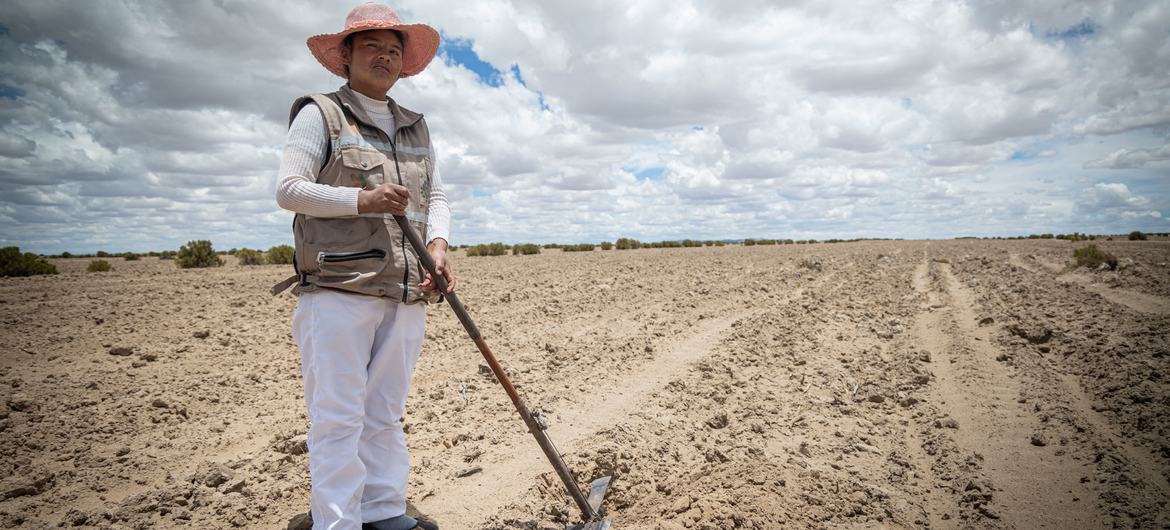
(UN News)* — Roughly 1.7 billion people are living in areas where crop yields are failing due to human-induced land degradation – “a pervasive and silent crisis that is undermining agricultural productivity and threatening ecosystem health worldwide.”
The report delivers a clear message: land degradation is not just an environmental issue – it impacts agricultural productivity, rural livelihoods and food security,” the UN agency said.
Land is the core of agrifood systems, supporting over 95 percent of food production in addition to providing essential ecosystem services that sustain life on the planet.
(UN News)* —Some six million people have been affected by the category five hurricane which swept across the Caribbean last week, prompting UN agencies to scale up relief operations to safeguard livelihoods and reduce further losses.
Haiti, Cuba and Jamaica all suffered extensive damage and loss of life as a result of Hurricane Melissa.
Speaking from the Jamaican capital, Kingston, the World Food Programme’s (WFP) Alexis Masciarelli told UN News that “our priority right now is to reach the most isolated communities.”
Now, WFP has launched emergency food distributions for the hardest-hit families, and additional relief supplies are scheduled to arrive in the coming days, the agency reported.



 HUMAN WRONGS WATCH