02/05/2020
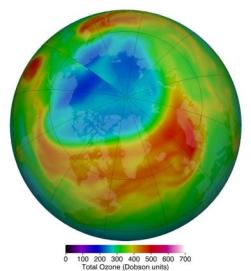
1 May 2020 (WMO)* — Depletion of the ozone layer, the shield that protects life on Earth from harmful levels of ultraviolet radiation, reached an unprecedented level over large parts of the Arctic this spring. This phenomenon was caused by the continuing presence of ozone-depleting substances in the atmosphere and a very cold winter in the stratosphere (the layer of the atmosphere between around 10 km and round 50 km altitude).
read more »
Posted in Africa, Asia, Latin America & Caribbean, Market Lords, Middle East, Migrants and Refugees, Mother Earth, Others-USA-Europe-etc., The Peoples |
Leave a Comment »
02/05/2020
From predation to saving the life of all the inhabitants of the Earth
Three scourges are devastating the life of the earth’s inhabitants. | Image from Wall Street International.
- The COVID-19 pandemic (more than 230,000 deaths). The explosion and spread of the coronavirus are, according to almost all scientists, closely linked, among other things, to the environmental devastation of recent decades and the deterioration of hygiene and health conditions in most countries of the world.
read more »
Posted in Africa, Asia, Latin America & Caribbean, Market Lords, Middle East, Migrants and Refugees, Mother Earth, Others-USA-Europe-etc., The Peoples, War Lords |
Leave a Comment »
02/05/2020
KATHMANDU, May 1 2020 (IPS)* – This year’s World Press Freedom Day on 3 May falls during COVID-19 lockdowns in many of our countries. Restriction on movement means journalists all over the world are facing obstacles in getting interviews and data, and verifying stories before publishing.

In addition, the global pandemic has been used by many governments to control not just the people’s movement but also their right to information. Journalists have been intimidated or attacked, and photojournalists and videographers on the frontlines often risk getting infected while documenting stories.
read more »
Posted in Africa, Asia, Latin America & Caribbean, Market Lords, Middle East, Migrants and Refugees, Mother Earth, Others-USA-Europe-etc., The Peoples, War Lords |
Leave a Comment »
02/05/2020
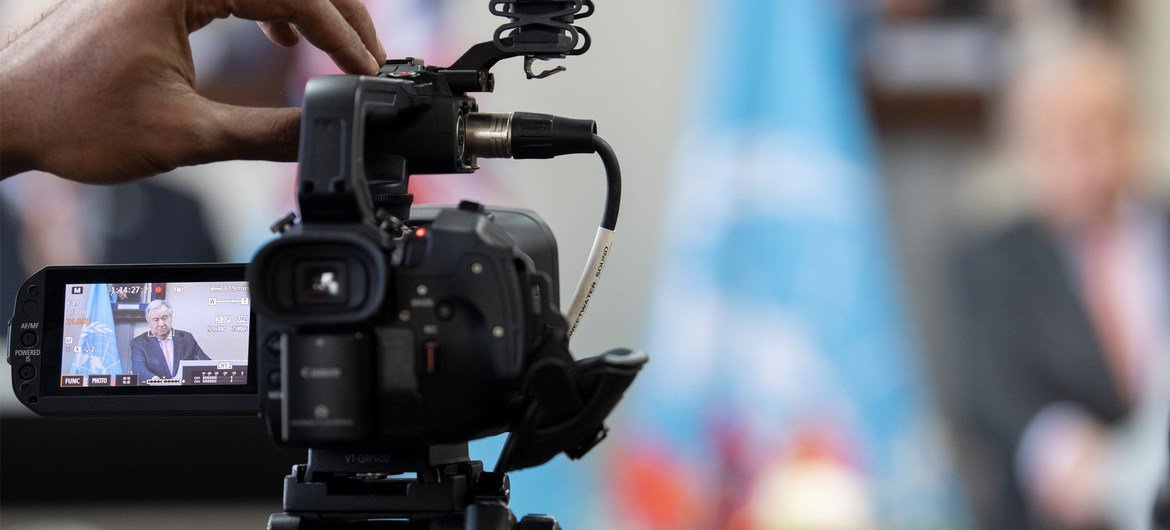
1 May 2020 (UN News)* — The UN Secretary-General is calling for greater protection of journalists who are providing the “antidote” to what he has characterized as a pandemic of misinformation surrounding the COVID-19 crisis.
UN Photo/Mark Garten | UN Secretary-General António Guterres, on screen, holds a virtual press conference (file photo).
António Guterres made the appeal in a video message for
World Press Freedom Day, observed this coming Sunday
[3 April 2020], in which he underscored the crucial role media has in helping people make informed decisions.
Posted in Africa, Asia, Latin America & Caribbean, Market Lords, Middle East, Migrants and Refugees, Mother Earth, Others-USA-Europe-etc., The Peoples, War Lords |
Leave a Comment »
01/05/2020
KUALA LUMPUR, Malaysia, Apr 29 2020 (IPS)* – May 3rd marks World Press Freedom Day around the world. During this COVID-19 pandemic, a robust media environment is critical: access to life-saving information is key in the fight against the virus. As governments impose a range of restrictions in attempts to curb the pandemic, journalists help hold authorities to account by providing analysis, engaging in debate about government actions, and creating a space for dialogue about the future we all hope to see.
read more »
Posted in Africa, Asia, Latin America & Caribbean, Market Lords, Middle East, Others-USA-Europe-etc., The Peoples, War Lords |
Leave a Comment »
01/05/2020
Journalists in the line of duty. Photo credits: left – UNESCO; right – UN Photo/Evan Schneider.
.
UNESCO is launching a
global campaign on media and social media channels, with a focus on “
Journalism without Fear or Favour” in an increasingly complex media landscape. Join them on May 3rd for an interactive free livestreamed event to celebrate World Press Freedom Day 2020: ”
Difference Day Conference 2020.”
Posted in Africa, Asia, Latin America & Caribbean, Market Lords, Middle East, Migrants and Refugees, Mother Earth, Others-USA-Europe-etc., The Peoples, War Lords |
1 Comment »
01/05/2020
(teleSUR)* – On Thursday [30 April 2020], the Labor Department reported that the business shutdowns and stay-at-home orders caused by the pandemic have led 30 million Americans to file for unemployment insurance.
Some, among the millions of American workers laid off because of the COVID-19, are beginning to face a tough choice — return to work and risk infection, or stay home and risk losing unemployment payments, The Associated Press reported Thursday [30 April 2020].
read more »
Posted in Africa, Asia, Latin America & Caribbean, Market Lords, Middle East, Migrants and Refugees, Others-USA-Europe-etc., The Peoples |
Leave a Comment »
01/05/2020
(UN News)* — The United States must urgently lift its blockade on Cuba to save lives amid the expanding COVID-19 crisis, UN human rights experts stressed on Thursday [30 April 2020], emphasizing that the more than six-decades-old sanctions are impeding the supply of medicine, medical equipment, food and other goods essential to surviving the pandemic.

UN Cuba | Health personnel from the Pedro Kourí Institute of Tropical Medicine in Havana, Cuba
Posted in Africa, Asia, Latin America & Caribbean, Market Lords, Middle East, Others-USA-Europe-etc., The Peoples, War Lords |
1 Comment »
30/04/2020
28 April 2020 (Wall Street International)* — Whenever there is confusion and panic as with the Coronavirus pandemic, there will be those trying to profit from it. Sadly, the division in many countries has only be emphasized by COVID-19, so it has been easier for fraudsters to exploit all the confusion out there. Hence, in these times of uncertainty, we connect constantly to our social networks, mainly to watch how this disease evolves and while looking for correct and accurate information, we can be dangerously exposed to fake news.
 Stay cautious and do not let the bad guys control your mind with the powers of the Dark Web | Image from Wall Street International.
Posted in Africa, Asia, Latin America & Caribbean, Market Lords, Middle East, Migrants and Refugees, Mother Earth, Others-USA-Europe-etc., The Peoples, War Lords |
1 Comment »
30/04/2020
(UN News)* — A third of all nations lack laws to protect their citizen’s online data and privacy, despite an 11 per cent uptick in the global adoption of data protection and privacy legislation since 2015, the United Nations’ trade, investment and development body (UNCTAD) said on Wednesday [29 April 2020].
Unsplash/Markus Spiske | Code displayed on a computer monitor
Reporting the results of a fresh survey on the adoption of cyberlaws around the world, UNCTAD said that the vulnerability is even more stark among least developing countries, amounting to 43 per cent.
The share is highest in Europe at 96 per cent, followed by 69 per cent in the Americas, 57 per cent in Asia and the Pacific, and 50 per cent in Africa.
read more »
Posted in Africa, Asia, Latin America & Caribbean, Market Lords, Migrants and Refugees, Others-USA-Europe-etc., The Peoples, War Lords |
Leave a Comment »




 HUMAN WRONGS WATCH