4 December 2019 (UN Environment)* — Soil’s contribution to climate change, through the oxidation of soil carbon, is important, and soils—and thus agriculture—can play a major role in mitigating climate change.
Protecting people’s health from climate change dangers such as heat stress, storms and tsunamis has never been more important, yet most countries are doing too little about it, the World Health Organization (WHO) said on Tuesday [3 December 2019]. (*).
In its first global review of more than 100 countries, the UN agency found that while around half of them have developed a strategy on the issue, fewer than one in five is spending enough to implement all of their commitments.
UNITED NATIONS, Dec 3 2019 (IPS)* – The greatest single climate-induced threat facing the world’s 44 small island developing states (SIDS) is rising sea waters which could obliterate some of the low-lying states, including Maldives, Marshall Islands, Kiribati, Nauru, Solomon Islands, Tuvalu, Palau and Micronesia.
Credit: UNICEF
The Marshall Islands alone, says the UN, has seen more than a third of its population move abroad in the last 15-20 years. Many have moved for work, healthcare and education – but climate change is now threatening those who have chosen to stay.
2 December 2019 (UN News)* — A green economy is “not one to be feared but an opportunity to be embraced”, UN Secretary-General António Guterres said on Monday,[2 December 2019 in a keynote speech to delegates at the opening of the COP25 UN climate conference in Madrid on Monday .
Mr. Guterres outlined the work programme for what will be a busy two-week event covering multiple aspects of the climate crisis, including capacity-building, deforestation, indigenous peoples, cities, finance, technology, and gender.
3 December 2019 (World Health Organization)* — Safeguarding human health from climate change impacts is more urgent than ever, yet most countries are not acting fully on their own plans to achieve this, according to the first global snapshot of progress on climate change and health.
Madrid, 3 December 2019 (World Meteorological Organization)*— The year 2019 concludes a decade of exceptional global heat, retreating ice and record sea levels driven by greenhouse gases from human activities. Average temperatures for the five-year (2015-2019) and ten-year (2010-2019) periods are almost certain to be the highest on record. 2019 is on course to be the second or third warmest year on record, according to the World Meteorological Organization..
We give our children loving care, but it makes no sense to do so unless we do everything in our power to give them a future world in which they can survive. We also have a duty to our grandchildren, and to all future generations.
Plants, which make up 80 percent of the food we eat, and produce 98 percent of the oxygen we breathe, are “under constant and increasing threat from pests and diseases”, the UN food agency, FAO, warned on Tuesday [2 December 2019], at an event at the agency’s headquarters in Rome, to designate 2020 as the International Year of Plant Health.(*).
.
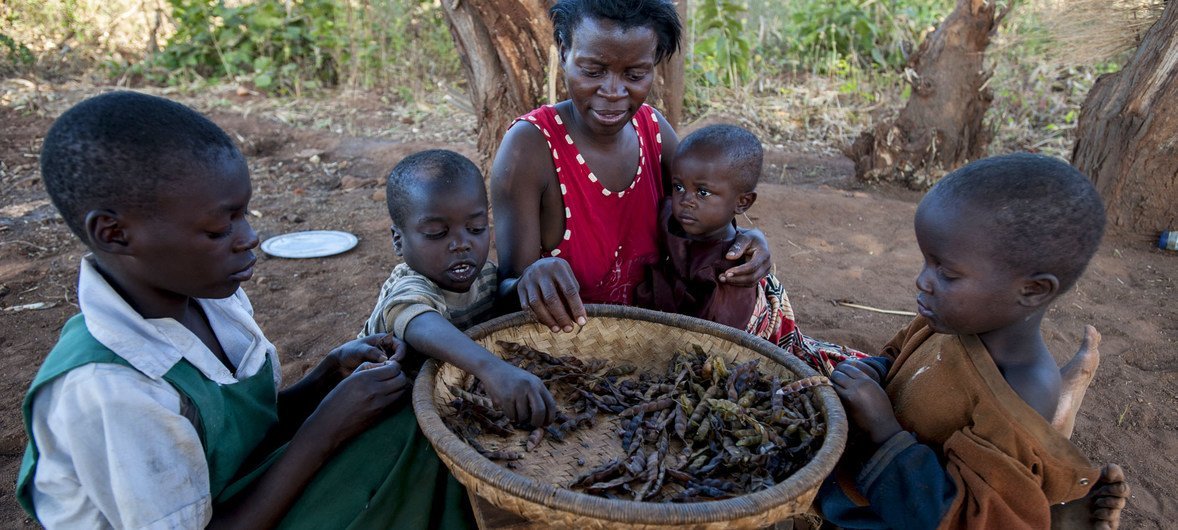
UNICEF/Sebastian Rich | A family eats a daily meal of dried peas at home in Balaka district in Malawi. (June 2016)
Geneva, 30 November 2019 (UN Environment)* — Parties to the Minamata Convention decided to move forward with their agreement in phasing out the use of products which contain mercury and to promote alternatives at the Third Conference of the Parties, that closed today in Geneva after a one-week meeting from 26 to 29 November 2019.
2 December 2019 (UN Environment)* — When Omar Itani couldn’t find anywhere to dispose his second-hand clothes, he set a chain of events in motion that he could never have imagined.
.
Making the decision not to contribute to Lebanon’s landfill, he instead decided to set up his own solution. The social enterprise FabricAID was born.
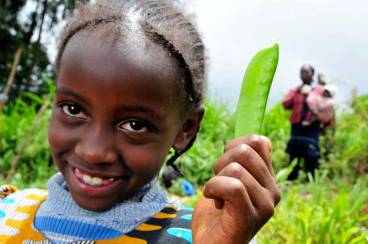 Photo by Neil Palmer, CIAT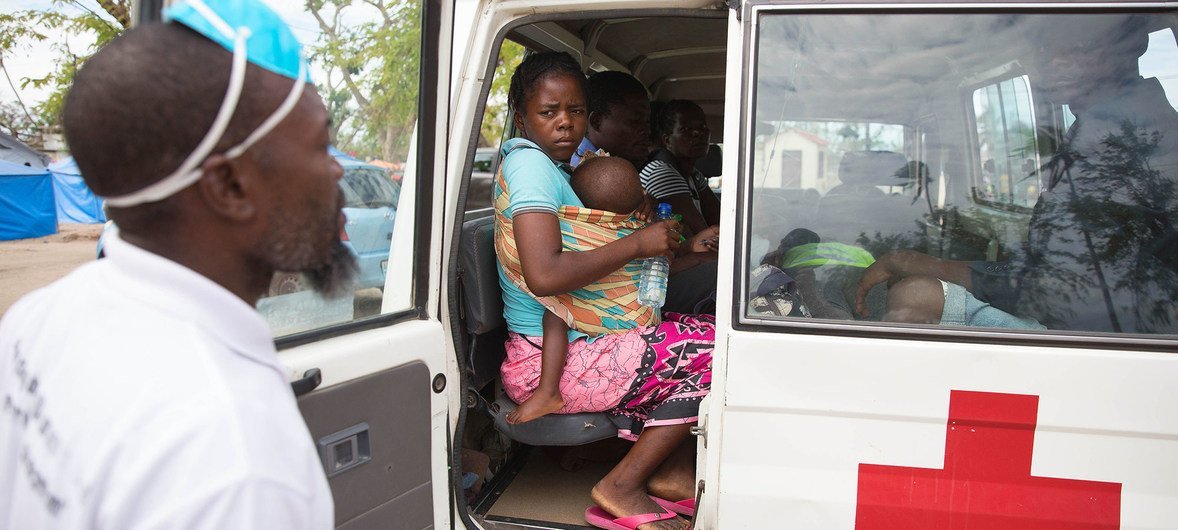



 HUMAN WRONGS WATCH