At least half of the world’s population still do not have full coverage of essential health services.
About 100 million people are still being pushed into extreme poverty (defined as living on 1.90 USD or less a day) because they have to pay for health care.
Over 800 million people (almost 12% of the world’s population) spent at least 10% of their household budgets to pay for health care.
All UN Member States have agreed to try to achieve universal health coverage (UHC) by 2030, as part of the Sustainable Development Goals.
What is universal health coverage (UHC)?
7 April 2019 (WHO)* — UHC means that all individuals and communities receive the health services they need without suffering financial hardship.
Where women can access health services, maternal deaths decrease, lengthening women’s life expectancy.
In many circumstances, men access health care less than women.
Men are much more likely to die from preventable and treatable noncommunicable diseases and road traffic accidents.
18.1-year gap in life expectancy between poorest and richest countries.
4 April 2019 (WHO)* — Women outlive men everywhere in the world – particularly in wealthy countries. The World Health Statistics 2019 – disaggregated by sex for the first time – explains why.
“Breaking down data by age, sex and income group is vital for understanding who is being left behind and why,” said Dr Tedros Adhanom Ghebreyesus, WHO Director-General.
“Behind every number in the World Health Statistics is a person, a family, a community or a nation. Our task is to use these data to make evidence-based policy decisions that move us closer to a healthier, safer, fairer world for everyone.”
GENEVA, 6 April 2019 (WHO)* — WHO was born on 7 April 1948 with a clear and ambitious vision: a world in which all people enjoy the highest attainable standard of health. Although we have made enormous progress in recent years against some of the world’s leading causes of death and disease, we still have a lot of work to do to realize that vision.
WHO/P. Albouy | Dr Tedros, WHO Director-General, among the supporters, forming the solidarity chain in Geneva on 5 April 2019 as part of the World Health Day celebrations in advocating for universal health coverage.
4 April 2019 (Wall Street International)* — Humanity’s Last Stand1 by Nicanor Perlas is a very important book about a very important topic, and which is indeed the subject of this year’s Mystics and Scientists conference on technology, spirituality and well-being, with the subtitle of ‘The Possible Human in a Digital Age’.
The International Plant Protection Convention adopts standards on fumigation and six pests, including Xylella fastidiosa and the oriental fruit fly.
A technician checks olives for pests’ infestations in Italy where Xylella fastidiosa has led to the decline of 180,000 hectares of olive groves.| Photo from FAO.
ROME, 3 April 2019 (FAO)* – The body charged with keeping plant pests and diseases at bay and trade in plants safe has adopted new international measures to prevent pests from crossing borders and spreading.
Ukraine is one of the most mine-affected countries in the world, limiting freedom of movement and posing a serious threat to civilians crossing the contact line. | Español | Français
3 April 2019 (UNHCR)* — Sheltering in the basement of his family home in eastern Ukraine, Volodymyr Zayika, 71, was in the dark. Shelling had severed the electricity supply. Venturing out to check on some electrical wires, he felt his foot snag on a wire.
“There was a flash,” he recalls. “Something hissed on my right. Then there was a blast.”
The path towards achieving the 2030 Agenda for Sustainable Development must be “clear of landmines, explosive remnants of war and improvised explosive devices (IEDs)”, the United Nations Secretary-General said on Thursday [4 April 2019], International Mine Awareness Day.
.
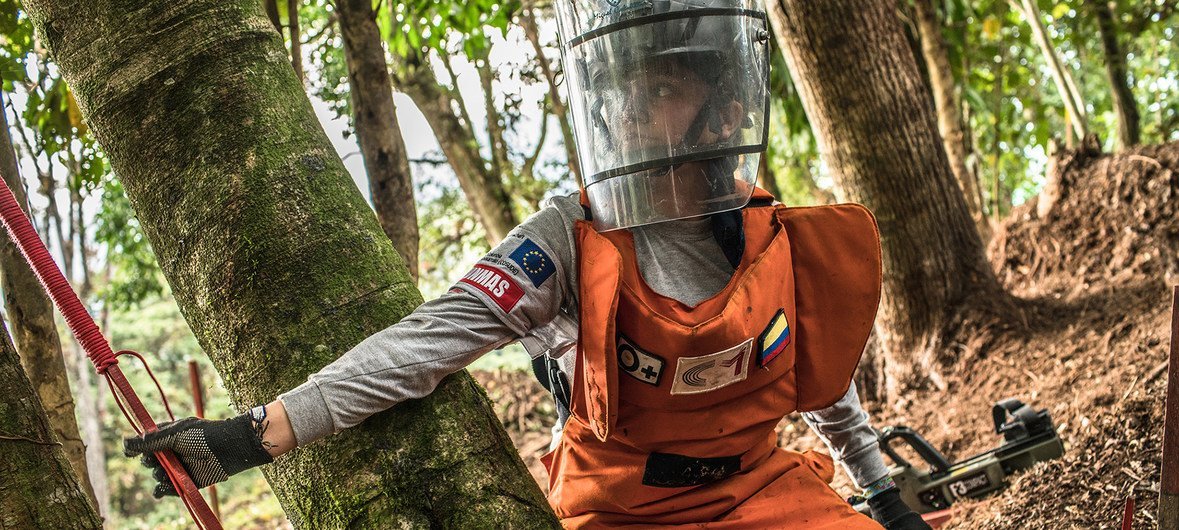
UNMAS/Juan Arredondo |Through the 2016 peace agreement between the Government of Colombia and the Revolutionary Armed Forces of Colombia (FARC), the Colombian mine action sector has expanded significantly providing new employment opportunities for both men and women.
A major new UN-led report, involving more than 60 international organizations, warns that a comprehensive overhaul of the world’s financial system is necessary, if governments are to honour commitments to tackle critical issues, such as combatting climate change and eradicating poverty by 2030.
.
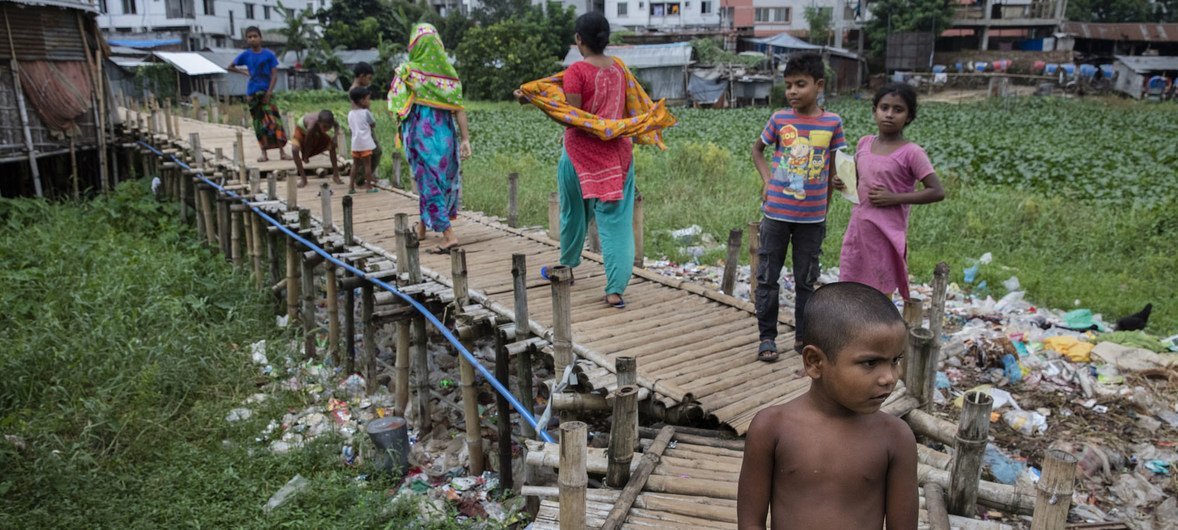
World Bank/ Dominic Chavez | Residents living in a slum in Dhaka, the capital of Bangladesh. | Photo from UN News.
Average life-expectancy globally has increased by five-and-a-half years since the turn of the century, and women outlive men “everywhere”, the World Health Organization (WHO) said on Thursday [4 April 2019].
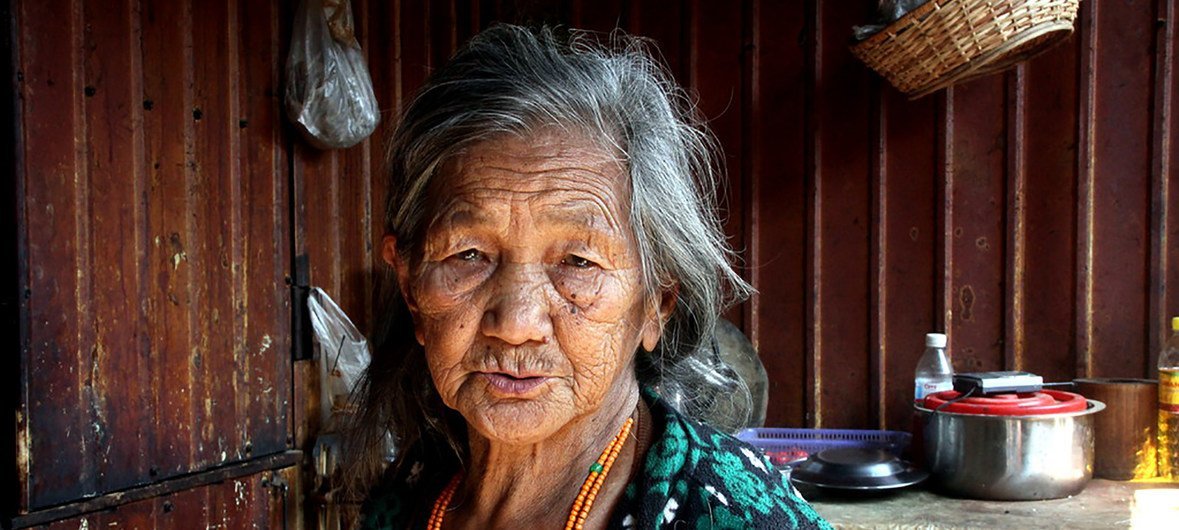
OCHA/Htet Htet Oo | Elderly woman in Muse Township, Northern Shan State, Myanmar, March 2018.
“Whether it’s homicide, road accidents, suicide, cardiovascular disease – time and time again, men are doing worse than women”, said Dr. Richard Cibulskis, main author of WHO’s World Health Statistics Overview 2019.
Apart from the average increase from 66.5 years, to 72 years overall, its findings also show that “healthy” life expectancy – the number of years individuals live in full health – increased from 58.5 years in 2000, to 63.3 years in 2016.
3 April 2019 (Wall Street International)* — Israel’s Prime Minister Benjamin Netanyahu and U.S. President Donald Trump have several things in common. Netanyahu is currently facing the prospect of indictment on charges of bribery, fraud and breach of trust. Trump is facing numerous charges based upon the efforts of Congressional investigative committees, and investigations at both the State (New York) and federal levels. The allegations, which are still in the formative stages, indicate Trump has obstructed justice, committed campaign finance violations, and has abused his power while in office.



 HUMAN WRONGS WATCH