(Oxfam)* — Gender inequality is one of the oldest and most pervasive forms of inequality in the world. It denies women their voices, devalues their work and make women’s position unequal to men’s, from the household to the national and global levels.
.
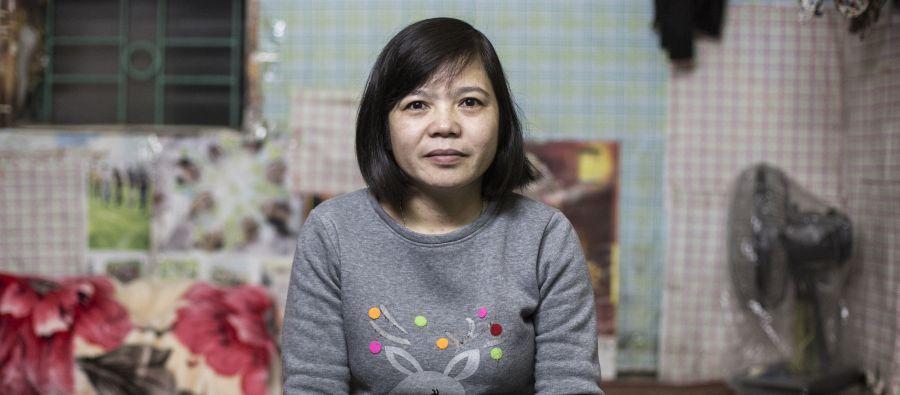
Hoan works at the Tinh Loi Garment Factory, in North Vietnam, where she works on average 62 hours each week, earning around $1 an hour, packaging t-shirts and shirts for global export. Photo: Adam Patterson/Oxfam
Despite some important progress to change this in recent years, in no country have women achieved economic equality with men, and women are still more likely than men to live in poverty.
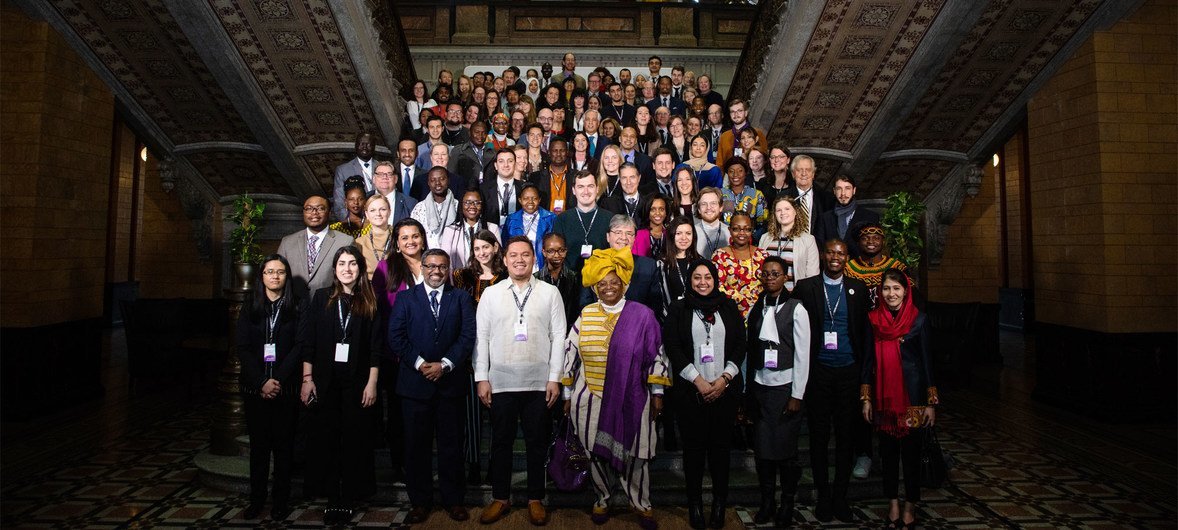
For the first time ever, youth from the frontlines of conflict have joined mediators, researchers and Government representatives at an international conference, to discuss new and innovative ways for young people to contribute to peace processes.
UN Youth Envoy/Nikke Puskala | First International Symposium for Youth Participation in Peace Processes takes place in Helsinki, Finland. March 2019
The First International Symposium on Youth Participation in Peace Processes concluded on Wednesday [6 March 2019] in Helsinki, Finland, with a global policy paper, according to reports, that aims to integrate their efforts, interventions and contributions towards sustaining the search for peaceful solutions to conflict.
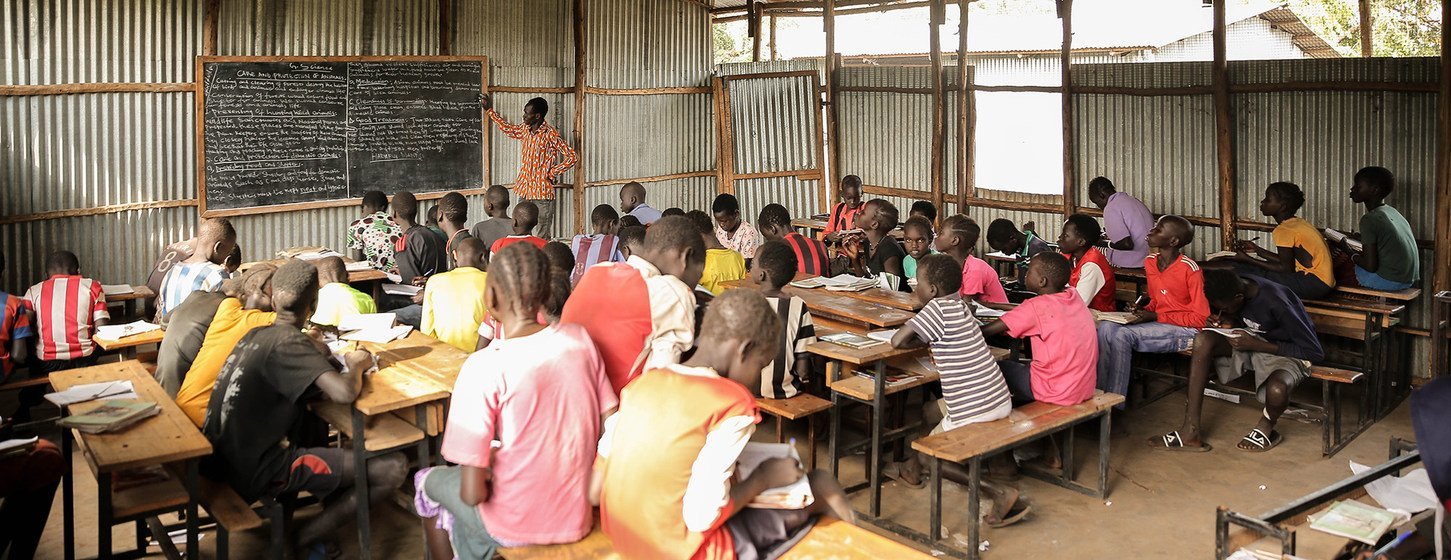
6 March 2019 — The older refugee and migrant children get, the less likely it is that they will get a quality education: less than a quarter of the world’s refugees make it to secondary school, and just one per cent progress to higher education. Even for migrants who settle in wealthy, developed host countries, accessing university is an uphill struggle.
UNICEFEthiopia/2018/Mersha | Students learning in Makod Primary and Secondary School in Tierkidi Refugee Camp, Gambella Region, Ethiopia.
For many young migrants in the UK, even those who have the legal right to remain in a new country, the idea of going to university is almost an impossible dream: not only are they are charged “overseas student” fees, which can be around double those of “home” students but, until recently, they were denied access to student loans, which puts up another barrier to entry.
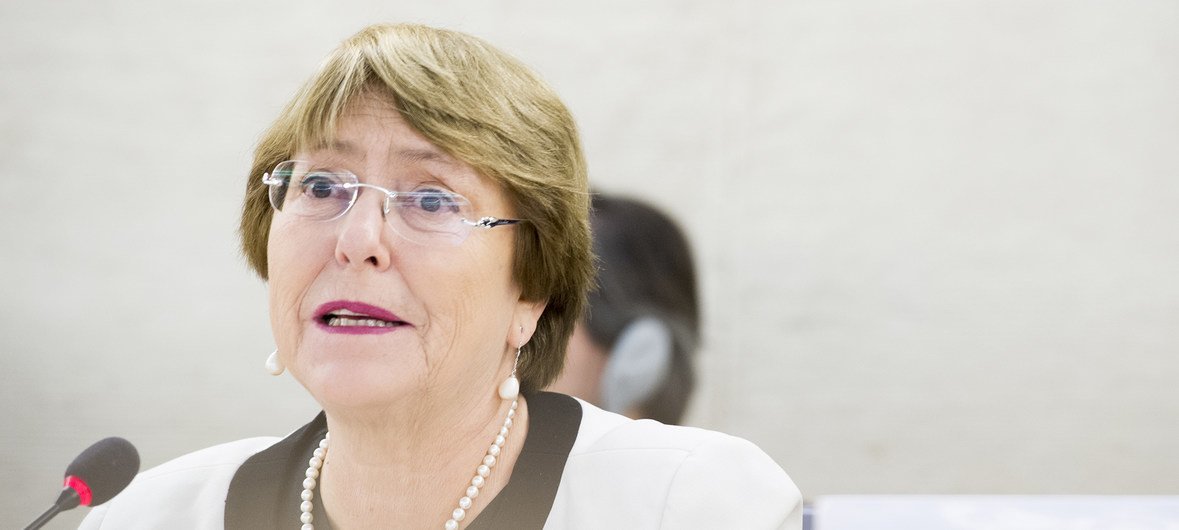
Inequality continues to drive rights violations everywhere, but some countries have made significant progress in tackling the problem, not least in women’s rights, the UN High Commissioner for Human Rights said on Wednesday [6 March 2019].
UN Photo/Violaine Martin | Michelle Bachelet, UN High Commissioner for Human Rights, addressing the Human Rights Council on the state of global human rights, 6 .March, 2019.
In a more than half-hour address to the Human Rights Council, Michelle Bachelet highlighted concerns around the world, while also welcoming several firsts, such as the record number of women now serving in the United States Congress, where they make up nearly a quarter of the representation.
“I just started talking about what I was going through.”
“I opened up.”
“I’ve had psychological support.”
Sujata Sharma Poudel, a psychosocial counsellor, speaks with a local woman at the Women’s Rehabilitation Centre in Panchkhal Nepal. Following the 2015 earthquake, Ashmita Tamang, district psychosocial counsellor with Nepal-based Centre for Victims of Torture reiterated that the number of domestic and sexual violence cases she dealt with increased. Photo: UN Women/Samir Jung Thapa.
DAYLESFORD, Australia, 6 March 2019 — Tax havens are locations around the world where wealthy individuals, criminals and terrorists, as well as governments and government agencies (such as the CIA), banks, corporations, hedge funds, international organizations (such as the Vatican) and crime syndicates (such as the Mafia), can stash their money so that they can avoid regulation and oversight and, very often, evade tax. According to Nicholas Shaxson: ‘Tax havens are now at the heart of the global economy.’
Robert J. Burrowes
Which is why, as he explains it: ‘The term “tax haven” is a bit of a misnomer, because such places aren’t just about tax. What they sell is escape: from the laws, rules and taxes of jurisdictions elsewhere, usually with secrecy as their prime offering.’ See ‘The tax haven in the heart of Britain’.
A tax haven (or ‘secrecy jurisdiction’) then is a ‘place that seeks to attract business by offering politically stable facilities to help people or entities get around the rules, laws and regulations of jurisdictions elsewhere’. See Treasure Islands: Tax Havens and the Men Who Stole the World.
However, the crash of the American empire may well be accompanied (caused) by a global financial crash with suffering for ordinary people, as it did for the Soviet people 30 years ago.
In a financial crash the cities are especially vulnerable. They depend on daily food deliveries to supermarkets that often come long distances by plane and truck.
It is precisely this delivery system that is at risk in a global financial crash. Not to mention industrial agriculture.
Both depend on adequate supplies of gasoline and diesel fuel for trucks, planes and tractors, and the fuel, in turn, is largely dependent on a global system of oil tankers which, in turn, depends up/on consistent financial support.
5 March 2019 (UN Women)* — A woman’s place is in her home. A woman’s place is in the workplace. In the community. On the streets and in public parks. In politics and leadership. In grocery stores, classrooms and on college campuses. A woman’s place is everywhere, and in every space, she has the right to feel safe and welcome.
Children’s area in the Al-Shoka public garden. Photo: UN Habitat
Yet, according to a multi-country study from the Middle East and North Africa, between 40 and 60 per cent of women said they had ever experienced street-based sexual harassment, and in Australia, almost two out of five women (39 per cent) aged 15 and older who have been in the workforce in the last five years, have experienced sexual harassment in the workplace.
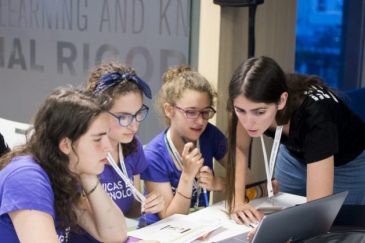
BUENOS AIRES/RIO DE JANEIRO, Mar 5 2019 (IPS)* – Designed mostly by men, many digital applications are not suitable for women, but some initiatives are beginning to include them as programmers and beneficiaries in Latin America, where the gender gap is also technological.
Entrepreneurs and beneficiaries of Chicas en Tecnología, an Argentine organisation that encourages the participation of teenage girls in the creation of programmes and digital applications. Credit: Chicas en Tecnología
What would Mahatma Gandhi say about the threat of war between India and Pakistan, which has brought the two nations and the world to the brink of a nuclear catastrophe?
Throughout the struggle for Indian independence, Gandhi was faced with the serious problem of avoiding conflict between religious groups once independence had been achieved.
He made every effort to bridge the rift between the Hindu and Muslim communities.
Gandhi believed that at their core, all religions are based on the concepts of truth, love, compassion, nonviolence and the Golden Rule. When asked whether he was a Hindu, Gandhi answered, “Yes I am. I am also a Christian, a Muslim, a Buddhist and a Jew.”




 HUMAN WRONGS WATCH