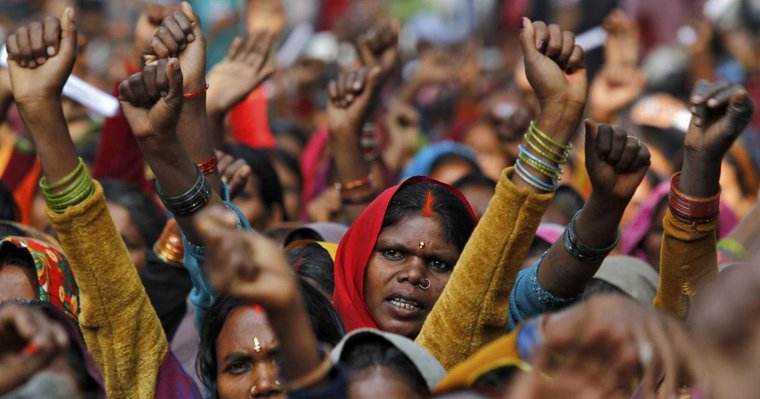
Indigenous women are on the front lines of resistance against forest evictions.
Image: Sabrang India
6 July 2020 (openDemocracy)* — The outbreak of the coronavirus and the regulations that have been installed by governments worldwide to protect citizens, life and vulnerable groups effect everyone – but not every person or community in the same way.
It is not yet clear, if indigenous groups in India, often living in remote areas with lack of information and restricted access to health care are particularly threatened by Covid-19 or more resilient to its spreading if they devise innovative coping mechanisms (such as self-isolation and protective health measures).
7 July 2020 (UN Environment)* — In their efforts to stave off a second wave of COVID-19, scientists from around the world have turned to a new ally: sewage.
In the United Kingdom, the Netherlands and Spain, researchers are poring over samples of wastewater for signs of the coronavirus, which is believed to be shed in human feces.
Given that many people with the virus are asymptomatic and will not be tested for the disease, scientists say sewage could act like a COVID-19 early warning system.
Countries have long monitored sewage, which is laden with traces of the food people eat, the medicine they take, and the disinfectants they use. Wastewater monitoring has been used for decades to assess the success of vaccination campaigns against poliovirus, for example.
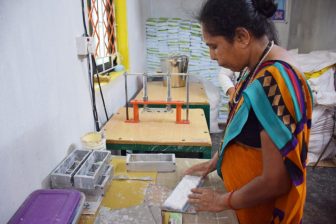
PILGAON/GOA, India, Jul 3 2020 (IPS)* – Jayashree Parwar has not traveled much outside of her village of Bicholim in the western coastal Indian state of Goa. But the homemaker-turned-social-entrepreneur has been reaching women in dozens of cities across the country with a hygiene product she makes at home along with women from her community.
The Sakhi sanitary pad is completely natural, comprising pinewood fibre, non-woven cloth, and butter paper. lt composts in eight days. Credit: Stella Paul/IPS
(UN News)* — As the battle against COVID-19 rages, the world can expect to see other diseases that pass from animals to humans emerge, according to a new UN report launched on 6 July 2020, which maintains that there is still time to head off potential zoonotic pandemics.
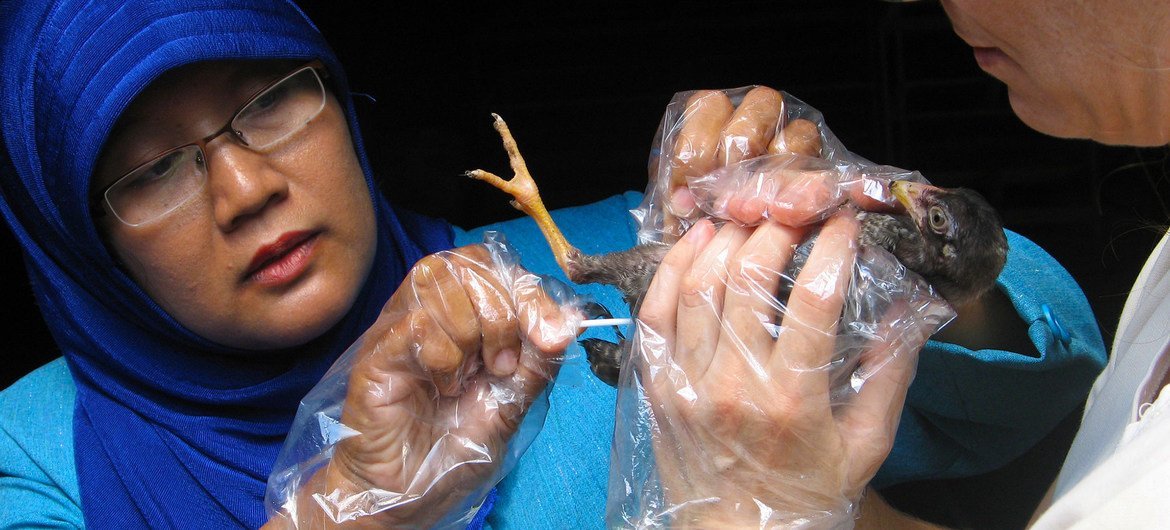
ILRI/Barbara Wieland | Researchers from the International Livestock Research Institute (ILRI) work to control bird flu in Indonesia.
Discipline and dissatisfaction controlling daily life
Accepting rules and commitments that are only means and not ends in themselves makes the individual a link in the alienating chains | Image fromWall Street International.
(Wall Street International)* — Accepting rules and commitments established in contexts that organize their validity corresponds to limits defining necessary functions. When these rules and commitments exist independently of the situations they regulate, when they exist to maintain other orders, they enslave and chain. Thus, being bound by commitments and rules makes the individual a link to alienating chains.
28 Jun 2020 – A letter to Robert F. Kennedy, Jr. by Dr. Antonietta M. Gatti
Dear Robert,
I don’t know if you are completely aware of the Italian situation. Summarizing everything in a few words, Italy was sold to Big Pharma and has become a huge laboratory where experiments are carried out on the population: adults, children, old, healthy, sick people … it makes no difference, we are all guinea pigs.
6 July 2020 (UN Environment)* — A new report by UNEP and The International Livestock Research Institute (ILRI) considers the root causes of the emergence and spread of COVID-19 and other zoonoses. Zoonoses are diseases that originate in animals and are transferred to humans.
.
.
The report offers a set of practical recommendations that can help policymakers prevent and respond to future disease outbreaks.
“Today, in the West, but especially in North America, we see the intimate ties between fascism and an increasingly militarized police apparatus.”
Borom Sarret (The Wagoner) by Ousmane Sembène | Screenshot.
3 July 2020 (openDemocracy)* — Widely regarded as the first film made in Black Africa, Borom Sarret (The Wagoner) by Ousmane Sembène provides an immediate glimpse of post-colonial reality. Made in 1963 on Sembène’s return from the Gorkii Studios in Moscow, it portrays one day in the life of a cart driver in Dakar, Senegal. Its formal minimalism enables Borom Sarret to reveal several layers of complexity.
3 July 2020 (RT)* — The remote worker of the future has been revealed. She’s called Susan and she’s not a pretty sight – a warning that we shouldn’t be seduced by the benefits of ‘WFH.’
If you’re working from home, stop now. Quit your job immediately, get out of the house and sign up as a barista or tree surgeon or literally any job that you can’t do from your domicile. Because I’ve seen the future of home-working: it’s hideous and it’s called Susan.
Susan, bless her miserable imagined existence, is the ‘remote worker in 25 years,’ according to American ‘job discovery platform’ DirectlyApply. And she is not a healthy-looking specimen.


 .
.

 HUMAN WRONGS WATCH