AYACUCHO, Peru, Jun 29 2020 (IPS)* – A communally built small dam at almost 3,500 meters above sea level supplies water to small-scale farmer Cristina Azpur and her two young daughters in Peru’s Andes highlands, where they face water shortages exacerbated by climate change. | En español
Local residents of Churia, a village of some 25 families at more than 3,100 meters above sea level in the highlands of the Peruvian department of Ayacucho, are building simple dikes to fill ponds with water to irrigate their crops, water their animals and consume at home. CREDIT: Courtesy of Huñuc Mayu
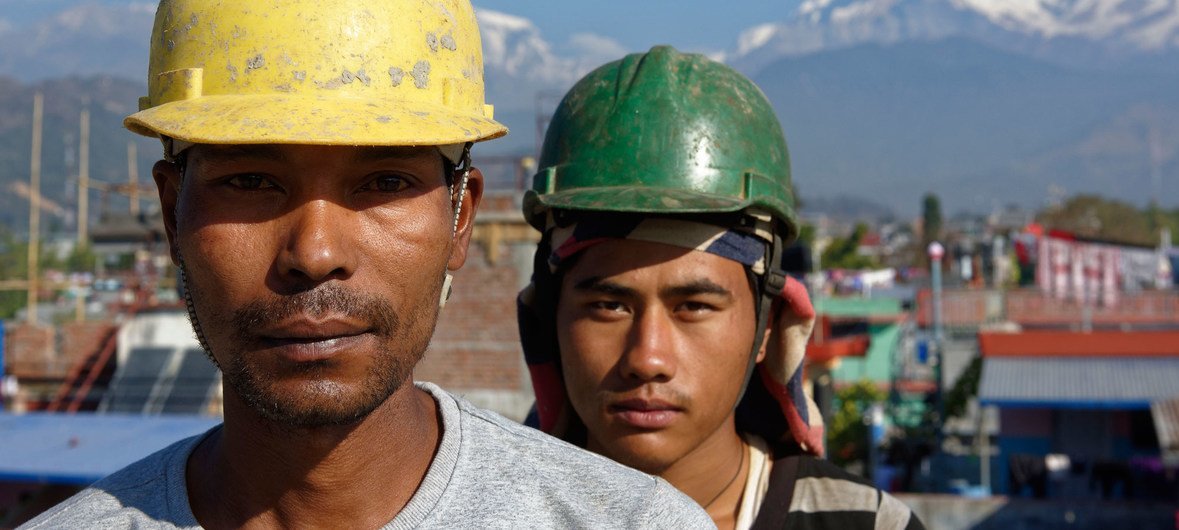
ILO/Marcel Crozet | Two workers on a construction site in Pokhara, Nepal.
.
A project run by the International Fund for Agricultural Development, IFAD, which was already in place before the pandemic, developing enterprises in rural areas of Nepal, is now providing a range of services for migrants, forced to return home..These include repatriation for workers stranded overseas, matching job-seekers with available jobs within the country, helping them to find other income-generating activities, and providing technical and vocational training.
28 June 2020 (IWGIA)* — Spending time with the Baka, as we have both done over several years, is a humbling experience. This group of over 40,000 spread between the forests of Cameroon, the Republic of Congo and Gabon, practice hunting and foraging as a traditional livelihood. Through their long history in the Congo Basin they have accumulated and passed on extensive ecological knowledge and sophisticated cultural mechanisms of egalitarianism, sharing and human-nature conviviality.
Despite (or because of) this rich cultural heritage, the Baka, and hunter-gatherers around the world, have consistently been forced into categories of ‘primitive’ and ‘uncultured’ by neighbouring agriculturalist communities, national governments and some international actors.
Our total human population and economy have imposed on the global environment an excessive weight.
Malthus’ Essay on the principle of population
27 June 2020 (Wall Street International)* — T.R. Malthus’ Essay on the principle of population, the first edition of which was published in 1798, was one of the first systematic studies of the problem of population in relation to resources. Earlier discussions of the problem had been published by Botero in Italy, Robert Wallace in England, and Benjamin Franklin in America.
As academics, we teach about empire, slavery and colonialism because without them, the world makes no sense.
The Rhodes Must Fall campaign in Oxford, UK – 9 Jun 2020 | SOPA Images/SIPA USA/PA Images
27 June 2020 (openDemocracy)* — Observing the protests against racism in the streets of the US, UK, Australia and elsewhere feels like watching not only a mass movement, but also a classroom, crackling with intellectual energy.
28 June 2020 (UN News)* — Demand for raw materials used in the production of electric car batteries is set to soar, prompting the UN trade body, UNCTAD, to call for the social and environmental impacts of the extraction of raw materials, which include human rights abuses, to be urgently addressed.
.
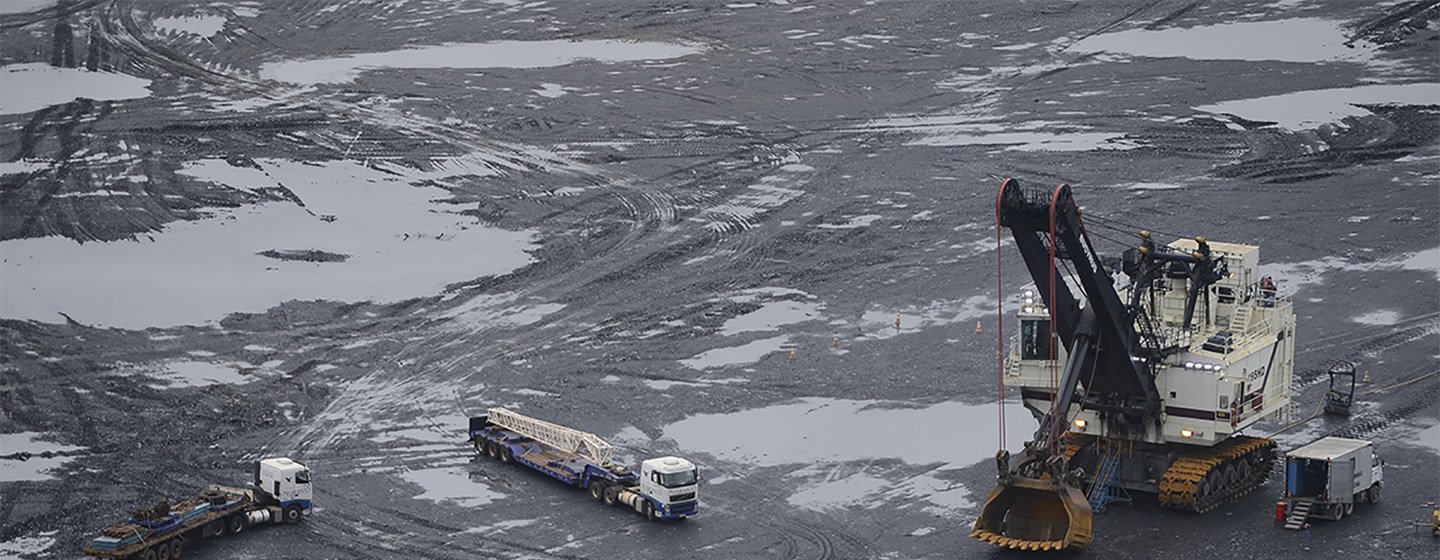
Agência Brasil/José Cruz | Brazilian mine (file)
Electric cars are rapidly becoming more popular amongst consumers, and UNCTAD predicts that some 23 million will be sold over the coming decade: the market for rechargeable car batteries, currently estimated at $7 billion, is forecast to rise to $58 billion by 2024.
(UN News)* — The UN Charter “brought rules and hope to a world in ruins”, Secretary-General António Guterres told a virtual ceremony on 26 June 2020, commemorating 75 years since the Organization’s foundational text was signed.
UN Photo/Yould | The UN Charter being signed by a delegation at a ceremony held at the Veterans’ War Memorial Building on 26 June 1945.
Adopted by Member States as the Second World War was coming to a close, the UN chief noted that the world today was marking the milestone anniversary “as global pressures are spiraling up”. The Charter was signed in San Francisco on 26 June 1945 and came into force on 24 October 1945.
To mark Micro-, Small- and Medium-sized Enterprises Day, which falls on 27 June, we are profiling entrepreneurs who are helping to tackle some of the planet’s most pressing environmental issues.
When Leroy Mwasaru was in his teens, he noticed a major problem at his Kenyan boarding school. Ageing pipes were leaking sewage directly into a nearby stream, which was a source of water for a neighbouring community.
27 June 2020 (United Nations)* — Small businesses, including those run by women and young entrepreneurs, are being hit hardest by the economic fall-out of the pandemic. Unprecedented lockdown measures enacted to contain the spread of the coronavirus have resulted in supply chain disruptions and a massive drop in demand in most sectors.
Martha Maocha runs a detergent manufacturing company but has recently started making hand sanitising gel, which protects against COVID-19. Bulawayo, April 2020. Photo: KB Mpofu / ILO.
To continue playing their crucial role in creating decent jobs and improving livelihoods, small businesses depend more than ever on an enabling business environment, including support for access to finance, information, and markets.
Let’s not forget that these enterprises, which generally employ fewer than 250 persons, are the backbone of most economies worldwide and play a key role in developing countries.
To mark Micro-, Small- and Medium-sized Enterprises Day, which falls on 27 June, we are profiling entrepreneurs who are helping to tackle some of the planet’s most pressing environmental issues.
Agricultural technician at a plantation in Cameroon, Ollivier Girard/CIFOR
27 June 2020 (UN Environment)*— Tabi Joda grew up in the forest, spending hours playing with his friends among the trees that lined the Mambila Plateau between Cameroon and Nigeria. But as they got older, there were fewer trees to climb amid a widespread and ruinous deforestation that turned trees into timber and agricultural land into deserts.




 When Leroy Mwasaru was in his teens, he noticed a major problem at his Kenyan boarding school. Ageing pipes were leaking sewage directly into a nearby stream, which was a source of water for a neighbouring community.
 HUMAN WRONGS WATCH