Conflict, COVID-19, climate crisis likely to drive higher levels of acute food insecurity in 23 hunger hotspots – new report
.
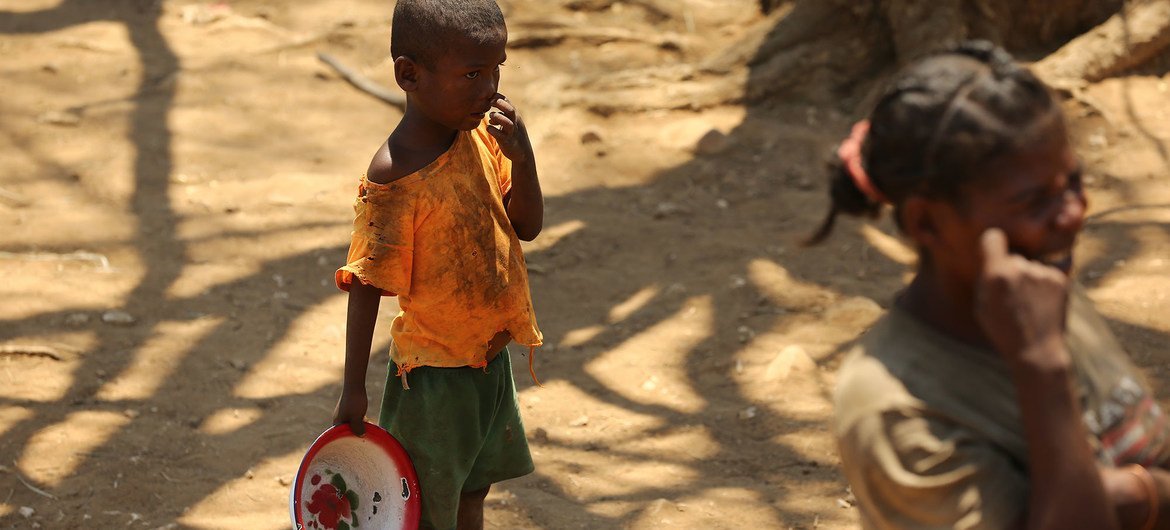
WFP/Tsiory Andriantsoarana
.
ROME (WFP)* – Efforts to fight a global surge in acute food insecurity are being stymied in several countries by fighting and blockades that cut off life-saving aid to families on the brink of famine, warn the UN’s Food and Agriculture Organization (FAO) and World Food Programme (WFP) in a new report issued on .
Bureaucratic obstacles as well as a lack of funding also hamper the two UN agencies’ efforts to provide emergency food assistance and enable farmers to plant at scale and at the right time.
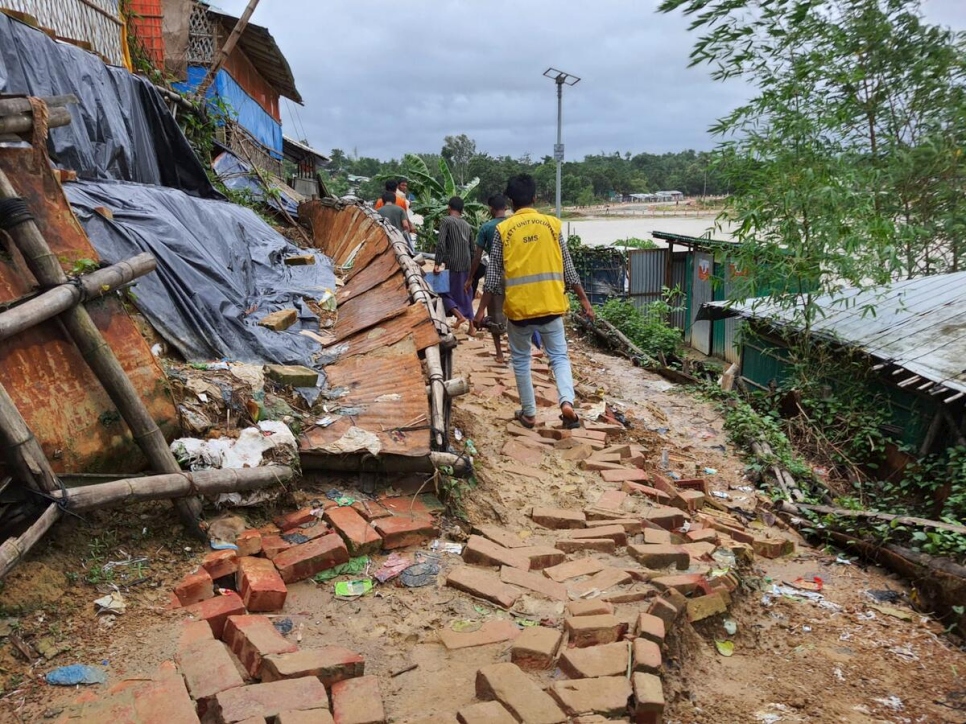
30 July 2021 (UNHCR)* — Heavy monsoon rains had been falling incessantly for days when Meher Khatun, 60, noticed water starting to come into the bamboo and tarpaulin shelter she shares with her son, daughter-in-law and grandchild in a refugee camp in Bangladesh’s Cox’s Bazar District.
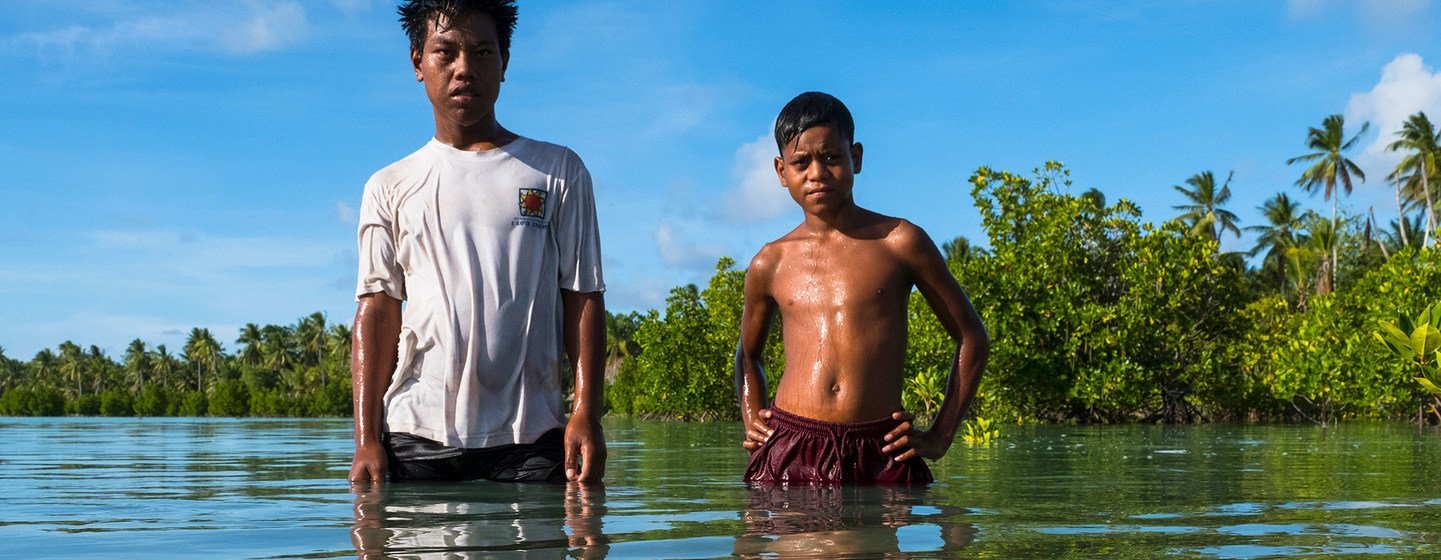
31 July 2021 (UN News)* — Small island nations across the world are bearing the brunt of the climate crisis, and their problems have been accentuated by the COVID-19 pandemic, which has severely affected their economies, and their capacity to protect themselves from possible extinction. We take a look at some of the many challenges they face, and how they could be overcome.
The 38 member states and 22 associate members that the UN has designated as Small Island Developing States or SIDS are caught in a cruel paradox: they are collectively responsible for less than one per cent of global carbon emissions, but they are suffering severely from the effects of climate change, to the extent that they could become uninhabitable.
KABUL– Civilian casualties in Afghanistan in the first half of 2021 reached record levels, including a particularly sharp increase in killings and injuries since May when international military forces began their withdrawal and the fighting intensified following the Taliban’s offensive.
In a new report issued on 26 July 2021, the United Nations warns that without a significant de-escalation in violence Afghanistan is on course for 2021 to witness the highest ever number of documented civilian casualties in a single year since UNAMA records began.
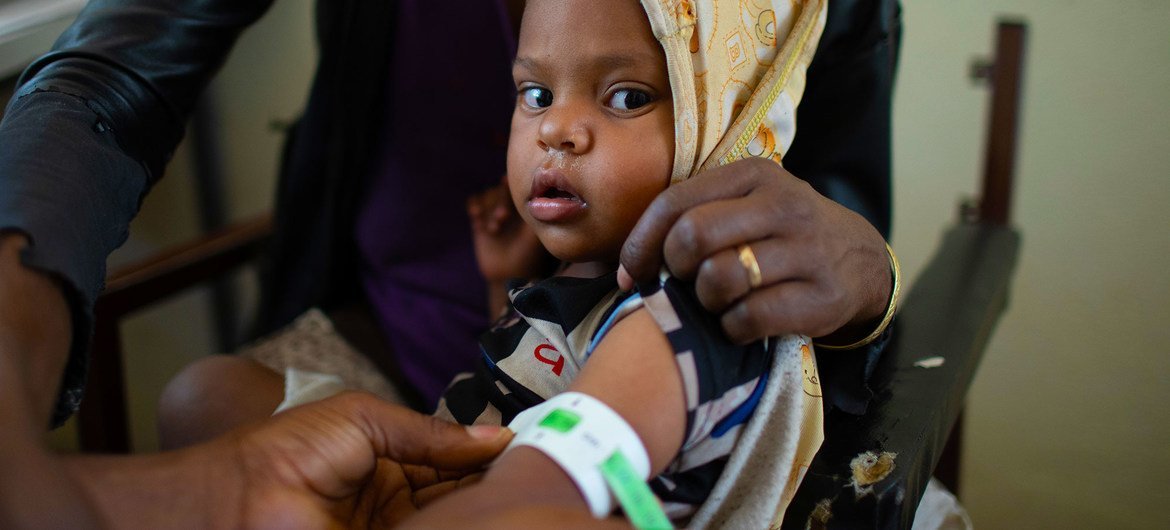
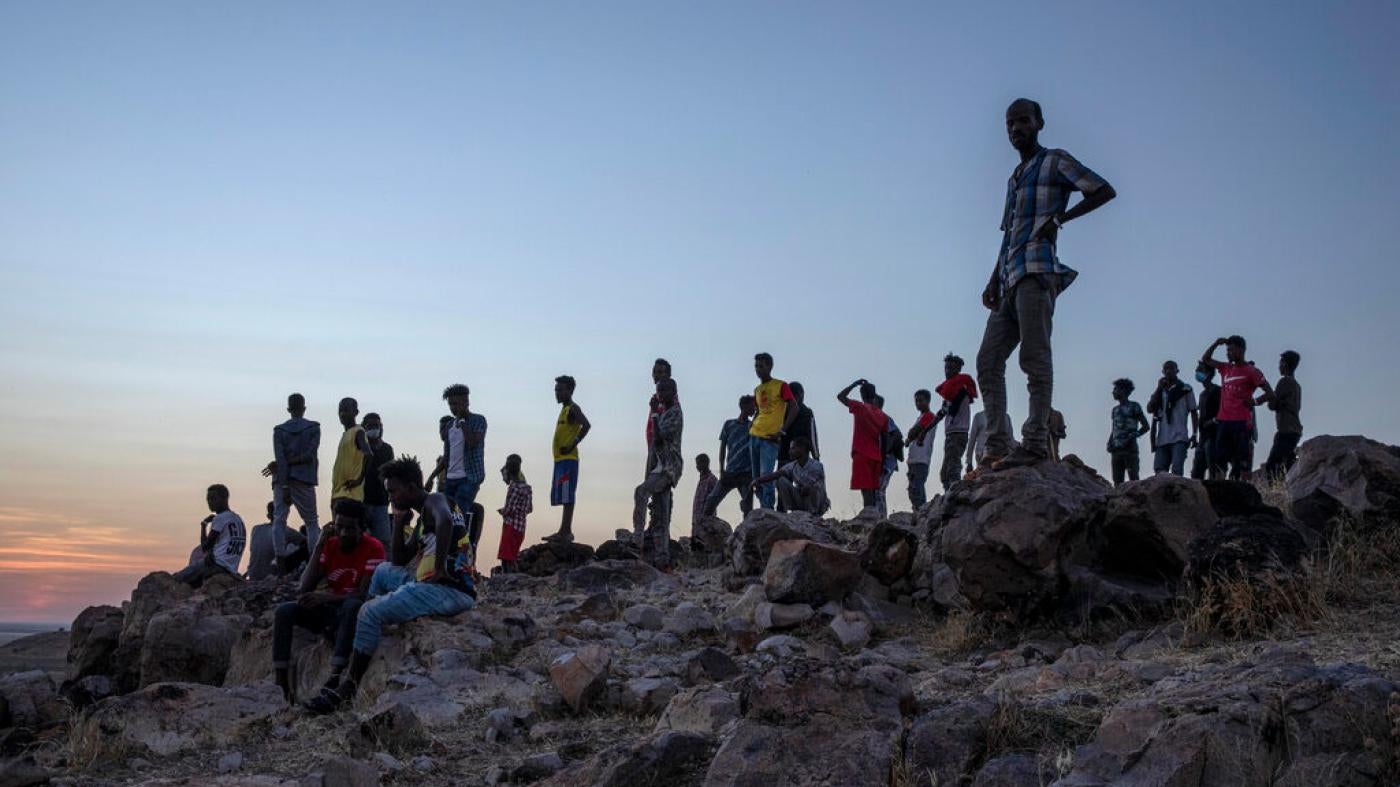
(UN News)* — More than 100,000 children in Tigray, Ethiopia, could suffer from life-threatening severe acute malnutrition in the next 12 months, a tenfold jump over average annual levels, UN Children’s Fund (UNICEF) said on Friday 30 July 2021.
The development comes as UNICEF announced that it had recently reached areas of Tigray that were previously inaccessible owing to insecurity linked to nearly nine months of conflict between Government forces and those loyal to the Tigray People’s Liberation Front, or TPLF.
UNICEF spokesperson Marixie Mercado told a UN briefing in Geneva that humanitarians’ worst fears about the health and wellbeing of children have been realized.
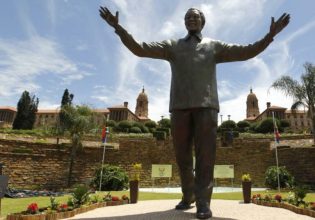
The Values Espoused by Madiba[1] Are Burnt in the Civil Unrest
The cold, wintry South African weather experienced last week was the background setting for the serious, nationwide riots, in the midst of the Third Wave of SARS Cov-2 pandemic, with the Delta variant[2], wreaking havoc amongst the large unvaccinated population of South Africa.
Statue of Mandela Outside the Union Building in Pretoria RSA
(Athens) – The Greek government should urgently reform discriminatory policies so that children seeking asylum can go to school when the new year begins on September 13, 2021, Human Rights Watch on 29 July 2021 said.
New coalition to scale up programmes across the world
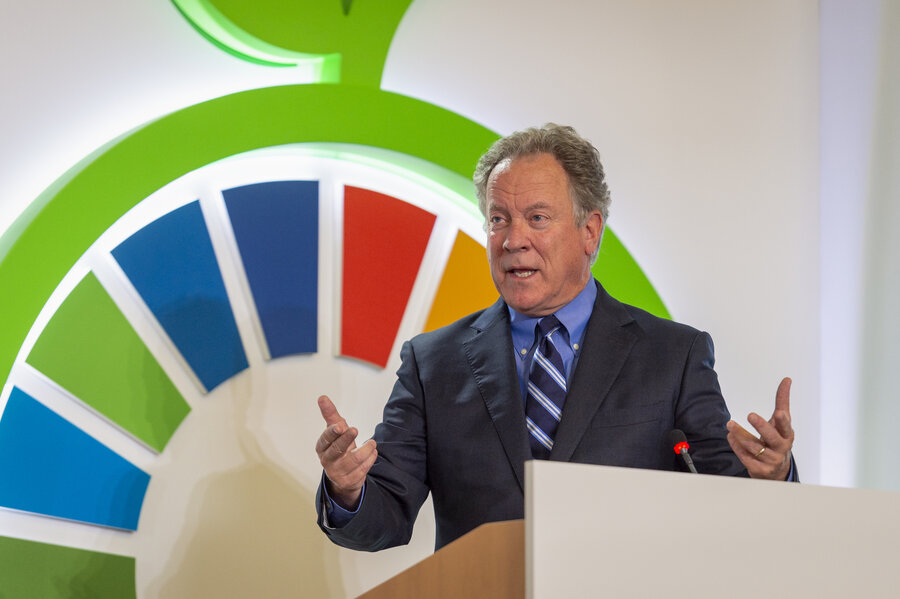
WFP Executive Director David Beasley describes the importance of school meals during a session on the new School Meals Coalition, as part of the UN Food Systems Pre-Summit in Rome. Photo: WFP/Giulio d’Adamo
The price of failing to fund children’s school meals far outweighs the cost of such programmes, World Food Programme (WFP) Executive Director David Beasley said on 28 July 2021.
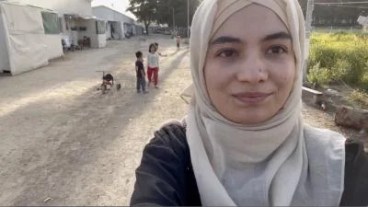
Nasra suffered from distance, pressure, racism and injustice in a context she thought was safe. In her migratory journey, she was a victim of trafficking. Photo: Sibylle Desjardins / IOM
“I wanted to go to France to continue my education, but I failed to secure the required resources and support,” she says.
“I couldn’t make the journey through regular channels so friends proposed we travel through Libya. We sold an uncle’s vehicle to pay XOF 1,000,000 (EUR 1,500) to a Burkinabé smuggler.”
Life then took a grim turn. Mariam travelled through Algeria and Libya, where she was sequestered under harsh and humiliating conditions. She was trafficked, primarily for prostitution and sexual slavery.


 HUMAN WRONGS WATCH