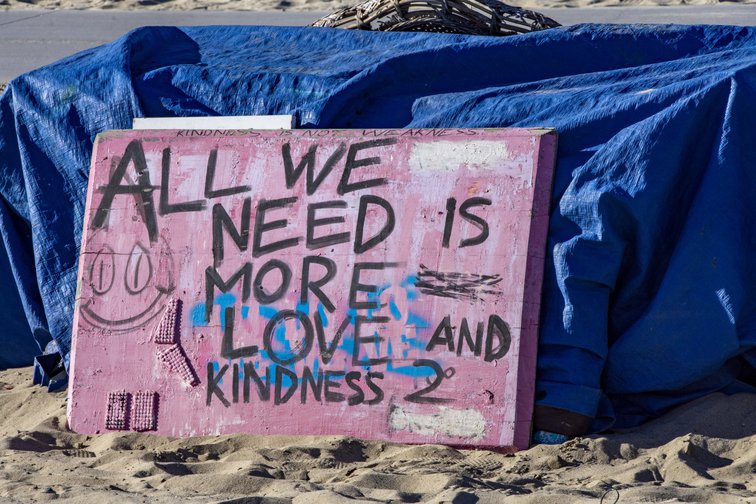
“Can we dare to think people are kind, and shape organisations around this view?”
7 July 2020 (openDemocracy)* — That’s the question Rutger Bregman examines in his latest book Humankind, and it’s one that anyone involved in youth and community work like me wrestles with on a daily basis. But is Bregman’s optimistic analysis grounded in reality?
To succeed, the struggle against racism needs to be understood in the context of the struggle against the culture of war.
In my history of the culture of war, I quote Malcolm X at length:
“”Book after book showed me how the white man had brought upon the world’s black, brown, red, and yellow peoples every variety of the sufferings of exploitation. I saw how since the sixteenth century, the so-called “Christian trader” white man began to ply the seas in his lust for Asian and African empires, and plunder, and power… First, always “religiously,” he branded “heathen” and “pagan” labels upon ancient non-white cultures and civilizations. The stage thus set, he then turned upon his non-white victims his weapons of war.”
SYDNEY and KUALA LUMPUR, Jul 7 2020 (IPS)* – In his early February annual State of the Union address, US President Donald Trump typically hailed his own policies for increasing wages and jobs to achieve record low US unemployment. Directly appealing to labour for a second term, Trump claimed exclusive credit for the US “blue-collar boom”.
Anis Chowdhury
‘Blue-collar boom’
During his previous two State of the Union speeches, Trump also directly appealed to blue-collar Americans who put him in the White House in November 2016.
As Trump claims manufacturing workers have been the main beneficiaries of his economic policies, including his trade and other policies, this seemed likely to dominate his re-election campaign.
In fact, US manufacturing growth had slowed to its lowest level in August 2019 when the purchasing managers’ index fell for the first time since September 2009. Despite his bombast, Trump has failed to reverse the continuing decline in manufacturing’s share of GDP.
By Sarah Schafer in New York and Matthew Mpoke Bigg in London. With contributions from Kristy Siegfried in Oxford, UK, and Gabriella Reis in Brasília. |UNHCR*
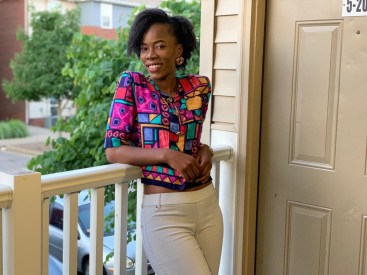
The police brutality that sparked protests in the United States and beyond reminds some refugees of the bigotry they fled — and sometimes still encounter in places they now call home. Here are some of their voices.
Discipline and dissatisfaction controlling daily life
Accepting rules and commitments that are only means and not ends in themselves makes the individual a link in the alienating chains | Image fromWall Street International.
(Wall Street International)* — Accepting rules and commitments established in contexts that organize their validity corresponds to limits defining necessary functions. When these rules and commitments exist independently of the situations they regulate, when they exist to maintain other orders, they enslave and chain. Thus, being bound by commitments and rules makes the individual a link to alienating chains.
“Today, in the West, but especially in North America, we see the intimate ties between fascism and an increasingly militarized police apparatus.”
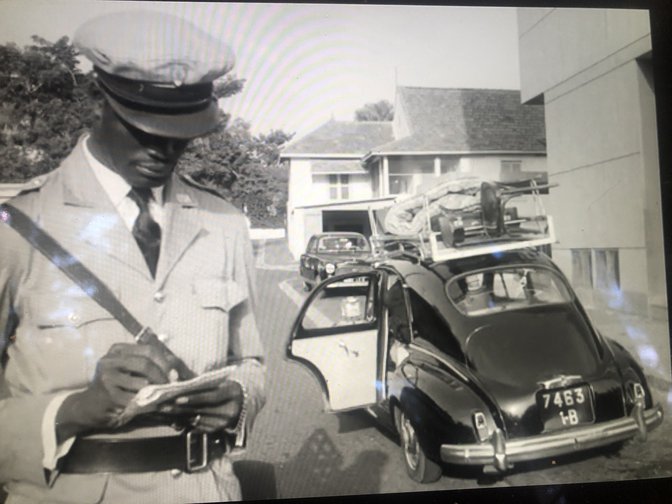
Borom Sarret (The Wagoner) by Ousmane Sembène | Screenshot.
3 July 2020 (openDemocracy)* — Widely regarded as the first film made in Black Africa, Borom Sarret (The Wagoner) by Ousmane Sembène provides an immediate glimpse of post-colonial reality. Made in 1963 on Sembène’s return from the Gorkii Studios in Moscow, it portrays one day in the life of a cart driver in Dakar, Senegal. Its formal minimalism enables Borom Sarret to reveal several layers of complexity.
“The time for manufacturing of weapons of war has passed as a viable industry for our nation, despite the way some of our political leadership clings to economies of the past.” — Lisa Savage, U.S. Senate candidate in Maine
Fincantieri Marine Group
On 25 June 2020 President Trump’s re-election efforts took him to the “battleground” state of Wisconsin, where he toured the Fincantieri MarinetteMarine shipyard. He railed against the Democrats as a scarier enemy than Russia or China.
He also celebrated Wisconsin’s win over domestic enemies like the state of Maine in securing a key shipbuilding project.
3 July 2020 (WMO)* — Climate change impacts are affecting water availability and are exacerbating the damages floods and drought cause worldwide. Climate related water action is a key for bringing us back on track to deliver Sustainable Development Goal 6, to ensure access to water and sanitation for all and to sustain a healthy environment.
WMO hosted a virtual diplomatic briefing on 2 July on plans for a Water and Climate Coalition aimed at building momentum on water and climate action through implementing concrete activities at the national, regional and global levels.
Afghanistan’s shortage of decent and affordable housing is one of the biggest challenges facing millions of displaced and returning refugees. A new project is offering some a solution. |Français | عربي
3 July 2020 (UNHCR)* — Mohammad Daud and his family fled fighting and insecurity in their home area and came to Kandahar province in southern Afghanistan more than eight years ago. But until recently, they still lacked a secure roof over their heads.
As of Friday [3 July 2020] morning, Brazil had reported 1,508,991 COVID-19 cases and 62,304 deaths.
Crosses installed in tribute to the victims of COVID-19, Brasilia, Brazil, June 28. | Photo: EFE
(teleSUR)* — Brazil’s President Jair Bolsonaro Friday [3 July 2020] passed a bill on the mandatory use of masks against COVID-19 but vetoed some provisions that required their use in places where people gather such as shops, religious temples, and schools.
The far-right politician, who has always downplayed the importance of physical isolation, argued that wearing masks in such cases “incurs a possible violation of residence” contrary to the Constitution.
 PublicDomainPictures.net/Linnaea Mallette. CC0 1.0.




 HUMAN WRONGS WATCH