Human Wrongs Watch
By Human Rights Watch*
Covid-19 Pandemic Devastates Mining Communities, Increases Rights Risks
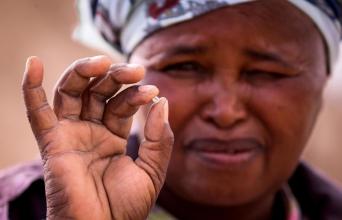 An artisanal miner holds an uncut diamond in her hand in South Africa, October 22, 2019. © 2019 Sumaya Hisham/Reuters
'Unseen' News and Views
Covid-19 Pandemic Devastates Mining Communities, Increases Rights Risks
An artisanal miner holds an uncut diamond in her hand in South Africa, October 22, 2019. © 2019 Sumaya Hisham/ReutersMany of the blazes, which come at the tail end of a devastating fire season, are believed to have been set by farmers eager to clear land and sate the booming global demand for beef and soybeans.
A new United Nations Environment Programme (UNEP) report, jointly produced with the International Resource Panel, says that type of unbridled international trade is having a damaging effect not only on rainforests but the entire planet.
– The World Bank has been leading other multilateral development banks (MDBs) and international financial institutions to press developing country governments to ‘de-risk’ infrastructure and other private, especially foreign investments.

Jomo Kwame Sundaram
They promote public-private partnerships (PPPs) supposedly to mobilize more private finance to achieve the Sustainable Development Goals.
PPP advocacy has been stepped up after developing countries’ pleas for better international tax cooperation were blocked at the third United Nations’ Financing for Development conference (FfD3) in Addis Ababa in mid-2015.
Official support for infrastructure PPPs seems stronger than ever. The Bank’s Global Infrastructure Facility (GIF) was set up to coordinate MDBs, private investors and governments promoting PPPs. Meanwhile, the G20 has been trying to modify the mandates of national and international development banks to enable them to initiate infrastructure PPPs with the private sector. Continue reading
(UN News)* — The Desert Locust crisis which struck the greater Horn of Africa region earlier this year threatening food supplies for millions, could re-escalate as recent strong winds carried mature swarmlets from southern Somalia into eastern and northeastern Kenya, the UN Food and Agriculture Organization (FAO) said on Tuesday [24 November 2020].

“In this case, hatching and hopper band formation can be expected in early December,” said the agency.
 A gravity-fed, gated irrigation system pulls water from Sebwe River at Mubuku, Uganda ©FAO/Eva Pek
In the absence of a dramatic change of fortunes, the report said, Africa was on course to overtake Asia and host more than half of the world’s hungry by 2030. And this, with less than a fifth of the global population.
20 November 2020 (IWGIA)* — After resisting the policy of forced assimilation enforced during the decades of military rule, today Indigenous peoples of Myanmar are subjected to land dispossession in the name of boosting economic development and implementation of the country’s climate commitments.
 Community, part of the Karen people. Photo: Alejandro Parellada
Myanmar, formerly known as Burma, is home to 54 million people, including more than 135 ethnic groups and Indigenous Peoples. Myanmar is thus considered to be one of the most ethnically diverse countries in Southeast Asia.
(UN Women)* — “My indigenous community is hardworking, and a place where women have taken leadership roles in the fight to recover ancestral land,” says Luz Angélica Tarapuez, from the municipality of Cumbal, in the department of Nariño, on the Colombian-Ecuadorian border.

She is among 94 indigenous women and farm workers who have attended the training school, ‘Soy Rosita, soy mujer, soy campesina, soy indígena’ [I am Rosita, I am a woman, I am a farmer, I am indigenous].
24 November 2020 (UN Women)* — The UN Secretary-General’s UNiTE by 2030 to End Violence against Women campaign is marking the 16 Days of Activism against Gender-based Violence (25 November to 10 December 2020) under the global theme, “Orange the World: Fund, Respond, Prevent, Collect!“.

UN Women’s Generation Equality campaign is amplifying the call for global action to bridge funding gaps, ensure essential services for survivors of violence during the COVID-19 crisis, focus on prevention, and collection of data that can improve life-saving services for women and girls.
The campaign is part of UN Women’s efforts for Beijing+25 and building up to launch bold new actions and commitments to end violence against women at the Generation Equality Forum in Mexico and France in 2021.

24 November 2020 (United Nations)* — Since the outbreak of COVID-19, emerging data and reports from those on the front lines, have shown that all types of violence against women and girls, particularly domestic violence, has intensified.
This is the Shadow Pandemic growing amidst the COVID-19 crisis and we need a global collective effort to stop it.
(UN News)* — COVID-19 is overshadowing what has become a “pandemic of femicide” and related gender-based violence against women and girls, said independent UN human rights expert Dubravka Šimonović on Monday [23 November 2020], calling for the universal establishment of national initiatives to monitor and prevent such killings.
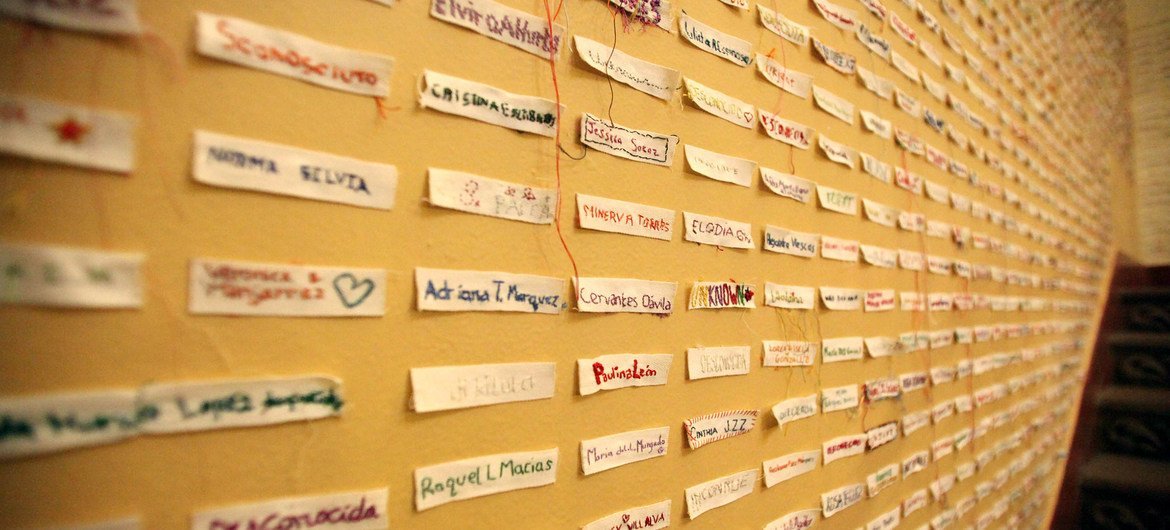
Ahead of the International Day for the Elimination of Violence against Women, marked on 25 November, Ms. Šimonović said the rise in femicides and violence was “taking the lives of women and girls everywhere” around the world, as the coronavirus continues to rage out of control.

 HUMAN WRONGS WATCH