Archive for November, 2014

16/11/2014

Is ISIS Coming?

Human Wrongs Watch

By Uri Avnery*, November, TRANSCEND Media Service 

IF ISIS had approached the borders of Israel this week, nobody in the country would have noticed. Israel was riveted to a court-room drama.
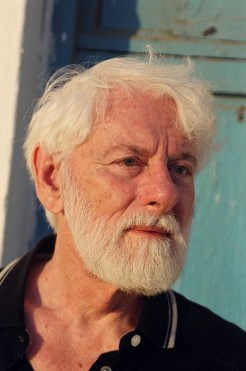
397px-uriavnery-e1353140505941

Uri Avnery

There, in the Jerusalem District Court, former Prime Minister Ehud Olmert faced his erstwhile secretary, Shula Zaken. No one could take his or her eyes off them. It was the stuff soap operas are made of.

SHULA WAS a 17-year old Jerusalem girl when she first met Ehud. He was a fledgling advocate, she was a new secretary in the same office.

Since then, for more than 40 years, Shula was the shadow of Ehud, a fiercely loyal secretary who followed her ambitious boss from station to station – mayor of Jerusalem, then Minister of Trade, and finally Prime Minister. She was his closest associate, his confidante, everything.

And then it all blew up. Olmert was accused of several big corruption affairs and was forced to resign. For years now he has been a fixture in the court rooms and TV court reports. Shula Zaken, now a 57-year old rather stout matron, is his co-defendant. She supported him through thick and thin, until in his testimony he put all the blame on her. Shula was sent to prison for 11 months. Ehud was (again) acquitted.

That was the turning point. It appeared that for years the devout secretary had recorded her boss’s private conversations with her. According to her, because she could not live without being able to listen to his voice at any time. Others saw in it as a kind of life insurance.

read more »

15/11/2014

More than 100,000 Libyans Flee Fighting over Past Month — 400,000 Since Last May

Human Wrongs Watch

Geneva (UNHCR) The UN refugee agency on 14 November 2014 reported that intense fighting among rival armed groups in western, eastern and south-eastern Libya has forced more than 100,000 people to flee their homes in the past month.*

© UNHCR/ L. Dobbs | A group of Tawerghan men displaced after the fighting in Libya in 2011. UNHCR is concerned about the situation of some 2,500 Tawerghans who fled their camp in Benghazi in mid-October to escape fighting that has forced more than 100,000 to flee their homes in the past month.

© UNHCR/ L. Dobbs | A group of Tawerghan men displaced after the fighting in Libya in 2011. UNHCR is concerned about the situation of some 2,500 Tawerghans who fled their camp in Benghazi in mid-October to escape fighting that has forced more than 100,000 to flee their homes in the past month.

The stepped up conflict is centred on the towns of Benghazi and Derna in the east, in the country’s south-east at Ubari and in the west at Kikla. The insecurity is hampering humanitarian operations.

Aid agencies are still trying to calculate the scale of internal displacement. “We have confirmed reports from our NGO partners of 56,500 people having fled Benghazi in the past few weeks,” UNHCR spokesman Adrian Edwards said in Geneva, adding that they included some 2,500 already internally displaced people originating from the deserted northern town of Tawergha.

read more »

15/11/2014

Is the World a Better Place for Children?

Human Wrongs Watch

This November marks 25 years since the United Nations General Assembly adopted the Convention on the Rights of the Child. Does a child born today have better prospects in life than one who was born at the time the Convention came into being?

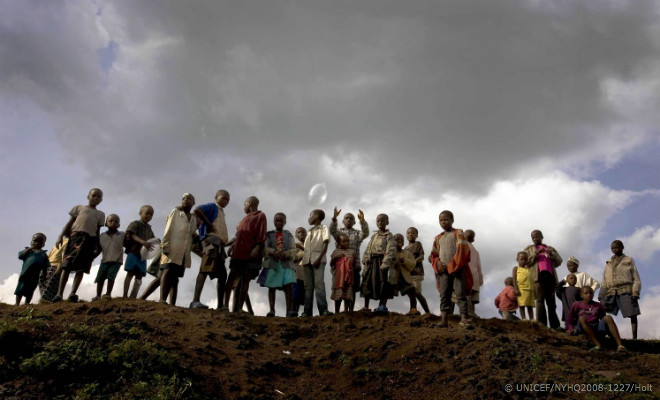
© UNICEF/NYHQ2008-1227/Holt | Children stand on a hilltop overlooking a UNICEF-assisted child-friendly space in a Kibati camp for the displaced near Goma, Democratic Republic of the Congo.

© UNICEF/NYHQ2008-1227/Holt | Children stand on a hilltop overlooking a UNICEF-assisted child-friendly space in a Kibati camp for the displaced near Goma, Democratic Republic of the Congo.

The world made an extraordinary commitment to all children through its adoption of the Convention on the Rights of the Child.

But today, many of those commitments have not been acted upon, and the rights of too many children are violated daily.

read more »

15/11/2014

Illegal Killing of Elephants for Their Ivory Is Now at “Critically High Levels” in Africa

Human Wrongs Watch

The illegal killing of elephants for their ivory is now at “critically high levels” in Africa with increased involvement by organized crime groups, leading to their possible extinction in parts of the continent, the UN Office for Drugs and Crime (UNODC) on 13 November 2014 said.

Photo: UNESCO/Pierre Gaillard

“Wildlife crime is a serious and growing problem worldwide,” said the International Consortium on Combating Wildlife Crime (ICCWC) ‘ in releasing Guidelines on methods and procedures for ivory sampling and laboratory analysis in support of the deployment of forensic technology to combat elephant poaching.*

Led by UNODC, as a member of the consortium, the Guidelines were developed together with experts from around the world.

Flagging the “critically high levels” of elephant poaching in Africa, the document said: “There is strong evidence of increased involvement of organized crime groups, and in some areas rebel militia, operating through well-developed criminal networks.”

read more »

12/11/2014

Starting Over: A Nun, a Wedding Singer and a Pair of Self-described Nerds Seek Refuge in Northern Iraq

A Syrian singer’s songbook, a Turkmen calligrapher’s ink, a Palestinian Iraqi’s lucky lighter, a Yazidi teenager’s Taylor Swift album. These are a civil war’s survivors and the things they carried.’

Sister Luma, a nun of the Dominican Order, fled when ISIS advanced on her hometown, Qaraqosh. She sought shelter in a convent in Ainkawa, Iraqi Kurdistan. UNHCR/L.Bohn

.
By Lauren Bohn*, November 2014 — Throughout Iraq, more than 1.9 million people have been displaced by recent violence. The country’s semi-autonomous Kurdish region is now hosting more than 850,000 displaced Iraqis, in addition to more than 225,000 Syrian refugees.
10/11/2014

Unseen Ebola

Human Wrongs Watch

‘The Ebola epidemic has forced millions in West Africa to change how they interact, starting with the strict rule of “Don’t touch”. But for the visually impaired, like Basiru Bah in Sierra Leone, losing human contact is itself a threat to survival.’

Basiru Bah, 17, explains how Ebola prevention methods present a special challenge to those who are visually-impaired. (c) UNICEF Sierra Leone/2014/Yolanda Romero

Basiru Bah, 17, explains how Ebola prevention methods present a special challenge to those who are visually-impaired. (c) UNICEF Sierra Leone/2014/Yolanda Romero

By  Yolanda Romero* 7 November 2014 — In Sierra Leone, social mobilization teams have been spreading the message out about how best to protect yourself from the Ebola virus. One large billboard sponsored by UNICEF and the Sierra Leone Football Association is typical: promoting hand washing and the 117 Ebola hotline. Elsewhere, what are often quite graphic posters, explain the symptoms and what to do.

The messages are clear for all to see. But they’re not accessible to everyone, especially the country’s more than 40,000 visually-impaired people.

read more »

10/11/2014

On International Day, UN Urges Protection of Environment from 'Ravages of War'

Human Wrongs Watch

From the contamination of land to the plundering of natural resources, the environment has long been a “silent casualty” of war, United Nations Secretary-General Ban Ki-moon on 6 November 2014 affirmed as he warned that the fast-changing dynamic of contemporary conflict required steadfast solutions for future peace building and sustainable development.

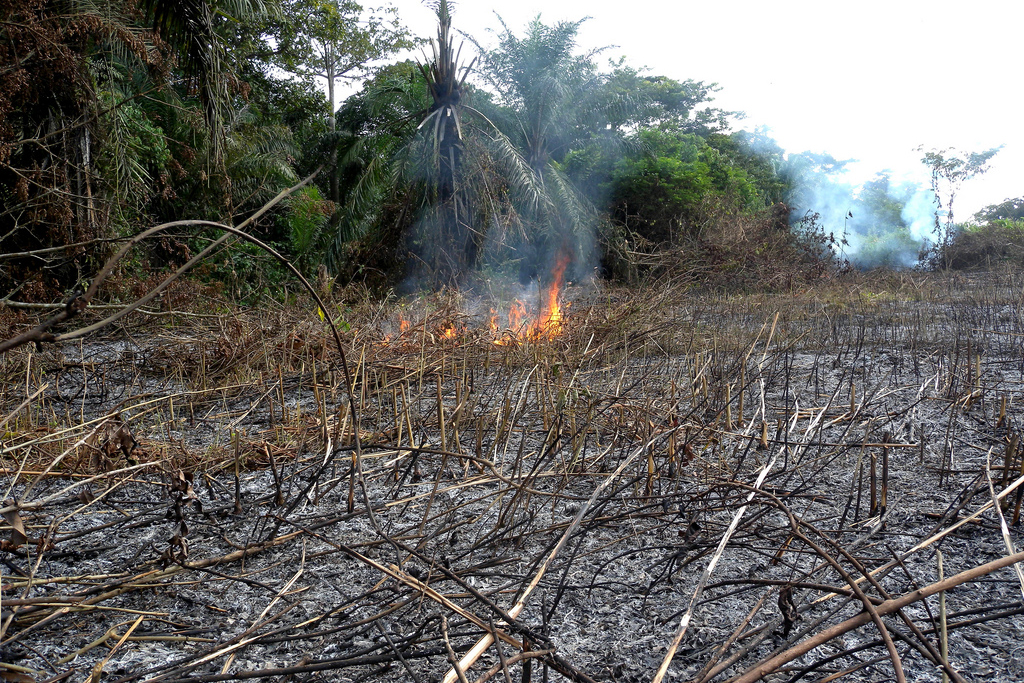
Low yields from slash-and-burn agriculture cannot ensure food security for the Democratic Republic of the Congo’s (DRC) rapidly growing population. Photo: UNEP

Low yields from slash-and-burn agriculture cannot ensure food security for the Democratic Republic of the Congo’s (DRC) rapidly growing population. Photo: UNEP

“Armed conflicts are becoming ever more complex, and require solutions that address the root causes,” Ban said in his message marking the International Day for Preventing the Exploitation of the Environment in War and Armed Conflict.

“Issues of poverty, vulnerability to climate shocks, ethnic marginalization and the transparent, sustainable and equitable management of natural resources must be considered within and alongside peace agreements if we are to build more resilient and prosperous societies.”

read more »

07/11/2014

Gorbachev, the Man Who Changed the World

Human Wrongs Watch

By Federico Mayor Zaragoza*, Other News 

Gorbachev in 1987 President of the Soviet Union

**Gorbachev in 1987 | President of the Soviet Union, 15 March 1990 – 25 December 1991| Wikimedia Commons

November 2014 — Twenty-five years ago the initial dismantling commenced at the Berlin Wall, that symbol of cold war, separation and confrontation for over twenty-eight years.

And with its fall, shortly thereafter, the immense Soviet empire was transformed practically overnight into a Commonwealth of Independent States, whose member countries began a long march toward achieving public liberties…

And all of this was accomplished without shedding even one drop of blood, thanks to Mikhail Sergeyevich Gorbachev, the “magician of the unexpected”.

read more »

07/11/2014

Migrant Workers in Lebanon – Playing for Equality

A cricket tournament highlights issues affecting migrant workers in Lebanon – and hits out at discrimination to bring communities together.

Migrant workers in Lebanon gathered for a day of cricket on the outskirts of Beirut | Source: ILO

Migrant workers in Lebanon gathered for a day of cricket on the outskirts of Beirut | Source: ILO

.
Beirut, 6 November 2014 (ILO)* – Every Sunday in Lebanon, some of the country’s hundreds of thousands of non-Arab migrant workers emerge from an arduous week at work to enjoy their only day off.
 .
Amongst them is Fernando Sugath, a migrant worker from Sri Lanka. For several years, Sugath has been meeting fellow migrant workers at the weekend at a Beirut parking lot to play cricket, a sport that is highly popular in his home country but little known in Lebanon outside migrant communities.
07/11/2014

World Population Aged 60 or Older 'Will Jump from 800 Million Now to 2 Billion by 2050'

Human Wrongs Watch

The UN health agency on 6 November 2014 warned that as the world population aged 60 or older will jump from some 800 million to 2 billion in the next four decades, soaring levels of chronic illness and diminished wellbeing are poised to become a major global public health challenge.
.
 [An old person posing in front of her house in Chagas, Mexico, where long-lasting impregnated curtains were installed in order to keep the house free of the triamatone bugs. Photo: WHO/TDR /Isaias Montilla] An old person posing in front of her house in Chagas, Mexico, where long-lasting impregnated curtains were installed in order to keep the house free of the triamatone bugs. Photo: WHO/TDR /Isaias Montilla

An old person posing in front of her house in Chagas, Mexico, where long-lasting impregnated curtains were installed in order to keep the house free of the triamatone bugs. Photo: WHO/TDR /Isaias Montilla

.
“By 2020, for the first time in history, the number of people aged 60 years and older will outnumber children younger than 5 years,” the UN World Health Organization (WHO) said reporting its findings in a series on health and ageing in the medical journal The Lancet.

And “by 2050, the world’s population aged 60 years and older is expected to total 2 billion, up from 841 million today,” WHO said, noting that 80 percent of these older persons will be living in low-income and middle-income countries.

read more »