24/06/2016

As of June 2016, 4.6 million people are severely food insecure in the Lake Chad basin, of which 65 per cent are located in Northeast Nigeria, especially in the Borno and Yobe States. Photo: FAO/Patrick David
In a press release, FAO said that as of June, 4.6 million people are severely food insecure in the Lake Chad Basin, of which 65 per cent are located in northeast Nigeria, especially in Borno and Yobe states.
Posted in Africa, Market Lords, Mother Earth, Others-USA-Europe-etc., The Peoples |
Leave a Comment »
24/06/2016
Countries in the Latin America region should carry out a strategic reorientation of their labour market policies in order to increase productivity and address rising unemployment resulting from an economic slowdown, a new report by the United Nations International Labour Organization (ILO) on 23 June 2016 urged.
 A woman attends her post in a market in zone 3, Guatemala City, Guatemala. Photo: World Bank/Maria Fleischmann | Source: UN News Centre
The report, What works: Active labour market policies in Latin America and the Caribbean warns that the achievements made in the region since the 2000s, in terms of social inclusion and work quality, have stalled and are even beginning to reverse, which can lead to a dangerous “structural stagnation” in labour markets that could, in turn, generate an increase in inequality and informality and erosion in the middle class.
read more »
Posted in Latin America & Caribbean, Market Lords, Others-USA-Europe-etc., The Peoples |
Leave a Comment »
23/06/2016

If production stagnates, caloric availability declines & child malnutrition rises to 20% in Asia-Pacific. Credit: ADB
By 2025, the total population of Asia and the Pacific region should reach about 4.4 billion. And over the next 40 years, Asia’s urban population is projected to increase from 1.9 billion to 3.2 billion.
read more »
Posted in Asia, Market Lords, Mother Earth, Others-USA-Europe-etc., The Peoples |
Leave a Comment »
23/06/2016
The United Nations head of humanitarian operations for Lebanon on 22 June 2016 urged the international community to develop a comprehensive approach of support, or risk the implosion of a country that is vital to the regional dynamics.
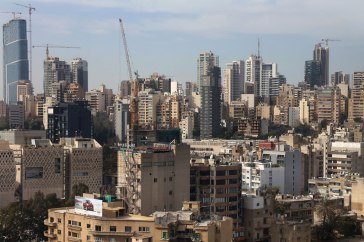
City view of Beirut, Lebanon. Photo: World Bank/Dominic Chavez | Source: UN News Centre
At a press conference at UN Headquarters in New York this afternoon, Philippe Lazzarini, Deputy Special Coordinator for Lebanon, highlighted that when we first began his new post, Lebanon was described to him as a resilient country known for managing crisis on the edge.
read more »
Posted in Asia, Market Lords, Middle East, Others-USA-Europe-etc., The Peoples, War Lords |
Leave a Comment »
23/06/2016
The number of people displaced from their homes due to conflict and persecution last year exceeded 60 million for the first time in United Nations history, a tally greater than the population of the United Kingdom, or of Canada, Australia and New Zealand combined, says a new report released on 20 June 2016 on World Refugee Day .

In Yemen, internally displaced children stand outside their family tent after the family fled their home in Saada province and found refuge in Darwin camp, in the northern province of Amran. PhotO: UNHCR/Yahya Arhab
The Global Trends 2015 compiled by the Office of the UN High Commissioner for Refugees (UNHCR) notes that 65.3 million people were displaced at the end of 2015, an increase of more than 5 million from 59.5 million a year earlier.
read more »
Posted in Africa, Asia, Latin America & Caribbean, Market Lords, Middle East, Others-USA-Europe-etc., The Peoples, War Lords |
Leave a Comment »
22/06/2016
 With fear etched on their faces, clearly still suffering from the trauma of a rough by boat across the Aegean, an Afghan family arrives in Lesvos, Greece (2015). Photo credit: UNHCR/Giles Duley
Hardly a statement could have portrayed more accurately the current wave of hatred invading humankind, like the one made by the UN High Commissioner for Human Rights, Zeid Ra’ad Al Hussein.
read more »
Posted in Africa, Asia, Latin America & Caribbean, Market Lords, Middle East, Mother Earth, Others-USA-Europe-etc., The Peoples, War Lords |
1 Comment »
22/06/2016
21 June 2016 – The United Nations Office for the Coordination of Humanitarian Affairs (OCHA) has released its 2015 annual report, articulating its response to the humanitarian challenges and human suffering, in all corners of the world that have overstretched the UN relief arm.

Humanitarian partners delivering aid to 71,000 people in Houla, rural Homs in Syria. Photo: UNOCHA Syria
The report recalls the humanitarian response and the work undertaken by OCHA in five level-three emergencies in the Central African Republic, Iraq, South Sudan, Syria, and Yemen, as well as in two sudden onset natural disasters in Nepal and Vanuatu, many protracted crises, including the complex mixture of violence and environmental degradation in the Lake Chad Basin that continued to require intensive advocacy, coordination and resource mobilization.
read more »
Posted in Africa, Asia, Latin America & Caribbean, Market Lords, Middle East, Mother Earth, Others-USA-Europe-etc., The Peoples, War Lords |
Leave a Comment »
22/06/2016
MEXICO CITY, Jun 20 2016 (IPS) – Civil society organizations from Chile, Mexico and Peru are pressing their legislatures and those of other countries not to ratify the Trans-Pacific Partnership (TPP).

A girl holds a sign saying the TPP means Transferring Fully our Powers, during a protest against the trade agreement in Santiago, Chile. Credit: Courtesy of “A Better Chile without TPP”
The free trade agreement, which was signed in New Zealand on Feb. 4, is now pending parliamentary approval in the 12 countries of the bloc, in a process led by Malaysia. Chile, Mexico and Peru are the three Latin American partners.
read more »
Posted in Africa, Asia, Latin America & Caribbean, Market Lords, Middle East, Mother Earth, Others-USA-Europe-etc., The Peoples |
Leave a Comment »
22/06/2016
GENEVA (UNHCR)* – With tens of thousands of civilians pouring out of the embattled Iraqi city of Falluja in recent days, US$17.5 million is urgently needed to meet their immediate needs, the UN Refugee Agency on 21 June 2016 said.

Families from Falluja, Iraq, continue to flee from the city as fighting continues. © UNHCR/Anmar Qusay
.
More than 85,000 people have fled Falluja and the surrounding area since a government military offensive to retake the city from extremists began a month ago, on May 23.
About 60,000 of these fled over a period of just three days last week, between 15 to 18 June. Thousands more could still be planning to leave the city, UNHCR spokeswoman Ariane Rummery told a news briefing in Geneva on Tuesday (June 21).
read more »
Posted in Asia, Market Lords, Middle East, Others-USA-Europe-etc., The Peoples, War Lords |
Leave a Comment »
22/06/2016

Indigenous Asheninka activist Diana Rios (centre) from the Amazon village of Saweto, Peru is the daughter of slain activist Jorge Rios who was murdered by illegal loggers in September 2014. Credit: Lyndal Rowlands / IPS.
The report, On Dangerous Ground, found that in 2015, 185 people were killed defending the environment across 16 countries, a 59 percent increase from 2014.
read more »
Posted in Latin America & Caribbean, Market Lords, Mother Earth, The Peoples, War Lords |
Leave a Comment »


 HUMAN WRONGS WATCH