07/04/2017

Djibouti’s strategic and commercial relevance at the junction of Africa, the Middle East and Indian Ocean is further bolstered by its increasing network of ports. Credit: James Jeffrey/IPS
Not that long ago Djibouti was known for little more than French legionnaires, atrocious heat and its old railway line to Addis Ababa in Ethiopia. Nowadays, however, this tiny republic of only about 900,000 people on the Horn of Africa coast has big plans, including turning its capital into the Dubai of Africa.
read more »
Posted in Africa, Middle East, Others-USA-Europe-etc., The Peoples |
Leave a Comment »
05/04/2017
By Frida Bengtsson*
Greenpeace – All life on Earth comes from the oceans… and they’re still looking after us today.

Des, surf rescue team at Manly beach, Sydney, Australia, 2016 | Greenpeace
The oceans have protected us from the worst impacts of global warming. Our oceans have trapped 90% of the extra heat caused by greenhouse gas emissions over the last sixty years.
20,000 years ago the world was just over 4°C colder on average than today, and a large part of North America was buried kilometres-deep in ice. Without the oceans absorbing the man-made heat of the past half century, we would have seen the Earth warm by an average of 36°C. Even disaster movies haven’t considered anything this devastating.
read more »
Posted in Africa, Asia, Latin America & Caribbean, Market Lords, Middle East, Mother Earth, Others-USA-Europe-etc., The Peoples |
Leave a Comment »
05/04/2017

President of the Caribbean Development Bank Dr. Warren Smith says the bank is giving high priority to addressing the fallout from climate change in the region. Credit: Desmond Brown/IPS
Nearly all of these countries are vulnerable to natural events like hurricanes.
read more »
Posted in Africa, Asia, Latin America & Caribbean, Market Lords, Middle East, Mother Earth, Others-USA-Europe-etc., The Peoples |
Leave a Comment »
05/04/2017
UN Secretary-General António Guterres on 4 April 2017 voiced deep regret at the decision by the United States to cut financial support for the United Nations population agency, stating that the announcement is based on a misinterpretation of the UN agency’s work.

A UNFPA-supported health centre 400 kilometers southwest of Uganda’s capital Kampala, includes a ward where women in their final stages of pregnancy can remain comfortably and avoid arduous travel once labour begins. Photo: UNFPA/Omar Gharzeddine
The Secretary-General “believes that the decision is based on an inaccurate perception of the nature and importance of the work of UNFPA,” the spokesperson said referring to the acronym for the UN Population Fund.
read more »
Posted in Africa, Asia, Latin America & Caribbean, Market Lords, Middle East, The Peoples |
Leave a Comment »
05/04/2017
ROME, Apr 4 2017 (IPS) – Good news: Kenya has just joined the commitment of other 10 countries to address major plastic pollution by decreeing a ban on the use, manufacture and import of all plastic bags, to take effect in six months.

Plastic bags are also a major contributor to the 8 million tonnes of plastic dumped in the sea every year. Credit: UNEP
The Kenyan decision comes three weeks after the UN declared “war on plastic” through its new UN Clean Seas initiative, launched on at the Economist World Ocean Summit in Bali (February 22-24, 2017).
The initiative’s campaign urges governments to pass plastic reduction policies; industry to minimise plastic packaging and redesign products; and consumers to change their throwaway habits before irreversible damage is done to our seas.
“Kenya is taking decisive action to remove an ugly stain on its outstanding natural beauty,” Erik Solheim, Head of UN Environment Programme (UNEP) commented on the Nairobi government’s decision.
read more »
Posted in Africa, Asia, Latin America & Caribbean, Market Lords, Middle East, Mother Earth, Others-USA-Europe-etc., The Peoples |
Leave a Comment »
04/04/2017
By Johan Galtung*
3 April 2017 – TRANSCEND Media Service – Starting with EU at 60, making small states (Luxembourg!) big by being members of something bigger, but making bigger, even imperial, states smaller by being “members”.

Johan Galtung
The Netherlands is small: Wilders suffered a humiliating defeat. But the UK is big with imperial past: old, rural people voted Brexit out of EU anonymity, but into what?
Master in their own house? With problems with Ireland and the Celtic fringe–Scotland, Wales–even threatening UK survival?
Can Anglo-America, UK even more under USA, compensate for that? They may want back; the obvious EU strategy being to adjust to many Brexit points.
France is also big and imperial. But Le Pen-Front National will not defeat a majority seeing EU as a French creation (Monnet, Schuman) and the Communauté Française as carried by the mystique of the French language anyhow. Frexit would make France smaller. France will stay.
read more »
Posted in Africa, Asia, Latin America & Caribbean, Market Lords, Middle East, Mother Earth, Others-USA-Europe-etc., The Peoples, War Lords |
Leave a Comment »
04/04/2017
The United Nations advisory body on issues related to population and development on 3 April 2017 kicked off its annual session, with a focus on changing population age structures and sustainable development.

A grandmother feeds her two year old granddaughter in Naubise, Dhading. Nepal Photo: Aisha Faquir/World Bank | SOURCE: UN News Centre
“Population ageing and population decline have now become key issues for a growing number of Member States,” Under-Secretary-General for Economic and Social Affairs Wu Hongbo told the opening segment of the Commission on Population and Development’s fiftieth annual session, which will run at UN Headquarters through 7 April.
read more »
Posted in Africa, Asia, Latin America & Caribbean, Market Lords, Middle East, Others-USA-Europe-etc., The Peoples |
Leave a Comment »
03/04/2017

Depression causes persistent sadness, a loss of interest in activities that you normally enjoy and an inability to carry out daily activities. Credit: WHO
Not that the world body all of a sudden wants to spoil your happiness—it is just that depression affects people of all ages, from all walks of life, in all countries, and as many as over 300 million people worldwide, according to the latest estimates from the World Health Organization (WHO).
read more »
Posted in Africa, Asia, Latin America & Caribbean, Market Lords, Middle East, Mother Earth, Others-USA-Europe-etc., The Peoples, War Lords |
Leave a Comment »
03/04/2017
By Uri Avery*
1/4/2017
SOME DAYS ago, a man committed an act of terrorism in the center of London, a city I love.
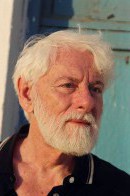
Uri Avnery
He ran over several persons on Westminster Bridge, stabbed a policeman to death and approached the doors of Parliament, where he was shot dead. All this in the shadow of the tower of Big Ben, an irresistible photographic target.
It was an electrifying world-wide news item. Within minutes, Daesh was blamed. But then the truth came out: the terrorist was a British citizen, a Muslim convert born in England. From early youth he had committed a string of petty crimes. He had been in and out of prison several times.
read more »
Posted in Market Lords, Middle East, Mother Earth, Others-USA-Europe-etc., The Peoples, War Lords |
Leave a Comment »
03/04/2017
Some 400 million people in Asia and the Pacific still confront poverty as part of their daily lives due to widening income inequality, despite the region’s impressive gains in reducing poverty in recent decades, a United Nations-backed report has found.
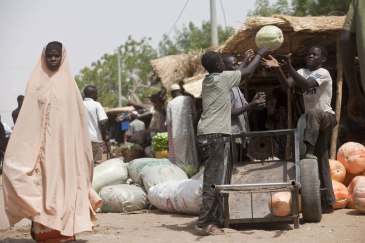
Rural produce can boost urban nutrition. Fruit vendors unloading pumpkins at the market in Maradi, Niger. Photo: FAO/Giulio Napolitano
“As outlined in the report, a renewed strengthening of the social contract is critical for addressing multi-dimensional poverty and the high marginalization and exclusion of people,” the Executive Secretary of ESCAP, Shamshad Akhtar, told the Asia Pacific Forum on Sustainable Development (APFSD 2017), according to a press release from ESCAP.
read more »
Posted in Asia, Market Lords, Others-USA-Europe-etc., The Peoples |
Leave a Comment »


 HUMAN WRONGS WATCH