Human Wrongs Watch

The Indigenous World 2017. Credit: IWGIA
These are some of the key findings of a major report “The Indigenous World 2017,” on the state of indigenous peoples worldwide, issued on the occasion of the tenth anniversary of the United Nations Declaration on the Rights of Indigenous Peoples.
The report, launched on 25 April by the International Working Group for Indigenous Affairs (IWGI) during the UN Permanent Forum on Indigenous Issues meeting (24 April—5 May), emphasises that in spite of progress, there are still major challenges facing indigenous peoples in Africa.
Africa is home to an estimated 50 million indigenous peoples, that’s around 13 per cent of the total of 370 million indigenous peoples worldwide. They live in all regions of Africa, with large concentrations in North Africa where the Amazigh people live. In West Africa, there are large pastoralist populations in countries like Niger, Mali, Burkina Faso, Cameroon etc.
There are also large concentrations of indigenous peoples in East Africa with big pastoralist populations in countries like Ethiopia, Kenya, Uganda and Tanzania. Hunter-gatherers are found in many countries in central and Southern Africa, though they are smaller in numbers than the pastoralist groups.
In several African states, explains IWGIA, “indigenous peoples are yet to be recognised as such.” Arguments of all Africans being indigenous or that the concept “indigenous peoples” is divisive and unconstitutional are persistently expressed in political statements and continue to shape policies of a number of African countries.
Large-scale dispossessions of indigenous peoples’ lands remain a significant challenge in several African states, says the report, adding that the global drive for raw materials, agro-business and building major infrastructure projects are pushing indigenous peoples to their last boundaries.
A recent African Commission’s report on extractive industries and indigenous peoples reveals the negative impact several mining, agro business and logging projects are having on indigenous peoples’ land rights and access to natural resources, according to IWGIA.
In several cases, tensions with indigenous peoples have led to open conflicts, including loss of lives. In this regard, the African Commission has sent urgent appeals to a number of African governments on serious human rights violations affecting indigenous peoples.
Forced Evictions, Human Eights Violations
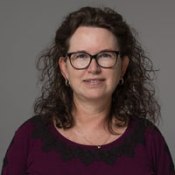
Marianne Wiben Jensen
Marianne Wiben Jensen, IWGIA’ senior advisor on Africa and Land Rights, told IPS that Africa’s indigenous peoples are victims of land grabbing and other forms of land dispossession caused by extractive industries, agribusiness and other business operations.
“This leads to forced evictions and other forms of serious human rights violations,“ she said, adding that indigenous peoples in Africa are “marginalised economically and politically and are only to a very limited extent participating in decision-making processes.”
“So they have very limited possibilities of voicing their perspectives and priorities and influencing their own futures,” Wiben Jensen warned, explaining that they typically live in marginalised and remote areas with very limited and bad social infrastructure.
The issue of extractive industries is once again a recurrent and overarching theme in the Indigenous world. Numerous examples show that both states and industries are repeatedly ignoring the key principle of Free, Prior and Informed Consent.
Mega infrastructure projects, investments in extractive industries and large-scale agriculture are increasingly posing a threat to the everyday life of indigenous peoples and their ability to maintain their land, livelihood and culture.
At the same time, Wiben Jensen added, indigenous peoples in Africa have proven to be very resilient, and despite the many problems they face and the lack of support they receive from their governments, they are still there and manage to survive in often very harsh environments based on their unique indigenous knowledge of the nature and the natural resources.
“All this is happening amidst an alarming rate of violence and discrimination of indigenous peoples and human rights defenders around the world.”
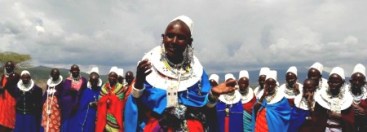
In the Ngorongoro district of Tanzania, indigenous women are getting organised. They don’t want to be kept out of decision-making processes – they want to be heard and respected. Credit: IWGIA
Violence against Indigenous Women, Girls
Wiben Jensen also warned that violence against indigenous women and girls continues to feature several indigenous communities in Africa, including harmful cultural practices such as Female Genital Mutilation (FGM), early or forced marriage and inaccessibility of good standards on reproductive rights.
Overall, one could put African states into three categories as far as the protection of indigenous peoples’ rights is concerned.
First, some African states that have fully endorsed the concept “indigenous peoples in Africa” and have moved on to adopt legal or policy frameworks aimed at addressing the concerned communities’ particular human rights situation. “These states are still small in number but their potential impact is immense.”
Second, some African states recognise and are willing to redress the historical injustices and marginalisation suffered by certain sections of their national populations that self-identify as indigenous peoples, “but remain uncomfortable with the term “indigenous peoples” and therefore prefer using alternative concepts in their laws or policies.”
Third, there are African states that continue to contest the existence of indigenous peoples in the continent or the relevance of the concept in Africa. There are numerous reasons for this denial, including a misunderstanding of what the concept “indigenous peoples in Africa” means.
The Forgotten Peoples, Reported
The Indigenous World 2017 is IWGIA’s 30th report on the status of indigenous peoples and comes in a special edition on the occasion of the 10th anniversary of the UN Declaration on the Rights of Indigenous Peoples.
It provides an update of the current situation for indigenous peoples worldwide and a comprehensive overview of the main global trends and developments affecting indigenous peoples during 2016. It contains 59 detailed country reports and 12 articles on defining global processes in a total of 651 pages.
It also highlights that despite some encouraging national achievements, the country reports in this year’s edition continue to illustrate the great pressures facing indigenous communities at the local level.
Over 70 experts, indigenous activists and scholars have contributed to the Indigenous World 2017, which has been published with support from the Danish Ministry of Foreign Affairs / Danida, Denmark’s development cooperation.
Related:
- Indigenous Peoples – Best Allies or Worst Enemies?
- Indigenous Peoples Lands Guard 80 Per Cent of World’s Biodiversity
- The Indigenous ‘People of Wildlife’ Know How to Protect Nature
- Rights of Indigenous Peoples ‘Critical’ to Combat Climate Change
- Indigenous Women: The Frontline Protectors of the Environment
- Long Way to Go for Indigenous Rights Protection
- “Serious Retreats” In Indigenous Rights Protection, Says UN Rapporteur
- Without Indigenous People, Conservation Is a Halfway Measure
- Beyond Standing Rock: Extraction Harms Indigenous Water Sources
- Indigenous Land Rights Bring Economic, not just Environmental Benefits
 *Author: Baher Kamal, Egyptian-born, Spanish-national secular journalist. He is founder and publisher of Human Wrongs Watch.
 More articles by Baher Kamal in Human Wrongs Watch:
20 Million People Could ‘Starve to Death’ in Next Six Months
Indigenous Peoples – Best Allies or Worst Enemies?
Middle East, Engulfed by a ‘Perfect Storm’
Yemen, World’s Largest Humanitarian Crisis
ACP: One Billion People to Speak To Europe with One Voice
Did You Know that the Oceans Have It All?
The Unbearable Cost of Drought in Africa
‘Humanity and Social Justice, a Must for the Future of Work’
Work, What Future? Seven Big Questions Needing Urgent Response
Plastic No More… Also in Kenya
Climate Breaks All Records: Hottest Year, Lowest Ice, Highest Sea Level
New Evidence Confirms Risk That Mideast May Become Uninhabitable
The Indigenous ‘People of Wildlife’ Know How to Protect Nature
These Women Cannot Celebrate Their Day
Antarctic Ice Lowest Ever – Asia at High Risk – Africa Drying Up
UN Declares War on Ocean Plastic
Of Arabs and Muslims and the Big Ban
Every Year 700 Million People Fall Ill from Contaminated Food
A Dire Vacuum in a World in Crisis
Indigenous Peoples Lands Guard 80 Per Cent of World’s Biodiversity
World’s 40,000 MP’s Must Enjoy Their Rights – But Are They?
Want to Prevent Stroke, Diabetes, Cancer? Get Moving… Now!
Trump to Pull Out of the UN, Expel It from the US?
Inequality (III): Less Employment… and More ‘Junk’ Jobs
Inequality (II): “It Will Take 170 Years for Women to Be Paid as Men Are”
Inequality (I): Half of World’s Wealth, in the Pockets of Just Eight Men
Poor Darwin – Robots, Not Nature, Now Make the Selection
When Your Healers Become Your Killers
Is Cash Aid to the Poor Wasted on Tobacco and Alcohol?
Poor Darwin – Robots, Not Nature, Now Make the Selection
When Your Healers Become Your Killers
Is Cash Aid to the Poor Wasted on Tobacco and Alcohol?
“Bonn Has Become an Insider Tip on the International Stage”
Battle of the Desert (and III): The Silk Road
Battle of the Desert (II): A ‘Great Green Wall for Africa’
Battle of the Desert (I): To Fight or to Flee?
Children of the ‘Others’, Sons of Minor Gods
World to Cut Gas Emissions by 25 Percent More Than Paris Agreement
Toxic Air – The ‘Invisible Killer’ that Stifles 300 Million Children
Climate Doomsday – Another Step Closer
What Happens When a Small Farmer Migrates?
‘The Earth Is Not Flat; It Is Urban’
Take a Deep Breath?… But 9 in 10 People Live with Excessive Air Pollution!
Believe It or Not, Pulses Reduce Gas Emissions!
Ships Bring Your Coffee, Snack and TV Set, But Also Pests and Diseases
One Humanity? Millions of Children Tortured, Smuggled, Abused, Enslaved…
Arable Lands Lost at Unprecedented Rate: 33,000 Hectares… a Day!
War on Climate Terror (II): Fleeing Disasters, Escaping Drought, Migrating
War on Climate Terror (I): Deserts Bury Two Thirds of African Lands
African Farmers Can Feed the World, If Only…
Climate Victims – Every Second, One Person Is Displaced by Disaster
400 Million People Live with Hepatitis But They Do Not Know
Rights of Indigenous Peoples ‘Critical’ to Combat Climate Change
Forests: To Farm or Not to Farm? That’s the Question!
‘Monster’ El Niño Subsides, ‘Monster’ La Niña Hitting Soon
‘Modern World Is Chaotic, Confused; Human Security a Must’
Xenophobic Rhetoric, Now Socially and Politically ‘Acceptable’ ?
‘Hate Is Mainstreamed, Walls Are Back, Suspicion Kills’
What If Turkey Drops Its “Human Bomb” on Europe?
Humanitarian Aid – Business As Unusual?
World Oceans Day – A Death Sea Called Mediterranean
The Humanitarian Clock Is Ticking, The Powerful Feign Deafness
Humanitarian Summit, The Big Fiasco
Humanitarian Summit: Too Big to Fail?
Humanitarian Summit Aims to Mobilise Up to 30 Billion Dollars
Africa, Resolved to Address African Problems With African Solutions
‘We Cannot Keep Jumping from Crisis to Crisis’
‘Human Suffering Has Reached Staggering Levels’
Now 1 in 2 World’s Refugees Live in Urban Areas
Middle East – The Mother of All Humanitarian Crises
Mideast: 1 in 3 Pays Bribe to Access Basic Public Services
Climate: Africa’s Human Existence at Severe Risk
No Water in the Kingdom of the Two Seas – Nor Elsewhere
Will the Middle East Become ‘Uninhabitable’?
Can an Animal Heist Fable Help Solve the Middle East Crisis?
A “Colombian Triangle” for Daesh in Libya?
‘Take My Iraqis and Give Me Some Syrians’ – Europe to Turkey
New Nuclear Hysteria in the Middle East
Africa Launches Largest Trading Block with 620 Million Consumers
Big War Lords Playing Brinkmanship Game in Syria
Cameron at large: Want Not to Become a Terrorist? Speak Fluent English!
Women’s Rights First – African Summit
Africa, Only If It Bleeds It Leads?
Seven Top Challenges Facing African Women
Once Auctioned, What to Do with the ‘Stock’ of Syrian Refugees?
Silence, Please! A New Middle East Is in the Making
The Over-Written, Under-Reported Middle East (II): 99.5 Years of (Imposed) Solitude
The Over-Written, Under-Reported Middle East (I): Of Arabs and Muslims
Egypt in the Rear Mirror (I): The Irresistible Temptation to Analyse What One Ignores
Egypt in the Rear Mirror (II): Who Are the Not-So-Invisible Powers Behind the Troglodytes?
Fed Up With Empty Promises, The Arabs May Abandon Nuclear Non-Proliferation Treaty
Anti-Nukes Move from Norway to Bahrain
Middle East Nuclear Free Bid Moves to Finland – Yet Another Lost Chance?
Annual Spending on Nuclear Weapons, Equivalent To UN Budget For 45 Years
Watch The Sky–It May Rain Atomic Bombs
Save The Planet? Just Eat Cars, Drink Fuel!
Who Is Afraid of 300 Or 400 Or 500 Million Miserables?
Violence And Death For Millions Of Life-Givers
Whither Egypt (I) – Did You Say Dictatorship?
Whither Egypt (II) – Economic Bankruptcy
Politicians Promote Fossil Fuels with Half a Trillion Dollars a Year
Who Dares to Challenge a 32 Billion Dollars Business – Human Trafficking?
Palestine: Yet Another One Hundred Years of Solitude
Does Anyone Know Anything About A New Country Called South Sudan?
South Sudan: Yet Another Kitchen-Garden?
Somalia? Which Somalia? Some Facts About Everybody’s — Nobody’s Land
2017 Human Wrongs Watch
Discover more from HUMAN WRONGS WATCH
Subscribe to get the latest posts sent to your email.
 Baher Kamal
 HUMAN WRONGS WATCH
Leave a comment