Archive for August, 2017

18/08/2017

Pregnant, Breastfeeding Women among Most at Risk in Yemen’s Cholera Outbreak

Human Wrongs Watch

17 August 2017 – In the midst of the cholera outbreak in Yemen, where an average 5,000 people fall sick every day, the United Nations population agency is warning about the dangers to pregnant and breastfeeding women.

At 22 May Hospital in Sana’a, Yemen, Dr. Farea checks in on a pregnant woman with cholera. Photo: UNFPA/Yemen

Pregnant and breastfeeding women, especially those who are malnourished, are particularly vulnerable. An estimated 1.1 million malnourished pregnant women are at risk, requiring immediate care,” the UN Population Fund (UNFPA) recently said.

One of these women is Ibtisam, who contracted cholera when she was nine months pregnant.

read more »

18/08/2017

South Sudan Refugees in Uganda Exceed One Million

Human Wrongs Watch

As the number of refugees from South Sudan in Uganda passes one million – the vast majority of whom are women and children – the United Nations refugee agency on 17 August 2017  reiterated its call for urgent additional support.

The Imvepi refugee camp in the Arua district, northern Uganda. Seen here are refugees waiting for additional profiling. They will then wait to be relocated to different zones within the camp. UN Photo/Mark Garten

“Over the past 12 months, an average of 1,800 South Sudanese have been arriving in Uganda every day,” said the Office of the UN High Commissioner for Refugees (UNHCR) in a statement to the press.

read more »

18/08/2017

New EU Policy on Boat Rescues Will Cause More People to Drown – UN Rights Experts

Human Wrongs Watch

The European Union’s new policy on Mediterranean Sea rescues threatens life and breaches international standards, two United Nations independent human experts on 17 August 2017 cautioned.

Migrants from the Mediterranean are rescued in the Channel of Sicily, Italy. Photo: IOM/Francesco Malavolta (file)

“The EU’s proposed new action plan, including a code of conduct for organizations operating rescue boats, threatens life and breaches international standards by condemning people to face further human rights violations in Libya,” said the Special Rapporteur on the human rights of migrants, Felipe González Morales, and the Special Rapporteur on torture, Nils Melzer.

read more »

17/08/2017

Minamata Convention Curbing Mercury Use, Now Legally Binding

Human Wrongs Watch

ROME, Aug 16 2017 (IPS)* The Minamata Convention — a legally-binding landmark treaty, described as the first new environmental agreement in over a decade – entered into force August 16..

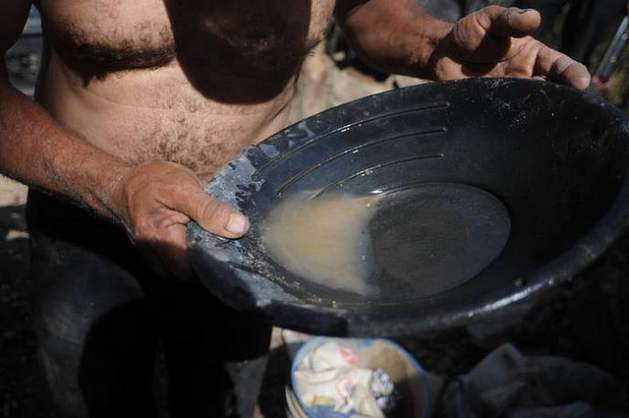
Minamata Convention - Informal gold mining is one of the main sources of mercury contamination. An artisanal gold miner in El Corpus, Choluteca along the Pacific ocean in Honduras. Credit: Thelma Mejía/IPS.

Informal gold mining is one of the main sources of mercury contamination. An artisanal gold miner in El Corpus, Choluteca along the Pacific ocean in Honduras. Credit: Thelma Mejía/IPS.

The primary aim of the Convention is “to protect human health and the environment” from mercury releases, which are considered both environmental and health hazards, according to the United Nations.

read more »

17/08/2017

Treaty Bans New Mercury Mines While Phasing-Out Existing Ones and Reducing Emissions, Use

Human Wrongs Watch

A ground-breaking global convention on mercury on 16 August 2017 went into effect, the United Nations environment wing said, protecting millions of children and infants from possible neurological and health damage.

Artisanal small scale mining is responsible for up to 35% of global emission of mercury into the environment. Photo: Global Environment Facility | Source: UN News Centre

17/08/2017

What Does “Climate-Smart Agriculture” Really Mean? New Tool Breaks It Down

Human Wrongs Watch

PORT OF SPAIN, Trinidad, Aug 14 2017 (IPS) – A Trinidadian scientist has developed a mechanism for determining the degree of climate-smart agriculture (CSA) compliance with respect to projects, processes and products.

The base for a water catchment tank. Faced with severe droughts, many farmers in the Caribbean have found it necessary to set up catchment areas to harvest water whenever it rains. Credit: CDB

This comes as global attention is drawn to climate-smart agriculture as one of the approaches to mitigate or adapt to climate change.

read more »

17/08/2017

Critical Voices in Critical Times: the Partition of India – Lessons Learned, an Interview with Rajmohan Gandhi

Gandhi with grandchildren Rajmohan and Tara. Delhi, circa March 1942. From the back cover of Rajmohan Gandhi’s, Why Gandhi Still Matters (Aleph, 2017)


read more »

17/08/2017

Why Are There Pesticides in Our Eggs?

Human Wrongs Watch

By Christiane Huxdorff and Davin Hutchins*

11 August, 2017 (Greenpeace)* — In case you missed the news this week, here’s what we know so far: during the first week in August, the Dutch food safety authority (NWMA) announced that they discovered tens of thousands of eggs contaminated with fipronil – a toxic anti-lice pesticide, banned in food production in the EU. Dutch and Belgian police have since made arrests at the homes of buyers of the fipronil-laced pesticides.

Eggs in ALDI Supermarket in Germany

Millions of eggs could be contaminated. The full extent isn’t known yet, but 180 Dutch farms have been temporarily closed and major German retailers like Lidl and Aldi have been pulling eggs off their shelves.

Authorities in Germany are testing other products made with eggs; like pasta, mayonnaise and cakes.

read more »

17/08/2017

Colombia: UN Observers Conclude FARC-EP Arms Removal Process

Human Wrongs Watch

16 August 2017 – More than 8,000 weapons and over one million burned cartridges were transported to a central warehouse in Colombia as the United Nations political mission in the country concluded the process of the laying down of individual weapons of the Revolutionary Armed Forces of Colombia (FARC-EP) combatants.

.

UN observers removing the last of more than 8,112 guns carried by the FARC-EP. Photo: UN Mission in Colombia

17/08/2017

Latin America and Caribbean at Difficult Juncture as Foreign Direct Investment Shrinks – UN

Human Wrongs Watch

16 August 2017 – The United Nations Latin America commission has reported that foreign direct investment (FDI) inflows to the region declined by 7.9 per cent to $167.043 billion in 2016, due to low commodity prices, sluggish economic growth and global trend of shifting investment in developed economies.

A railroad worker fixed tracks in Mexico. Photo: Curt Carnemark/World Bank | Source: UN News Centre.

The report on 2017 Foreign Direct Investment, published annually and launched late last week by the UN Economic Commission for Latin America and the Caribbean (ECLAC) , showed the region is losing ground as a recipient of FDI, with inflows reducing for the second year in a row to levels as six years ago.