10 May 2019 — The decision by a large armed group based in north-east Nigeria to release nearly 900 youngsters has been welcomed by UN Children’s Fund, UNICEF, which has warned that those freed will need long-term help if they are to lead a normal life in the future.
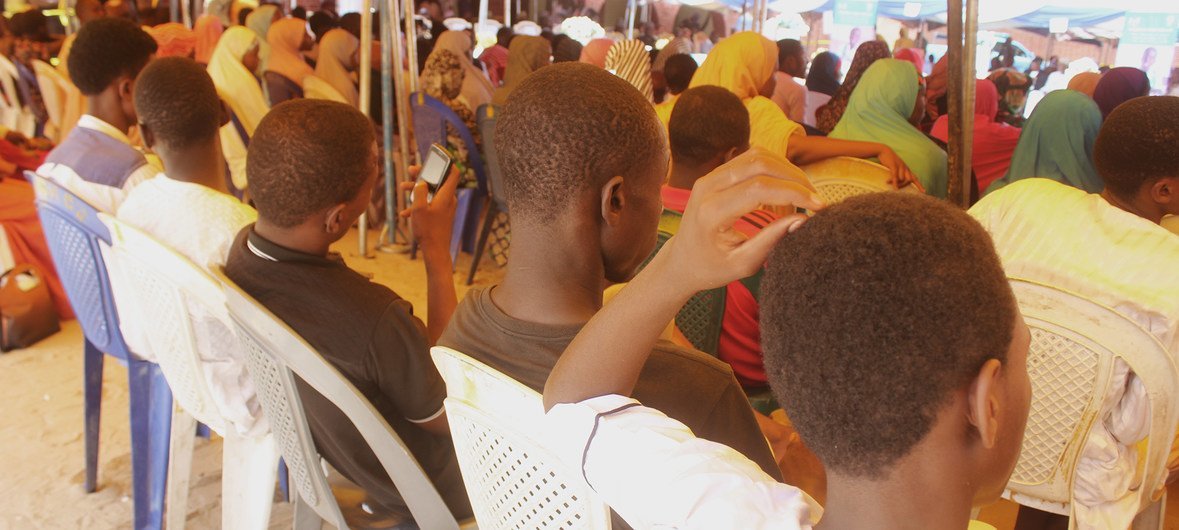
UNICEF | A total of 894 children, including 106 girls, have been released in Maiduguri, north-east Nigeria, from the ranks of the Civilian Joint Task Force, a local militia that helps the Nigerian security forces. (10 May 2019)
“Today [10 May 2019], 894 children, including 106 girls, were released from the ranks of an armed group called (the) Civilian Joint Taskforce (CJTF) in Maiduguri, north-east Nigeria as part of this group’s commitment to end and prevent the recruitment and use of children,” said Spokesperson Christophe Boulierac.
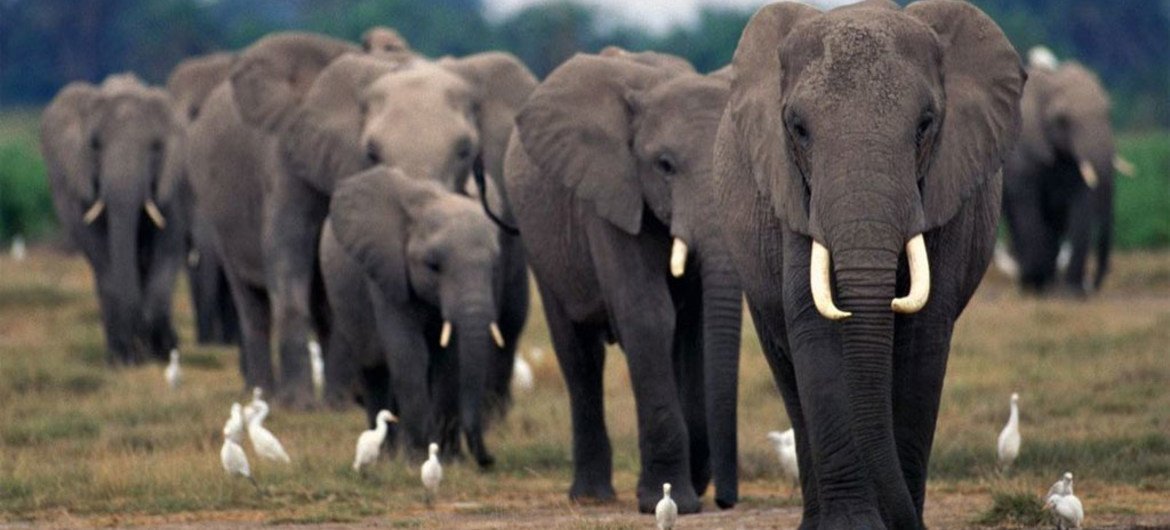
10 May 2019 — An updated assessment by a United Nations Environment Programme-administered treaty has confirmed that poaching continues to threaten the long-term survival of the African elephant.
CITES | Elephant poaching and ivory smuggling levels remain alarmingly high in Africa.
.
Based on the Proportion of Illegally Killed Elephants data, or PIKE, the Convention on International Trade in Endangered Species of Wild Fauna and Flora (CITES) has evaluated the levels of illegal killing through MIKE, the acronym for the Monitoring of Illegal Killing of Elephants programme.
MIKE has calculated that illegal killing is the chief cause of death for elephants.
10 May 2019 (FAO)* — One of the key ingredients to a #ZeroHunger future is the soil beneath our feet. Although it may not look like much, soil is full of water, nutrients and microorganisms that are vital for growing our food.
However, soil is a finite resource – restoring even a few centimetres of soil can take up to 1 000 years.
It is nothing less than a “moral, ethical and economic imperative” to take more action to mitigate the existential threat posed by climate change, said top executives from across the United Nations system on Thursday [9 May 2019].
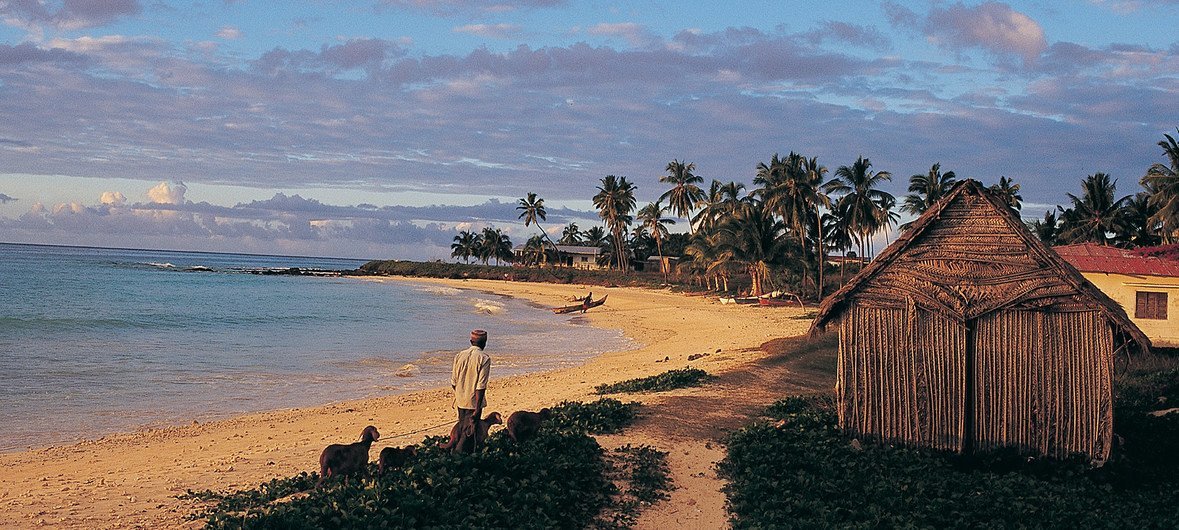
UNDP Comoros/James Stapley | People living on the Comoros archipelago in the Indian Ocean are needing to adapt to climate change.
Calling on Member States to take “urgent action to limit global temperature rise to 1.5°C above pre-industrial levels”, the leaders of more than 30 UN agencies and entities, issued a formal, joint appeal for governments everywhere to “step up ambition and take concrete action” ahead of the landmark Climate Action Summit, which has been convened by UN chief António Guterres this September.
10 May 2019 (UN Environment)* — Every year, birds make epic journeys across the world to survive. Over millions of years certain species of birds have become hard-wired to seek food and nesting sites along routes.
Photo by Bob Peyton/USFWS, Flickr
Take the red knot, a tiny shorebird that migrates from the tip of South America all the way to the Arctic Circle. They fly for up to 3,200 km without stopping at altitudes of 6,000 metres where the air is incredibly thin. And as they fly north, there are only a handful of specific places where they land.
9 May 2019 — The “race is on” in Indonesia to halt the illegal trade in wildlife and the loss of biodiversity according to the UN Development Programme (UNDP).The “race is on” in Indonesia to halt the illegal trade in wildlife and the loss of biodiversity according to the UN Development Programme (UNDP).*
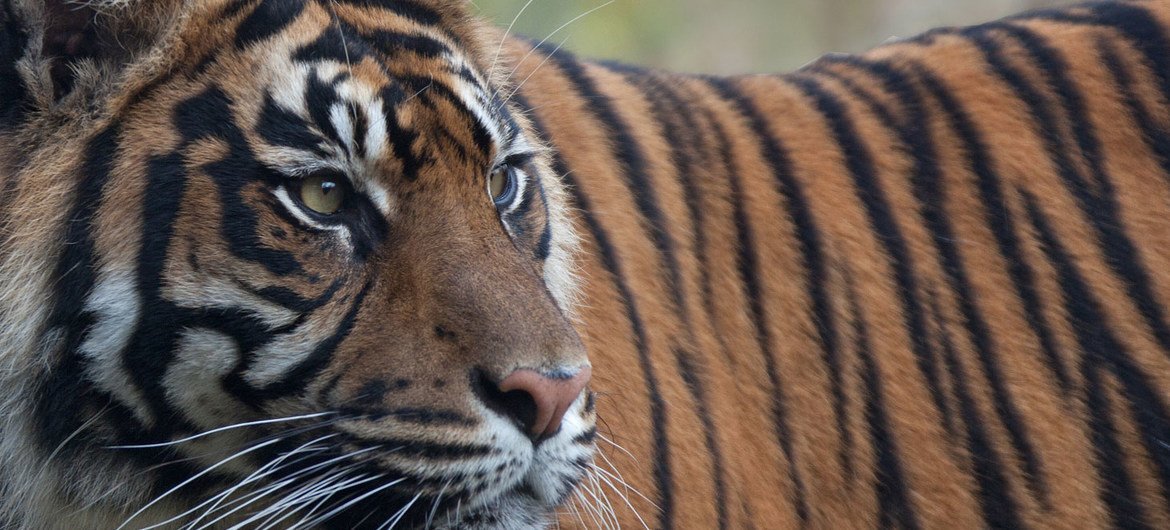
UNDP Indonesia | Sumatran tigers are found only on the Indonesian island of Sumatra, where less than 400 exist today.
The trade in wildlife in the South-East Asian country, which is estimated to be worth up to US$1 billion a year, has already led to the extinction of some animal species and disrupted the region’s ecological balance.
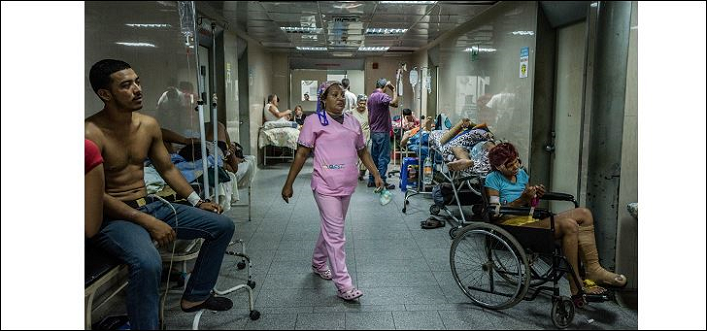
A new report on April 25 by a respected think tank has estimated that US sanctions imposed on Venezuela in August 2017 have caused around 40,000 deaths. This atrocity has been almost entirely blanked by the ‘mainstream’ media. Additional sanctions imposed in January 2019 are likely to lead to tens of thousands of further deaths.
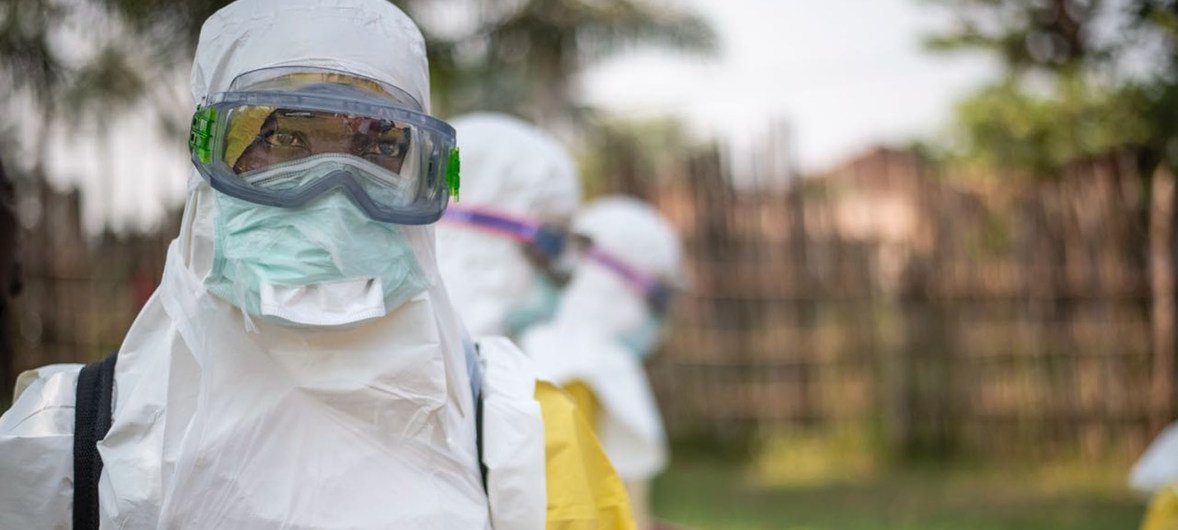
8 May 2019 — Now in its tenth month, the Ebola epidemic in the Democratic Republic of the Congo (DRC) has claimed more than a thousand lives, prompting Secretary-General António Guterres to throw the support of “the whole United Nations system” into stemming the spread of the deadly virus.
.
International Federation of Red Cross and Red Crescent Societies | Clinic in Mbandaka, Democratic Republic of the Congo, where health care workers treat Ebola patients.
“When people hear it from their peers who say ‘we’re fucked,’ that will be really powerful.”
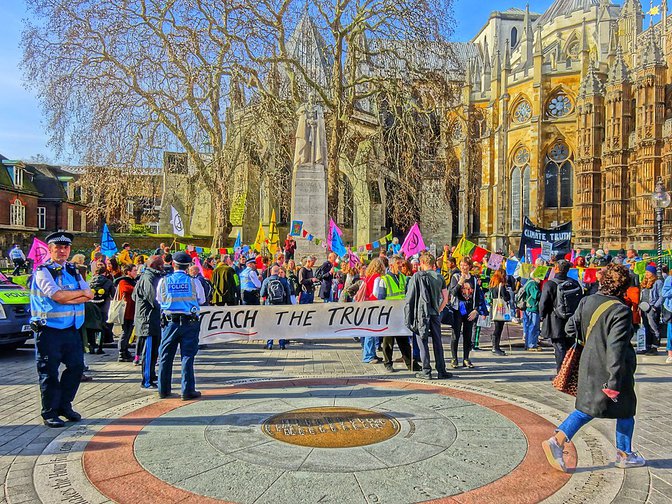
Extinction Rebellion Tell the Truth Protest, London February 22 2019. | David Holt via Wikimedia Commons. CC BY 2.0.
7 May 2019 (openDemocracy)* — In one mad sunny week over the Easter weekend, Extinction Rebellion brought public attention to the problem of climate change in a way that had rarely been achieved before. The group’s most ambitious demand – to cut greenhouse gas emissions completely by 2025 – is unlikely to be met.
Inflation historical data demonstrate that the elderly have experienced a gradual loss of their economic rights since Mauricio Macri became president in 2015.
Argentines protest in front of the Health Ministry to request the regularization of medicine purchases in Buenos Aires, Argentina, Jan. 26, 2018. The right sign reads “I died without medicines”. The left sing reads “You cut off my retirement and now you go for the medicines.” | Photo: EFE | Photo fromteleSUR.
8 May 2019 (teleSUR)* — In Argentina, the essential drugs average price increased by 710 percent between May 2015 and April 2019, an inflation process which mainly affected 6,983,377 people over 60 years of age.


 .
.

 HUMAN WRONGS WATCH