
Cyber attack | Image from Wall Street International.
'Unseen' News and Views
Only immediate climate action can save the future. If we don’t take action, the collapse of our civilizations and the extinction of much of the natural world are on the horizon.
.

Young people in the School Strike for Climate in Wellington, New Zealand | David Tong | CC BY-SA 4.0
A speech by Bill Moyers
At an April 30 conference entitled “Covering Climate Now”, co-sponsored by The Nation andColombia Journalism Review, Bill Moyers made a speech which included the following remarks:
22 May 2019 (UN Environment)* — When the sun’s first rays hit the green paddy fields in Ghagotpada in northern Bangladesh, fifty-year-old Mafruha is already hard at work in her kitchen. In this impoverished village, her home is a haven, always teeming with other women. While they mingle, Mafruha is whipping up delicacies for her visitors.

Photo by UN Environment/ Prashanthi Subramaniam
Travelling to Ghagotpada, one cannot miss the jarring sight of numerous brick kilns dotting the horizon. As the kilns noisily churn out harmful gases, polluting the air around them, the cramped kitchens of Ghagotpada fill up with smoke. The country is confronting a dire air pollution problem, with air quality index rankings pegging Dhaka as the third most polluted city in the world.
Valdecir Nascimento has been part of the women’s rights movement in Brazil for 40 years. When asked what inspired her, she said, “being a black woman in Brazil”.*

.
“Right now, there is a lot of aggression in the daily lives of black women in Brazil—in public spaces, in banks, hospitals, everywhere.
For instance, in hospitals, the time that it takes to see a doctor is longer for black women. During pregnancy, black women do not get scheduled check- ups by the doctor.
One-in-three girls or women will experience physical or sexual violence in her lifetime, and “the risk multiplies” during a conflict or natural disaster, the Executive Director of UNICEF told delegates attending the first-ever “Ending Sexual and Gender-Based Violence (SGBV) in Humanitarian Crises Conference” on Friday [24 May 2019], in the Norwegian capital, Oslo.

Paraguaná Refinery Complex in Falcón | Génesis García | CC BY-SA 3.0
Executive Summary
This paper looks at some of the most important impacts of the economic sanctions imposed on Venezuela by the US government since August of 2017. It finds that most of the impact of these sanctions has not been on the government but on the civilian population.
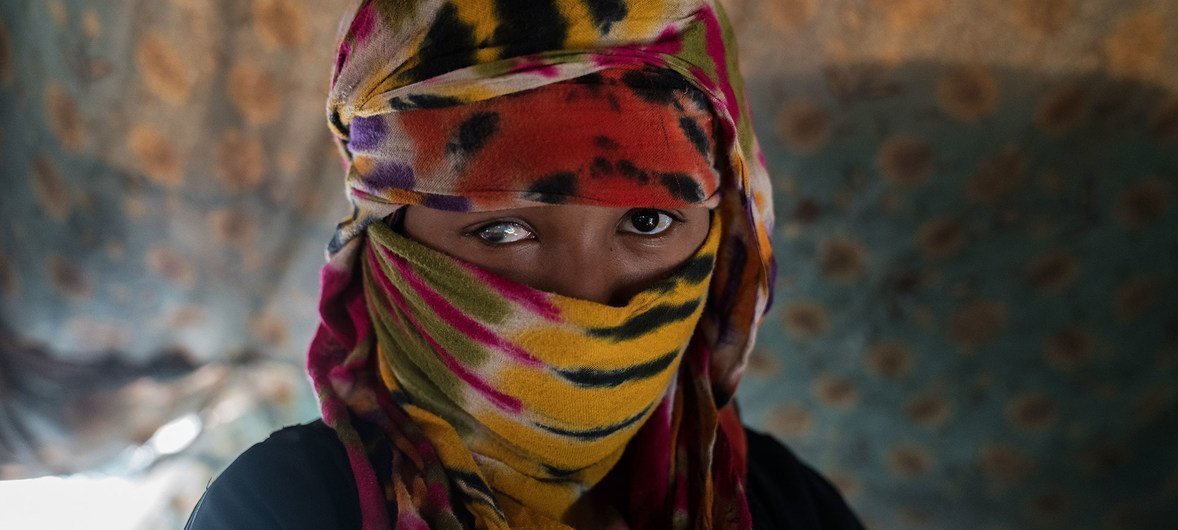
JUBA/COX’S BAZAR/UNITED NATIONS, 27 May 2019 (UNFPA)* – “My periods are a nightmare,” Nyanjuma Galoth, 20, told UNFPA at a civilian protection camp in South Sudan. “They are very painful, and I can’t get any sanitary products.”

How long will the myth of white supremacy bind white Americans?

26 May 2019 (Wall Street International)* — Most of America’s wars have been fought by those without the money or power to avoid military service. The Civil War is a dark example of the influence of class and ultimately racism upon the outcome of the conflict.
The Civil War has been characterized as “a rich man’s war and a poor man’s fight.” Poor farmers and just plain folks in the South were antagonistic toward the elite planters and the war itself.
Cox’s Bazar, 24 May 2019 (IOM)* – Bangladesh is boosting efforts to combat human trafficking with a 2018-2022 national plan of action to improve enforcement through better inter-agency coordination, improved training of officers and harmonization of existing laws.

Rohingya refugees living in Cox’s Bazar’s vast, impoverished camps are highly vulnerable to human trafficking. Photo: IOM/Muse Mohammed
The plan, developed with technical support from the International Organization for Migration (IOM), was presented to local officials and counter trafficking specialists at a conference in Cox’s Bazar this week. It follows legislation passed in 2012 to counter human trafficking in this South Asian country of 160 million.

24 May 2019 (openDemocracy)* — In his famous essay, ‘Algeria Unveiled’, Frantz Fanon (1959, p. 35) writes: ‘The way people clothe themselves, together with the traditions of dress and finery that custom implies, constitutes the most distinctive form of a society’s uniqueness’.
 HUMAN WRONGS WATCH