October 2019 (FAO)* — “There used to be a lot of wildlife here in my father’s and grandfather’s time: deer, tapir, capybara and peccaries,” explains Asaph, a traditional hunter from the Wapishana indigenous tribe in the Rupununi region of Guyana. “There are still some animals in the Kanuku Mountains, but they are harder to find.”
Protests that started over a hike in public transport fares boiled into massive marches. The government responded with heavy repression. At least 18 people have been killed, hundreds have been injured, and over 7,000 arrested.
The popular movement against Piñera’s neoliberal government and its repressive policies, is unprecedented in Chile’s modern history | Photo: teleSUR
25 October 2019 (teleSUR)* — Over one million people are marching in the streets of the Chilean capital, responding to the convocation of students and labor unions who organized on social media “The Largest March in Chile” on Friday afternoon, with rallies paralyzing major cities.
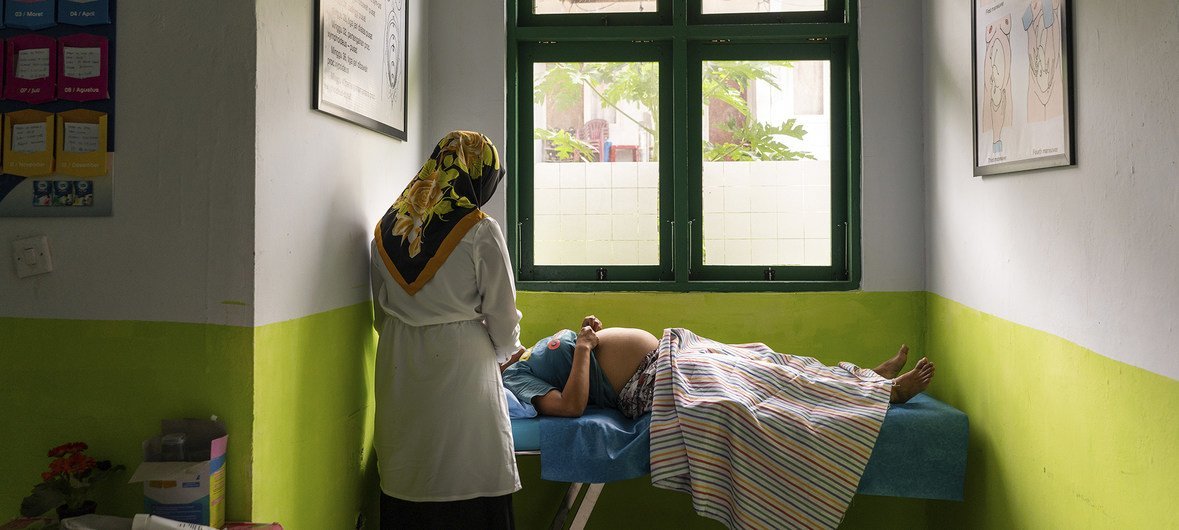
25 October 2019 — Around two-thirds of sexually active women surveyed in a new UN study indicated that although they wished to avoid or postpone having children, they had stopped relying on contraception out of concern for how it was affecting their health. As a result, around a quarter of all pregnancies are unplanned. That’s according to World Health Organization (WHO) findings published on Friday [25 October 2019].*
The family planning study of more than 10,000 women aged 15 to 49, across 36 low and middle-income countries confirms that 65 per cent of women with an unintended pregnancy were either not using contraception, or relied on traditional methods (such as withdrawal or calendar-based methods).
25 October 2019 — Sunaina lives in Majhi, a village of 104 people in Nepal’s impoverished Terai region. Huts fashioned of mud, thatch and straw stand in a row along the shoulder of a dirt road that carves through rice fields, where Sunaina, and the majority of her neighbours earn their living.*
In this under-developed area, sanitation has hitherto been lacking.
“Previously, the people did not have toilets, they did not see the necessity of having a proper place to defecate,” says Raju Prajad Sah, the local Chief Administrative Officer.
Michael Lynk said that Israel’s mission in Geneva does not respond to the requests to visit Palestinian territories.
The UN rapporteur sent a report to the UN General Assembly stating the Israeli occupation in Palestine is the longest occupation one in the world. | Photo: UN
24 October 2019 (teleSUR)* — Special rapporteur of the United Nations Organization on human rights in Palestine Michael Lynk condemned Israel for preventing him Thursday from traveling to the Palestinian territories, violating thus established procedures and protocols.
25 October 2019 — Protests in cities across the world in recent days show that “people are hurting and want to be heard” by political leaders who must now address a “growing deficit of trust”, said the UN chief on Friday [25 October 2019].*
.
OHCHR Regional Office for Centra Hundreds of people take to the streets of Managua, Nicaragua, demanding justice for victims of the violent crackdown on protests
Speaking to correspondents at UN Headquarters in New York, António Guterres said that although “every situation is unique” there are common underlying factors which constitute “rising threats to the social contract” between citizens and the political class.
The rights group said the demolitions left 238 Palestinians including 127 minors without a home.
Israel claims demolishing the family homes of alleged militants deters violence, while the Palestinians see it as a form of collective punishment. | Photo: Reuters (posted here fromteleSUR).
24 October 2019 (teleSUR)* — At least 140 Palestinian homes in east Jerusalem have been demolished so far this year by the Israeli authorities according to the rights organization B’Tselem who said Thursday that the figure was the highest since it began keeping records in 2004.
.
The rights group added the demolitions left 238 Palestinians including 127 minors without a home.
24 October 2019 (Wall Street International)* —At first I was appalled by the report of Piauí Magazine “Teatro Familiar – Alugar Parentes é um Negócio que Floresce no Japão” (Family Theater – Renting Relatives is an Emerging Business in Japan), but soon I realized the truism of the situation.
Japan is one of the main representatives of market capitalism | Image from Wall Street International.
This situation is banal and obvious from the point of view of the trajectories of market capitalism, in which everything is a product that can be consumed, but it is overwhelming to the extent of depersonalizing and reducing individuality to the condition of a mere representation of its institutional and affective pillars.
An interview with UN Environment Programme’s peatlands expert Dianna Kopansky
Photo by Aulia Erlangga/CIFOR.
23 October 2019(UN Environment)* — Tropical peatlands have been in the news recently with the very serious fires in Indonesia’s Jambi Province. Dianna Kopansky has worked extensively on tropical as well as other peatlands. She also coordinates the UN Environment Programme’s (UNEP) work on peatlands.
.
In this interview, she tells us about the importance of peatlands and what can be done to protect them from fires.
UNITED NATIONS, Oct 22 2019 (IPS)* – Sub-Saharan African migrants who risk perilous sea crossings to Europe are often assumed to be illiterate, jobless chancers in desperate bids to flee stagnation and rampant corruption in their home countries. But a survey of some 2,000 irregular African migrants in Europe found them to be more educated than expected, while many of them were leaving behind jobs back home that paid better-than-average wages.




 HUMAN WRONGS WATCH