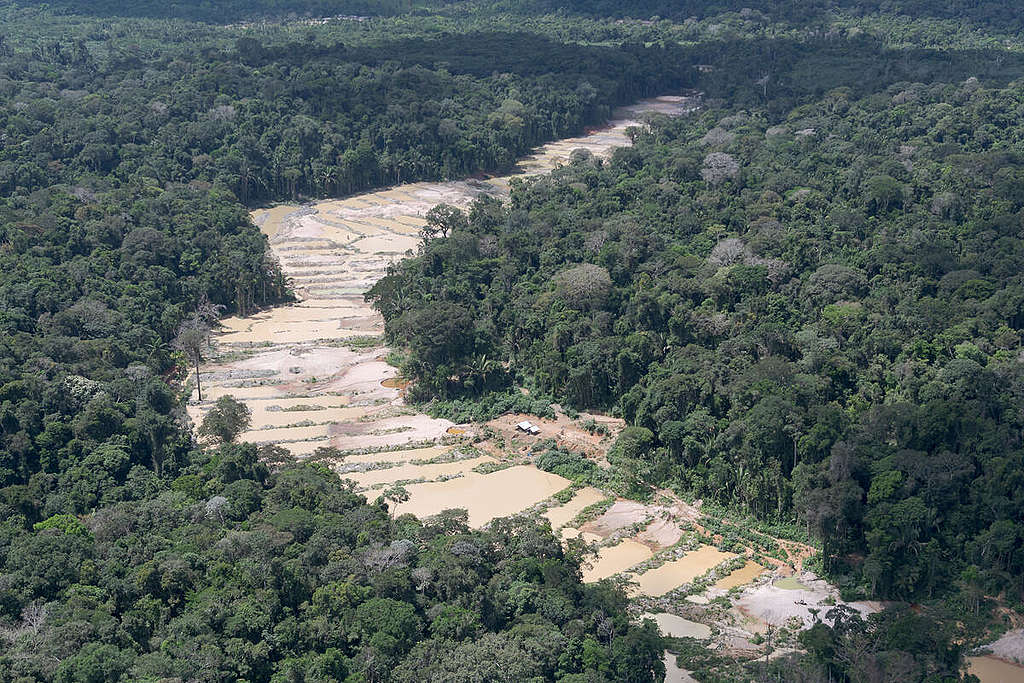
The rampant spread of the coronavirus in Brazil has already taken the lives of more than 57 thousand people. Meanwhile, illegal miners are going further and further into Indigenous lands in the Amazon, threatening not only the forest, but also exposing Indigenous People to COVID-19.
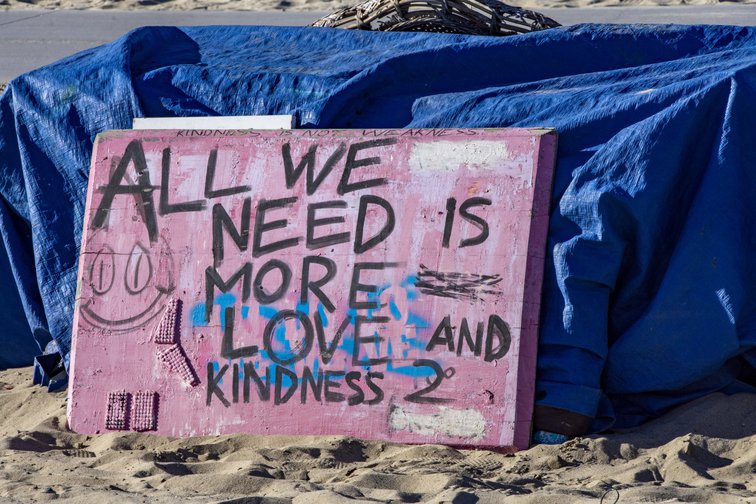
“Can we dare to think people are kind, and shape organisations around this view?”
7 July 2020 (openDemocracy)* — That’s the question Rutger Bregman examines in his latest book Humankind, and it’s one that anyone involved in youth and community work like me wrestles with on a daily basis. But is Bregman’s optimistic analysis grounded in reality?
To succeed, the struggle against racism needs to be understood in the context of the struggle against the culture of war.
In my history of the culture of war, I quote Malcolm X at length:
“”Book after book showed me how the white man had brought upon the world’s black, brown, red, and yellow peoples every variety of the sufferings of exploitation. I saw how since the sixteenth century, the so-called “Christian trader” white man began to ply the seas in his lust for Asian and African empires, and plunder, and power… First, always “religiously,” he branded “heathen” and “pagan” labels upon ancient non-white cultures and civilizations. The stage thus set, he then turned upon his non-white victims his weapons of war.”
SYDNEY and KUALA LUMPUR, Jul 7 2020 (IPS)* – In his early February annual State of the Union address, US President Donald Trump typically hailed his own policies for increasing wages and jobs to achieve record low US unemployment. Directly appealing to labour for a second term, Trump claimed exclusive credit for the US “blue-collar boom”.
Anis Chowdhury
‘Blue-collar boom’
During his previous two State of the Union speeches, Trump also directly appealed to blue-collar Americans who put him in the White House in November 2016.
As Trump claims manufacturing workers have been the main beneficiaries of his economic policies, including his trade and other policies, this seemed likely to dominate his re-election campaign.
In fact, US manufacturing growth had slowed to its lowest level in August 2019 when the purchasing managers’ index fell for the first time since September 2009. Despite his bombast, Trump has failed to reverse the continuing decline in manufacturing’s share of GDP.
By Sarah Schafer in New York and Matthew Mpoke Bigg in London. With contributions from Kristy Siegfried in Oxford, UK, and Gabriella Reis in Brasília. |UNHCR*
The police brutality that sparked protests in the United States and beyond reminds some refugees of the bigotry they fled — and sometimes still encounter in places they now call home. Here are some of their voices.
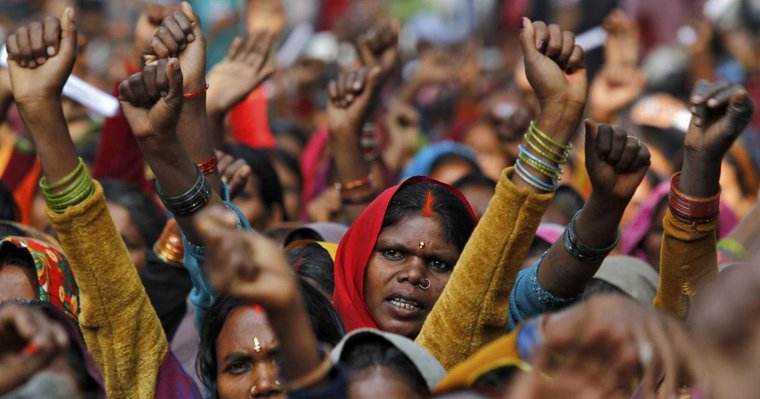
Indigenous women are on the front lines of resistance against forest evictions.
Image: Sabrang India
6 July 2020 (openDemocracy)* — The outbreak of the coronavirus and the regulations that have been installed by governments worldwide to protect citizens, life and vulnerable groups effect everyone – but not every person or community in the same way.
It is not yet clear, if indigenous groups in India, often living in remote areas with lack of information and restricted access to health care are particularly threatened by Covid-19 or more resilient to its spreading if they devise innovative coping mechanisms (such as self-isolation and protective health measures).
7 July 2020 (UN Environment)* — In their efforts to stave off a second wave of COVID-19, scientists from around the world have turned to a new ally: sewage.
In the United Kingdom, the Netherlands and Spain, researchers are poring over samples of wastewater for signs of the coronavirus, which is believed to be shed in human feces.
Given that many people with the virus are asymptomatic and will not be tested for the disease, scientists say sewage could act like a COVID-19 early warning system.
Countries have long monitored sewage, which is laden with traces of the food people eat, the medicine they take, and the disinfectants they use. Wastewater monitoring has been used for decades to assess the success of vaccination campaigns against poliovirus, for example.
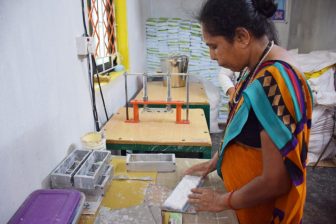
PILGAON/GOA, India, Jul 3 2020 (IPS)* – Jayashree Parwar has not traveled much outside of her village of Bicholim in the western coastal Indian state of Goa. But the homemaker-turned-social-entrepreneur has been reaching women in dozens of cities across the country with a hygiene product she makes at home along with women from her community.
The Sakhi sanitary pad is completely natural, comprising pinewood fibre, non-woven cloth, and butter paper. lt composts in eight days. Credit: Stella Paul/IPS
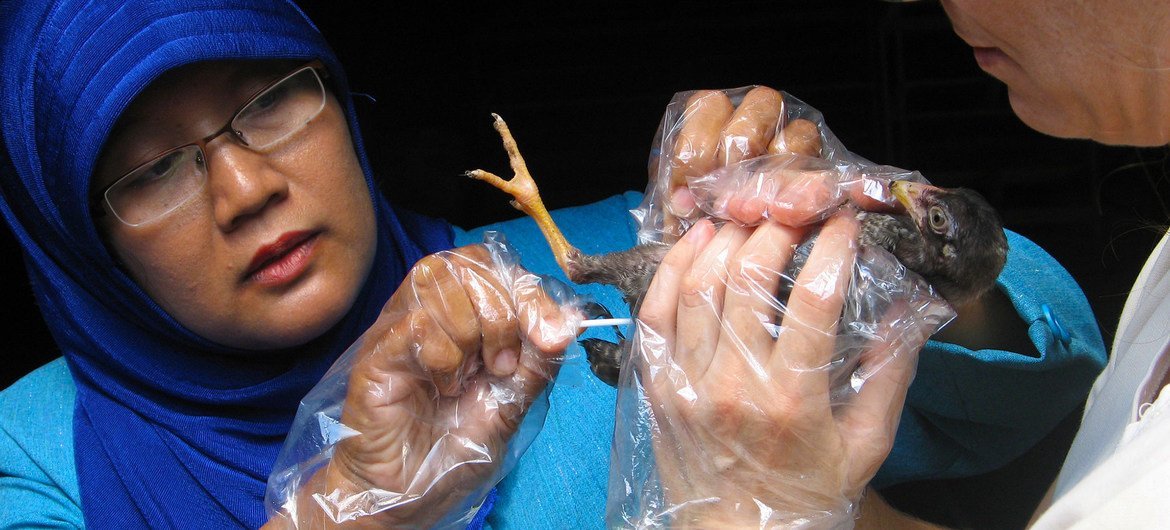
(UN News)* — As the battle against COVID-19 rages, the world can expect to see other diseases that pass from animals to humans emerge, according to a new UN report launched on 6 July 2020, which maintains that there is still time to head off potential zoonotic pandemics.
ILRI/Barbara Wieland | Researchers from the International Livestock Research Institute (ILRI) work to control bird flu in Indonesia.
(UN News)* — States, civil society, psychiatric organizations and the World Health Organization (WHO) itself must change the way they address mental health challenges, a UN independent rights expert said, calling for a shift towards understanding the context behind mental distress.
WHO/P. Virot | Patients at the Institute of Human Behaviour and Allied Sciences in Delhi, India.
While welcoming international recognition of mental health, Dainius Pūras, UN Special Rapporteur on the right to physical and mental health, told the Human Rights Council on 6 July 2020 that “much more is still needed”.




 HUMAN WRONGS WATCH