10 April 2019 (Norwegian Refugee Council)* — “Knowing I contribute to put food on the table and feed the children of other refugee families makes it worth the effort I put into my cooking,” says Syrian Khitam. Together with the Norwegian Refugee Council (NRC), she provides meals for 300 families affected by the winter storms in Lebanon.
Khitam is a 54-year-old woman from Syria and lives in one of the biggest refugee settlements in Lebanon, together with more than 1,500 refugees. She is one of seven refugee women cooking meals that are distributed to the refugees living in this and other settlements. Photo: Racha El Daoi/NRC
13 April 2019 (Wall Street International)* — Islamophobia can be said to refer to the way Islam is being alienated in society by other cultures through fear and distrust against people belonging to the Islamic faith. Muslims are often portrayed in an increasingly negative context as witnessed in media, legislation and public debates.
Islam is often presented as an ‘isolated culture’ with its own distinct features, which are allegedly incompatible with certain values upheld in Western societies.
It is the rise of such a polarizing context that results in growing fear against Muslims, prejudice of other cultures and the ‘us versus them’ paradigm.
12 April 2019 (openDemocracy)* — At any given moment, World Bank policy statements and press releases claim that the organisation has learned from its past mistakes, whether in the environmental, social or anti-corruption areas. But in many cases, the financial legacy of these mistakes is often enormous, and will last for decades.
“Miraculously I had no machete marks” a survivor of the Genocide against the Tutsi in Rwanda told a solemn United Nations event in New York on Friday [12 April 2019], 25 years on, to remember the systematic killing of more than one million people, over less than three months.*
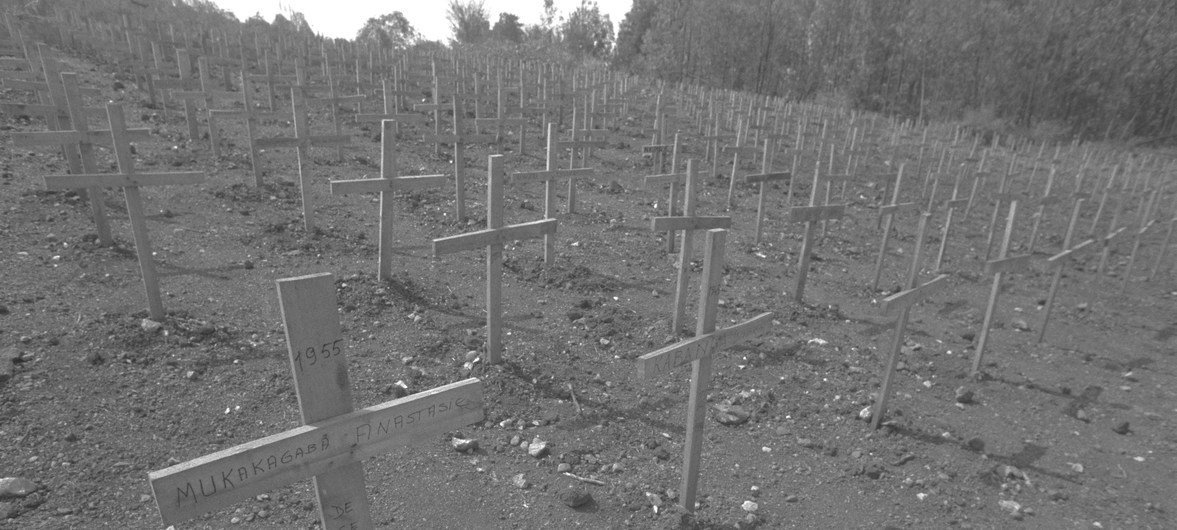
UNICEF/Giacomo Pirozzi | In 1996 in Rwanda, wooden crosses mark the graves in a cemetery in the village of Nyanza in a rural area of Kigali, the capital. During the 1994 genocide, over 10,000 people were burned to death in Nyanza as they tried to escape towards Burundi.
“Most of the survivors we have today were broken in their bodies and their souls”, Esther Mujawayo-Keiner told those gathered in the General Assembly Hall, to reflect on what UN chief António Guterres referred to as “one of the darkest chapters in recent human history”, which overwhelmingly targeted Tutsi, but also moderate Hutu and others who opposed the genocide.



 HUMAN WRONGS WATCH