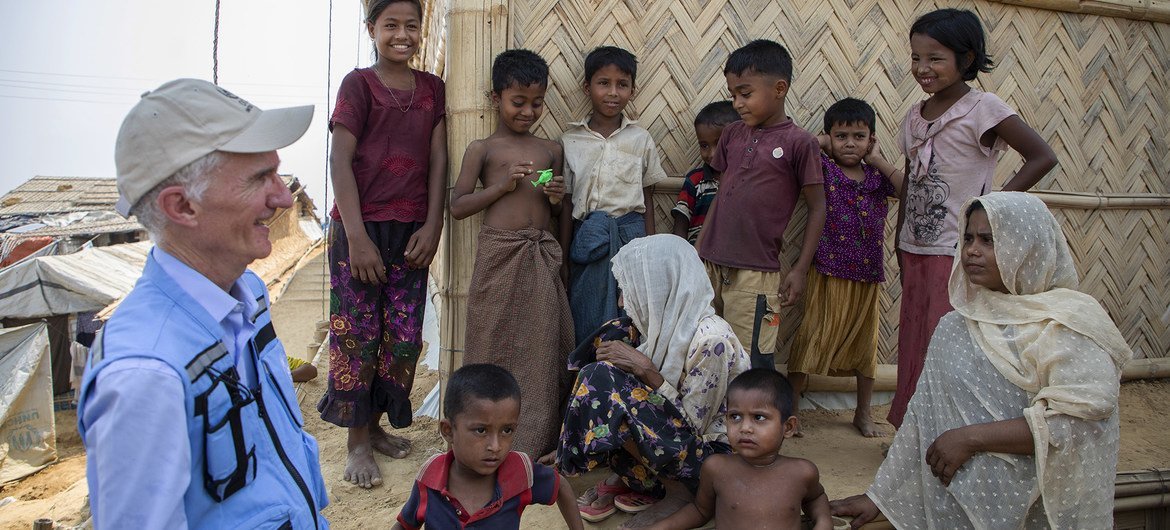
The critical needs of 1.2 million mostly Rohingya refugees in south-eastern Bangladesh were top of the agenda for a fact-finding mission to the region by three senior United Nations officials, who called for continuing support on Friday [26 April 2019] for them from the international community.
At the end of a joint visit to the country, UN Emergency Relief Coordinator Mark Lowcock, head of UN migration agency (IOM) António Vitorino, and UN High Commissioner for Refugees (UNHCR), Filippo Grandi, reiterated their commitment to find safe and sustainable solutions for Rohingya refugees in Bangladesh, as well as helping them to make a safe and dignified return home.
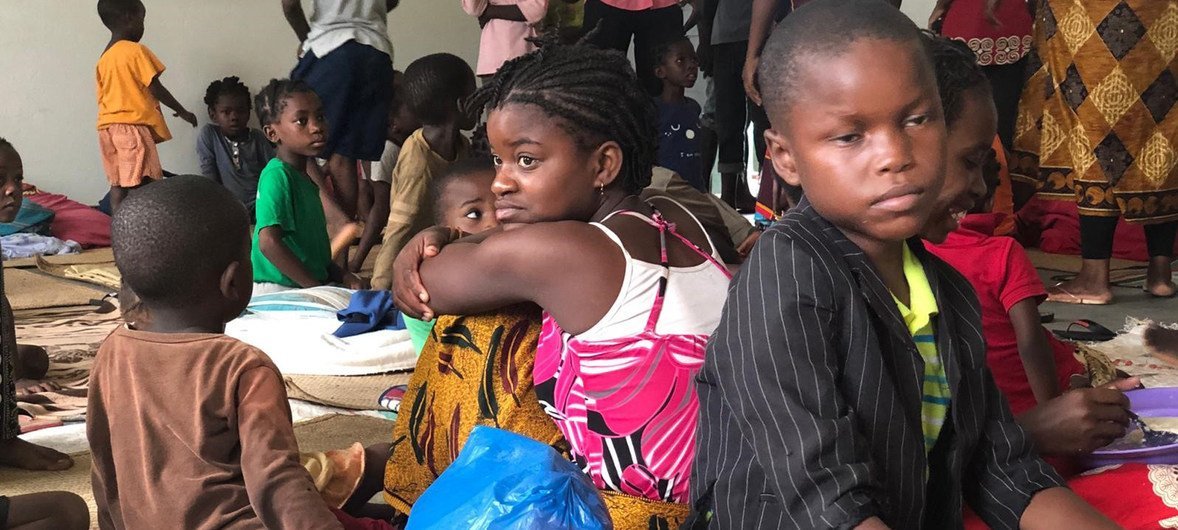
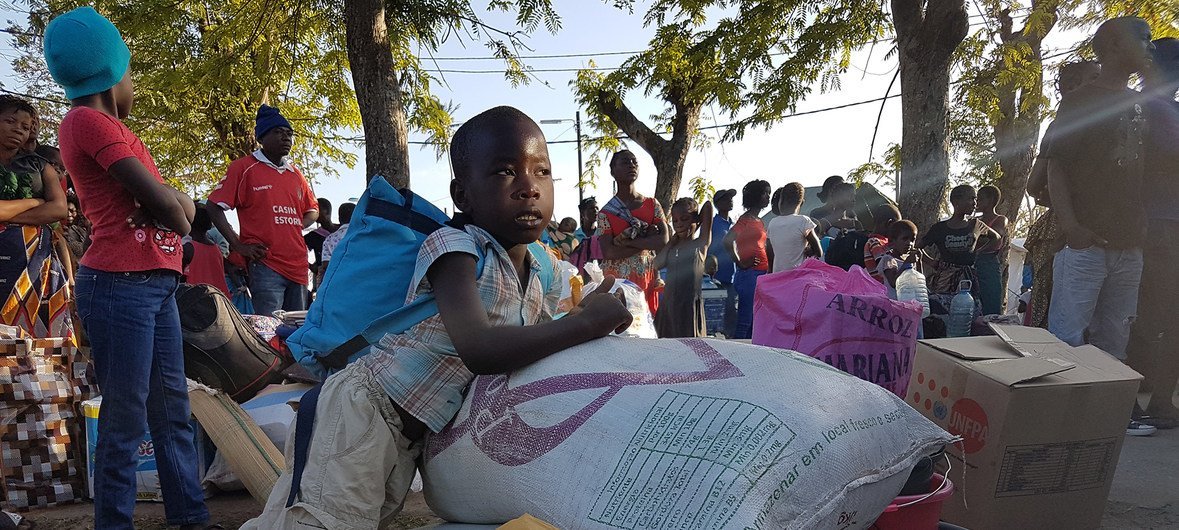
Tropical Cyclone Kenneth swept into northern Mozambique on Thursday evening bringing heavy rain and winds in excess of 225 kilometres per hour (140 miles per hour) after lashing the Comoros islands, where it claimed at least three lives, UN agencies said on Friday [26 April 2019].
WFP/Nour Hemici | Children sheltering in a school after being displaced by Cyclone Kenneth, in Pemba city, Mozambique.
“Tropical Cyclone Kenneth made landfall in northern Mozambique near the border with Tanzania in an area where no storm since the satellite-era has ever been observed,” said Clare Nullis, spokesperson for the World Meteorological Organization (WMO).
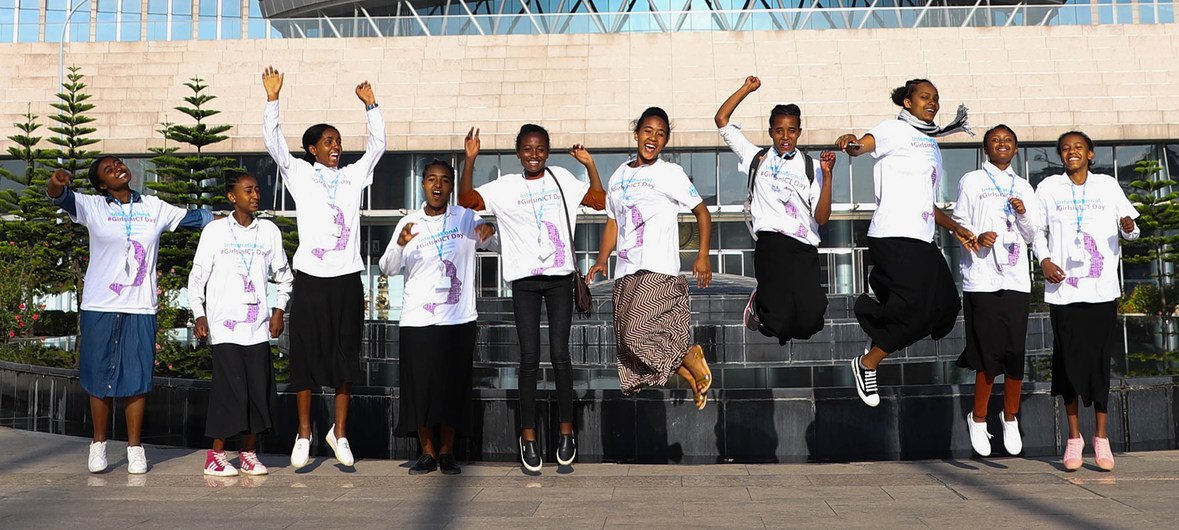
When women and girls are empowered with technology, the whole world benefits. That’s one key message from the International Day for girls in the field of information and communications technology, or ICT, marked on Thursday [25 April 2019].
ITU/M.Tewelde | Girls participating in the International Girls in ICT Day organised by ITU, at the African Union, Addis Ababa, Ethiopia (25 April 2019).
Celebrated every year on the fourth Thursday of April, the Day is an initiative of the International Telecommunications Union (ITU) and aims to encourage and empower girls and young women to consider entering the growing field of ICT, enabling both girls and technology companies to reap the benefits of greater female participation in the sector.
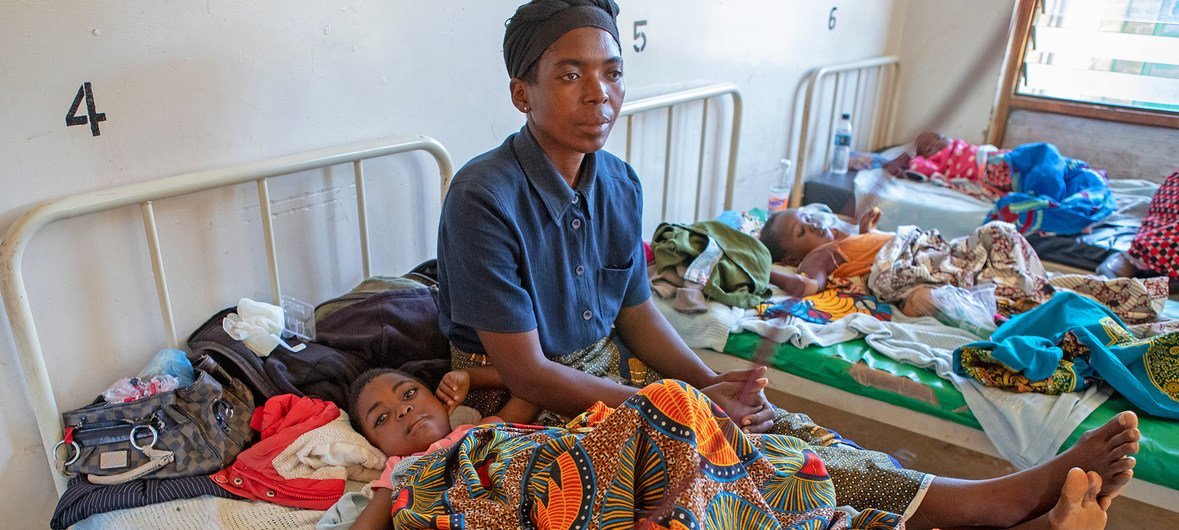
25 April 2019 — After more than a decade of steady advances in fighting malaria, progress has leveled off, which is why this World Malaria Day, the World Health Organization (WHO) is supporting a grassroots campaign to emphasize country ownership and community empowerment to improve malaria prevention and care.
WHO/Mark Nieuwenhof | A woman cares for her child who has malaria at a hospital in Malawi (April 2019)
“Every two minutes a child dies from this preventable and treatable disease”, said WHO Director-General Tedros Adhanom Ghebreyesus.
Emergency measures are being stepped up by the UN and partners in northern Mozambique, amid fears that another devastating tropical storm could batter coastal areas on Thursday [25 April 2019] evening, weeks after Cyclone Idai claimed hundreds of lives and flooded vast swathes of the south of the country.
“We are expecting that heavy rain will provoke flash floods and landslides impacting the north-eastern provinces of Cabo Delgado and Nampula,” Word Food Programme (WFP) spokesperson Herve Verhoosel said.
USPANTÁN, Guatemala, Apr 23 2019 (IPS)* — In the stifling heat, Diego Matom takes the bread trays out of the oven and carefully places them on wooden shelves, happy that his business has prospered since his village in northwest Guatemala began to generate its own electricity. | En español
Diego Matom, a member of the Ixil indigenous community, poses happily with his family, surrounded by fresh loaves of bread which were baked thanks to community electricity generation, which has given his business a big boost, in the 31 de Mayo village in the mountainous ecoregion of Zona Reina, in northwestern Guatemala. Credit: Edgardo Ayala/IPS
And it managed to do so against all odds, facing down big business and the local authorities.
The ‘Free Land Camp’ is gathering thousands to protest against neoliberalism and racism.
Kayapo men dance to defend indigenous land and cultural rights in Brasilia, Brazil, April 24, 2019. | Photo: Reuters | Photo from teleSUR.
24 April 2019 (teleSUR)* — Indigenous peoples from all over Brazil occupied Wednesday the ‘Ministries Esplanade’ in the capital Brazilia, the square where most ministries are located, to stage the 15th edition of the Free Land Camp (ATL), a meeting called this year to fight President Jair Bolsonaro’s policies.
Located in the Great Lakes Region, Burundi is one of the world’s poorest nations, faced with a fragile humanitarian situation mainly due to recurrent natural disasters, chronic vulnerability and food insecurity.
COPENHAGEN, 25 April 2019 (International Work Group for indigenous Affairs – IGWIA)* – Rising tensions between states and indigenous peoples are reaching a tipping point, and with an ever-shrinking civic space worldwide, the topics of criminalisation of Indigenous Rights Defenders’ activities and their organisations; land rights issues; and access to justice are more important than ever.
.
The Indigenous World 2019 adds to the documented records, highlighting the increase in attacks and killings of indigenous peoples while defending their lands and other natural resources.
.
The 62 country reports and 13 reports on international processes in this edition underscore this global trend, and includes a special focus on Indigenous Rights Defenders at risk.
24 April 2019 (Wall Street International)* — Intimacy with the other, with contexts is what characterizes relationships regarding presence and the present.
Perceiving the other and what happens through mediating referrals does metamorphose situations.
In the succinct, total moment, to be with the other, with what happens, is to have no mediating referrals. Direct contact is communication that allows for intimacy and familiarity. This encounter is to stand before, to perceive (know), which leads to categorizations, that is, recognitions that are significant and determinant.



 HUMAN WRONGS WATCH