Human Wrongs Watch
30 April 2019 — Communities in Colombia in South America are being helped by the UN Development Programme (UNDP) to preserve and reintroduce indigenous crops as a way to combat the effects of climate change.*
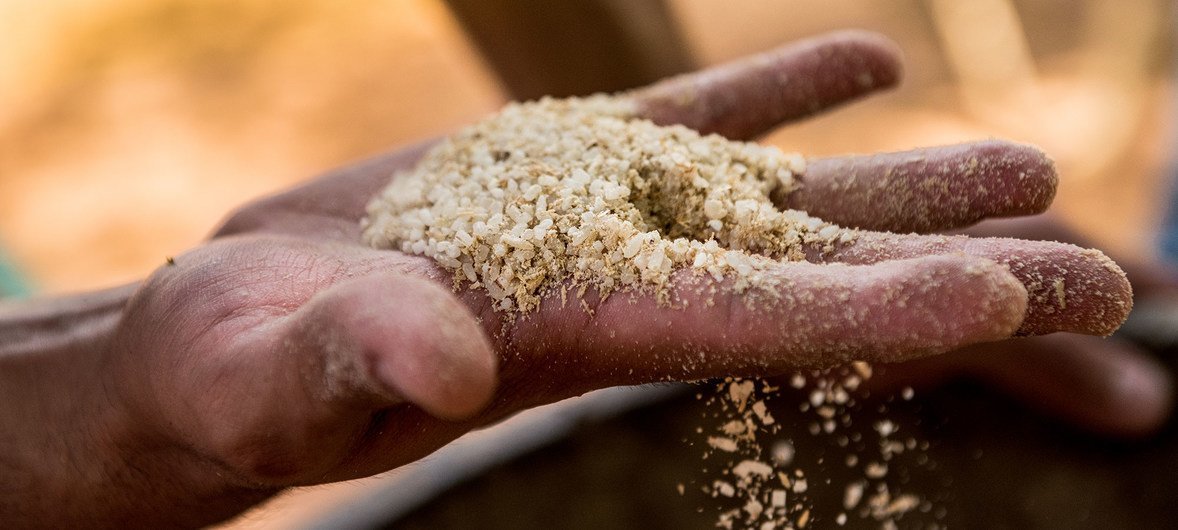
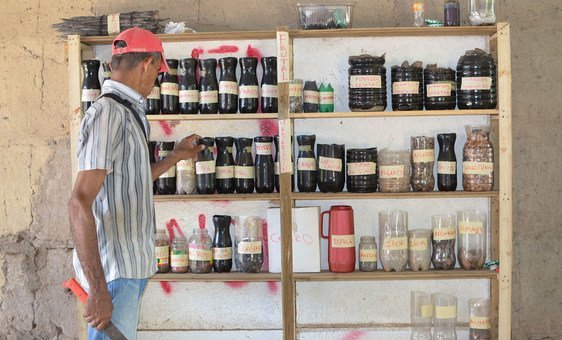
Photo: UNDP | In the community’s newly-built seed bank, bottles are catalogued with species’ names, so that locals can sow, distribute, and exchange them with other communities.
Seeds, including cashew, loquat and tamarind have been collected using age-old indigenous knowledge and now the efforts of farmers are beginning to bear fruit.
READ THE FULL STORY HERE
*SOURCE: UN News.
Discover more from HUMAN WRONGS WATCH
Subscribe to get the latest posts sent to your email.
 Baher Kamal
 HUMAN WRONGS WATCH
Leave a comment