In March, I travelled from London to Verona, Italy to join a historic protest for women’s and LGBTIQ rights – while Matteo Salvini, from the far-right Lega party, received a standing ovation at a key summit of ultra-conservative activists.
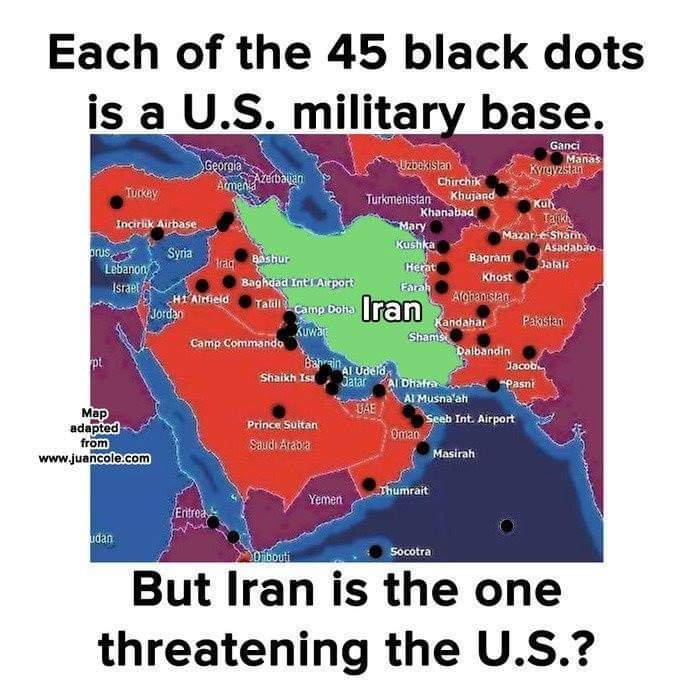
Despite appearances of random, off-the-cuff decisions, rendered on tweets and without, or even in opposition to, the advice of foreign policy specialists, I am going to posit a rationale behind the warlike actions and pronouncements of Messrs. Trump, Bolton and Pompeo.
William R. Polk
To do so, I will try to put all the scattered and sometimes conflicting pieces together. I begin by acknowledging the issue that has attracted most attention. That is the nuclear danger. While it figures in all the media accounts, I put it aside for two reasons:
First,Iran has no nuclear weapons as every reasonably well-informed person in government and among the general population knows.
To acquire them in the foreseeable future, Iran would have to buy them from an existing nuclear power. Nuclear capable powers have not been known to put their weapons on the market.
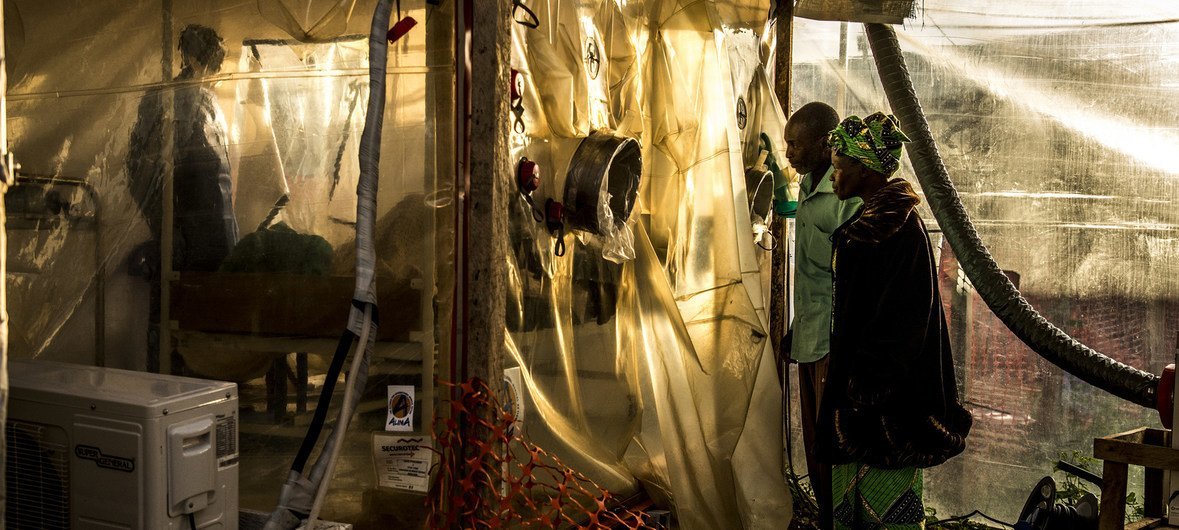
DR Congo: ‘No time to lose’ says newly appointed UN Ebola response coordinator
World Bank /Vincent Tremeau | Parents visiting her 15-year-old daugher, who is suspected of being infected by Ebola, at the Ebola Treatment Center in Beni, DRC (January 2019). | Photo from UN News.
With the Democratic Republic of the Congo’s worst ever Ebola outbreak now in its tenth month, the United Nations on Thursday [23 May 2019] announced measures to strengthen its response, with the Organization’s newly appointed Emergency Coordinator (EERC) declaring there is “no time to lose”.
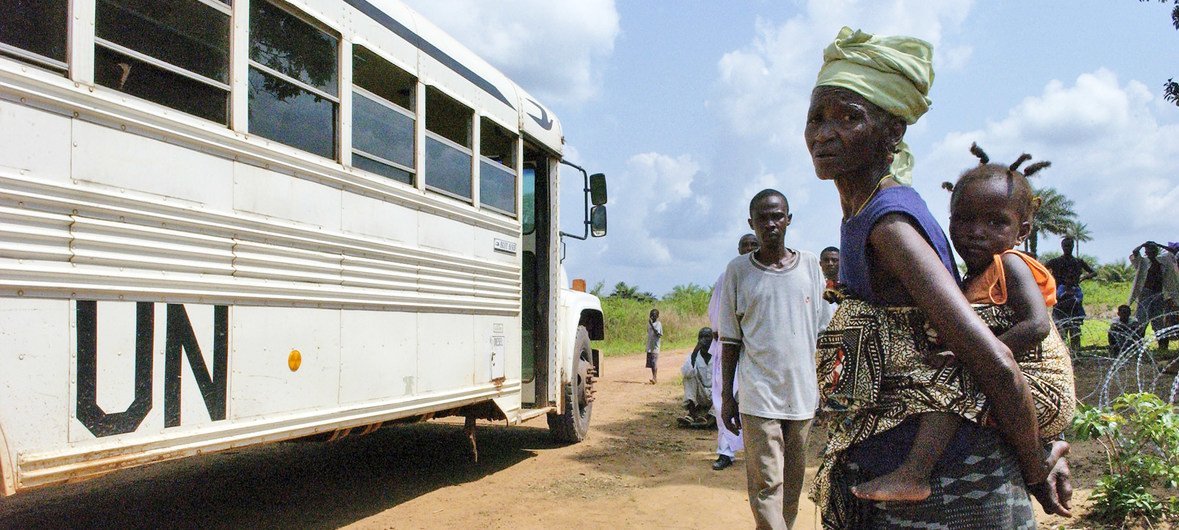
‘Great cause of concern’ UN chief tells Security Council, surveying ‘bleak’ state of civilian protection
UN Photo/Eric Kanalstein | The UN peacekeeping mission in Sierra Leone (UNAMSIL)was explicitly mandated to protect civilians 20 years ago. (file 2006)
.
Marking 20 years since the UN Security Council added the protection of civilians to its agenda, Secretary-General António Guterres told the chamber on Thursday [23 May 2019] that while safeguards were stronger, “compliance has deteriorated”.
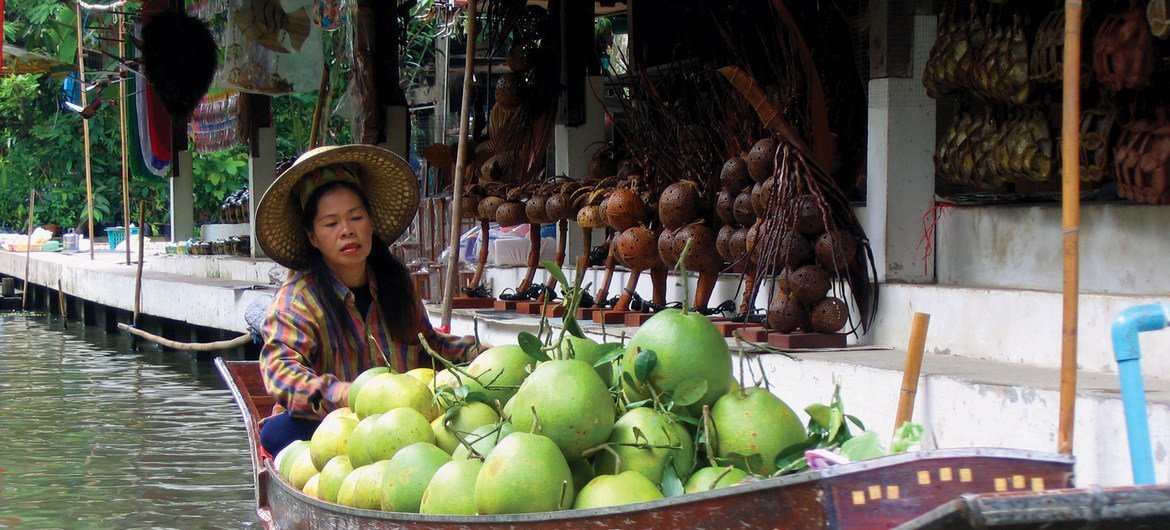
The food people eat around the world is becoming “alarmingly homogenous” according to UN data, even though access to a wide variety of nutritious food has never been greater.
.
Bioversity International/B. Sthapit | A saleswoman sells Asian grapefruits on a floating market.
That warning comes as the world marks the International Day for Biological Diversity on Wednesday [22 May 2019], which this year highlights the impact of environmental neglect on food security and public health.
22 May 2019 (UN Environment)* — While restaurants in cities around the world offer a tremendous variety of dishes, our global diet as a whole—what people actually eat—is becoming more homogenized.
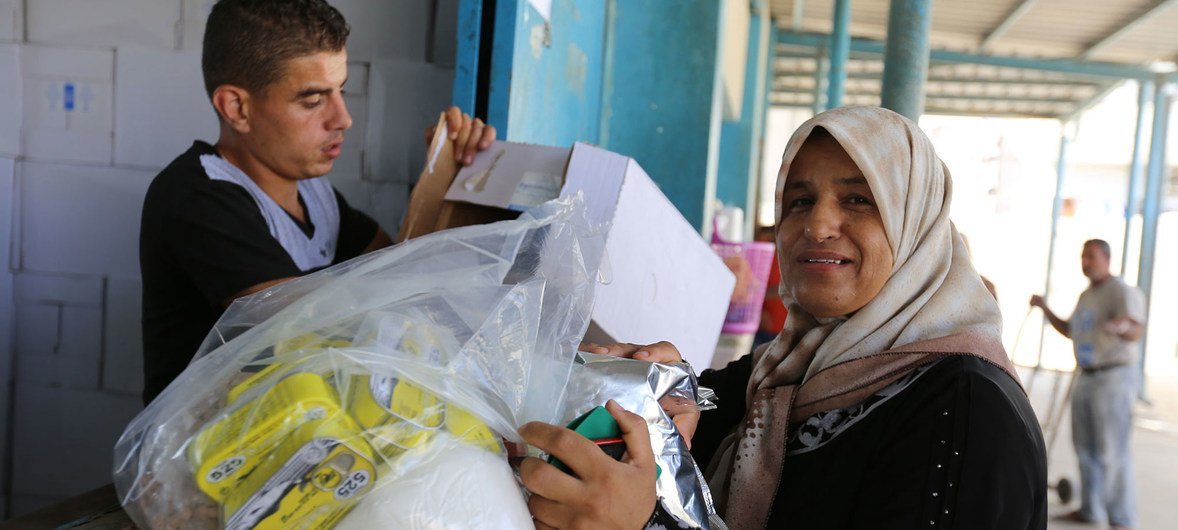
The head of the UN relief and works agency for Palestine refugees (UNRWA) warned on Wednesday [22 May 2019] that despite weathering a “truly existential crisis” over funding last year, money to continue operations this year in the Gaza Strip will only last until mid-June.
UNRWA/Tamer Hamam | A Palestine refugee woman receives food assistance at the UNRWA Khan Younis Distribution Centre in Gaza. (file)
Commissioner-General Pierre Krähenbühl told the Council it was “absolutely critical to avoid a breakdown of our food pipeline” and called on partners – 42 of whom increased their contributions to UNRWA last year after the United States withdrew funding – “to actively mobilize in support of our efforts”.
21 May 2019 (Wall Street International)*– 3.2 million years ago Lucy, our first known ancestor, was born of a simian mother differentiating herself from her thanks to the evolution of her genes that allowed her to stand on two feet and start walking. This happened in Africa, in Hadar in the Awash Valley, 159 kms from Addis Ababa, in today’s Ethiopia.
.
We all descend from Lucy, including the slavers, colonialists and white supremacists of yesterday and today.
Thai Ronald McDonald | Flickr/Daniel Grosvenor. CC BY-NC-ND 2.0.
19 May 2019 (openDemocracy)* — According to its backers we’re in the midst of a “mindfulness revolution.” Jon Kabat-Zinn, recently dubbed the “father of mindfulness,” goes so far as to proclaim that we’re on the verge of a global renaissance, and that mindfulness “may actually be the only promise the species and the planet have for making it through the next couple hundred years.”



 .
.

 HUMAN WRONGS WATCH