The number of people fleeing conflict or violence but remaining within their own countries has reached an all-time high, according to a report published today [28 April 2020] by the Internal Displacement Monitoring Centre (IDMC). | Español | Français
The report reveals that 8.5 million new displacements resulting from conflict or violence were recorded in 2019. Another 25 million were triggered by disasters such as cyclones and hurricanes.
The excerpt below is from Carl Sagan’s book, Pale Blue Dot, and it was inspired by an image recorded by Voyager-1 on 14 Feb 1990.
As the spacecraft was leaving the solar system for its no-return outer-space exploration trip, NASA technicians redirected the camera for a last photo of Planet Earth behind.
Voyager was about 6.4 billion kilometers (4 billion miles) away when it captured this unique, historical, unflattering portrait of the world.
Among light rays from the Sun, our Earth appears as a tiny, almost invisible point of light 0.12 pixel in size in the beam to the right of the frame. The landmark photo was by Sagan’s request.
Stockholm, 27 April 2020 (SIPRI)* — Total global military expenditure rose to $1917 billion in 2019, according to new data from the Stockholm International Peace Research Institute (SIPRI). The total for 2019 represents an increase of 3.6 per cent from 2018 and the largest annual growth in spending since 2010.
World military expenditure, by region, 1988–2019
The five largest spenders in 2019, which accounted for 62 per cent of expenditure, were the United States, China, India, Russia and Saudi Arabia. This is the first time that two Asian states have featured among the top three military spenders.
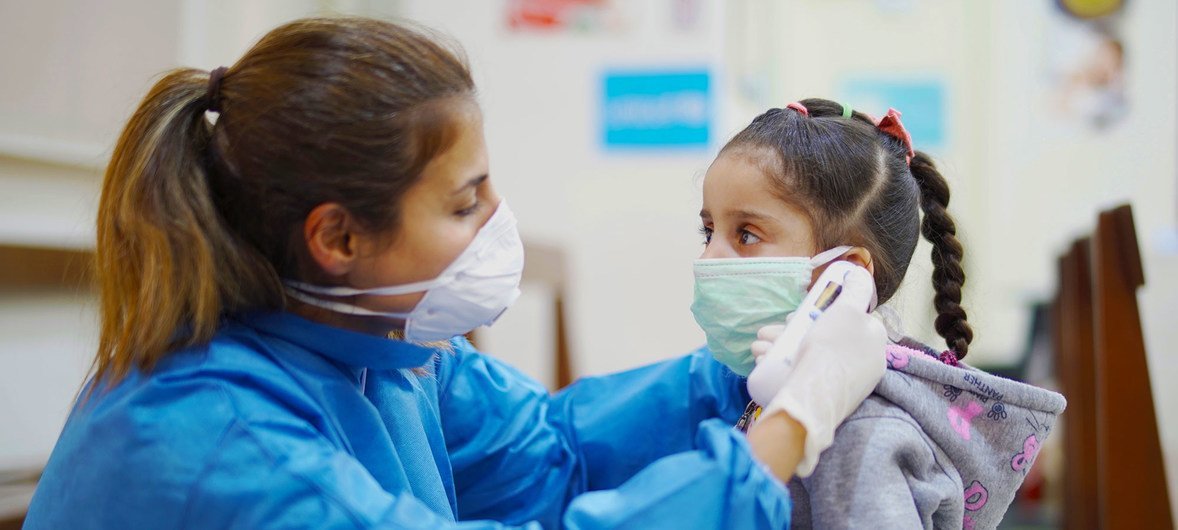
(UN News)* — Against the backdrop of the unprecedented global crisis caused by the COVID-19 pandemic, the deputy UN chief briefed journalists on Monday [27 April 2020] about a new women-led initiative that mobilizes support to save lives and protect livelihoods.
Deputy Secretary-General Amina Mohammed highlighted that collectively, we are dealing with “an especially severe blow” to developing countries, particularly those in humanitarian or conflict settings.
GENEVA, 28 April 2020 (ILO)* – As the pressure mounts on countries to ease their lockdown restrictions, the International Labour Organization (ILO) has urged Governments to take action to prevent and control COVID-19 in the workplace , with active involvement and dialogue with employers’ and workers’ organizations.
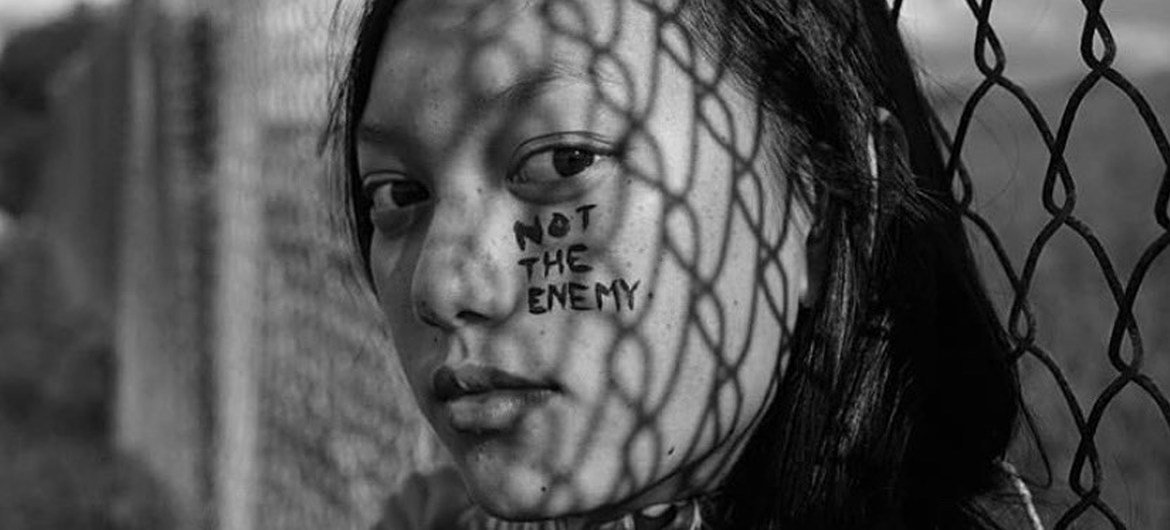
(UN News)* — Disturbing details have emerged from dozens of countries that a “toxic lockdown culture” against the COVID-19 pandemic has impacted drastically on society’s most vulnerable members, the UN human rights Office (OHCHR) said on Monday [27 April 2020].
The development follows UN Secretary-General António Guterres’s call last week for States not to use the COVID crisis as a pretext for repressive measures, in which he urged Governments to recognize that the threat was the “virus, not people”.
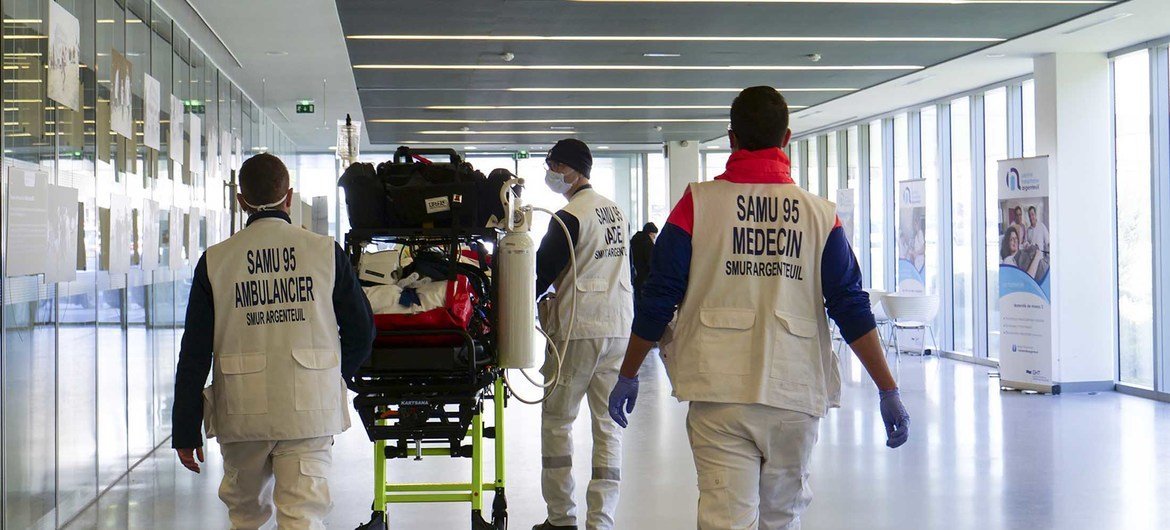
27 April 2020 (UN News)* — With many European health services struggling to deal with an influx of COVID-19 patients, many refugees and migrants with experience in the sector, are being drafted in to help respond to the crisis.
Centre hospitalier d’Argenteuil | The Mobile Emergency and Resuscitation Service (SMUR) is on the front line in the fight against coronavirus
.
Refugee workers are often delayed from being able to join the labour force in Europe despite having expertise, because the diplomas and certificates they received in their home countries are not recognized. But a recently adopted scheme to fast-track acceptance of their qualifications, is making it easier for highly regulated health services to take advantage of their skills.
We are hearing more and more about the “stimulus packages” that the government is putting forward to address the impacts of COVID-19 on our economy. If you’re like me, you get hives just thinking about the plan that was put forward in 2008 following the financial crash that basically “rewarded” the executives and companies who had caused the crisis, and left behind regular people who lost savings, retirement funds and their homes. ADD MY NAME TO BAIL-OUT WORKERS
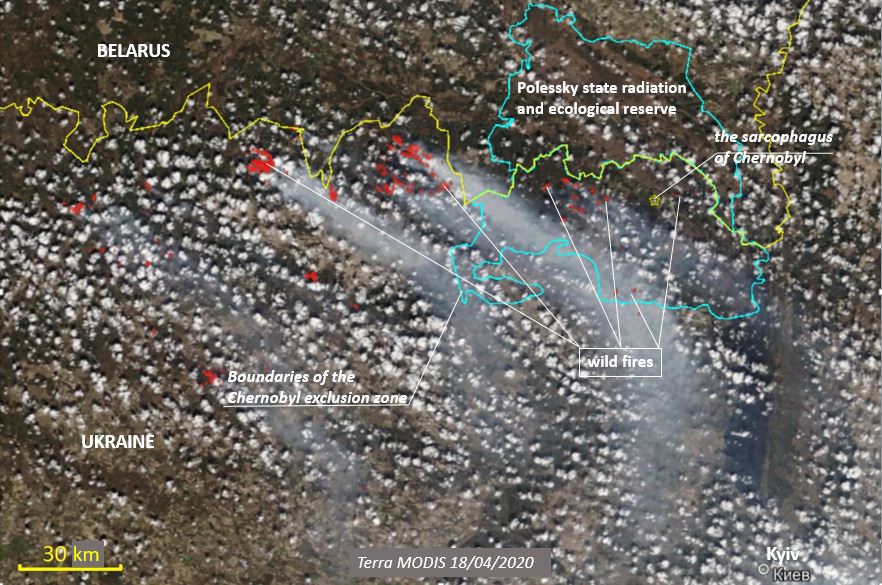
Early in the morning of April 26, 1986, the fourth reactor exploded at the Chernobyl nuclear power plant in Ukraine. 34 years later, Chernobyl radioactivity is still circulating. The long-lived radionuclides released by the accident mean the disaster continues decades on.
(Greenpeace)* — The wildfires started on April 3rd, due to abnormally hot, dry and windy weather. They are now the biggest fires ever recorded in the Chernobyl exclusion zone. What is one of the largest wildlife areas in Europe will take years to recover.
The memorial to the firefighters of Chernobyl, a monument that pays tribute to the first responders to the disaster in April 1986. Many of these firefighters were exposed to large doses of radiation in the minutes and hours following the accident. Photo: Dana Sacchetti/IAEA
.
26 April 2020 (United Nations)*— An explosion at the Chernobyl Nuclear Power Plant in 1986 spread a radioactive cloud over large parts of the Soviet Union, now the territories of Belarus, Ukraine and the Russian Federation.
.
Nearly 8.4 million people in the three countries were exposed to the radiation.
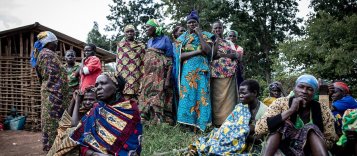 Internally displaced people at a camp in Ituri, Democratic Republic of the Congo, in 2019. © UNHCR/John Wessels




 HUMAN WRONGS WATCH