Human Wrongs Watch
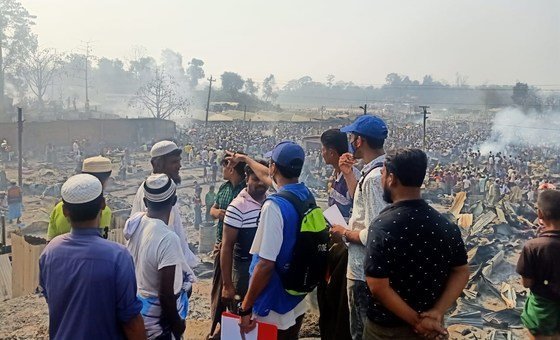
23 March 2021 (UN News)* — United Nations humanitarian personnel are on the ground evacuating and assisting tens of thousands of Rohingya refugees, after a devastating fire tore through their densely populated camp in southern Bangladesh.
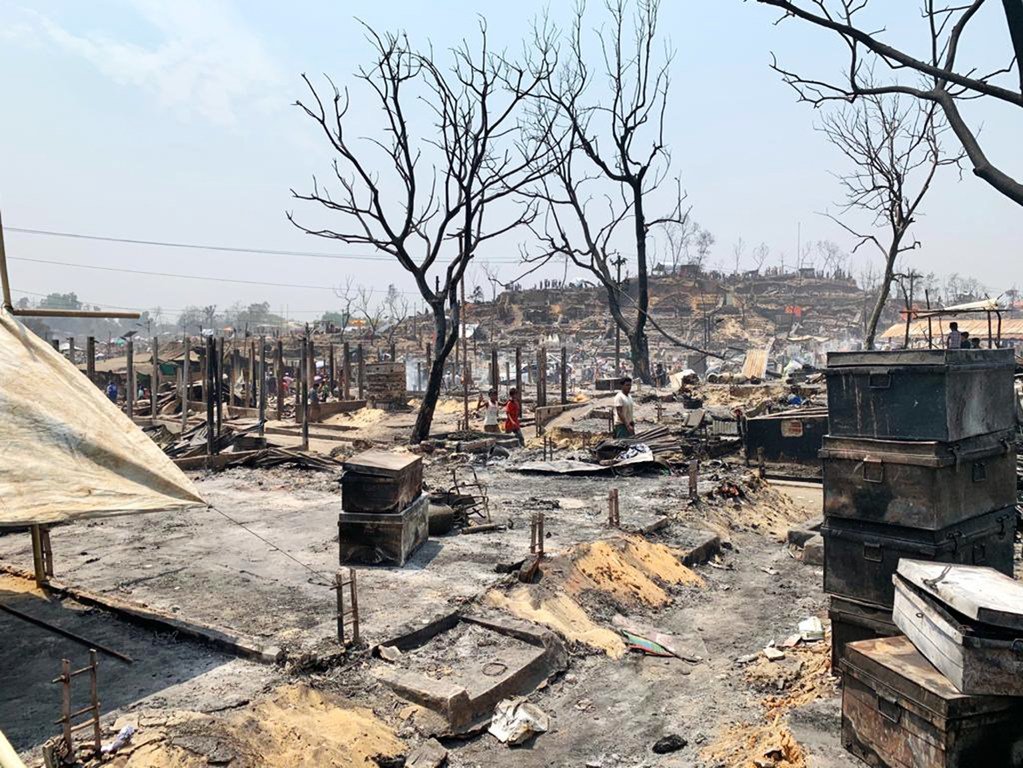
It is not currently clear exactly how the fire started.
The blaze then rapidly spread to Camps 8E, 9 and 10. In all, about 66 per cent of the four camps’ populations have been impacted, according to the UN International Organization for Migration (IOM).
The media has reported several deaths and injuries, which are yet to be confirmed. There are also reports that children are among the injured and many have been separated from their families.
Two nutrition centres and one food distribution centre run by the UN World Food Programme (WFP), and IOM’s largest health clinic in the camp also burnt to the ground. Two other WFP nutrition sites and one e-voucher outlet have been closed until damage can be assessed.
Affected refugees have sought shelter with families and friends, as well as transit sites operated by the UN refugee agency (UNHCR), WFP added.
The Kutupalong camp network, which includes about 26 subcamps, houses over 700,000 of the roughly 880,000 Rohingya refugees sheltering in Cox’s Bazar, Bangladesh (as of February 2021).
In January, more than 3,500 refugees were left without shelter when a fire destroyed some 550 shelters and 150 shops in the Nayapara camp, about 30 kilometres (19 miles) south of Kutupalong.
Immediate UN response
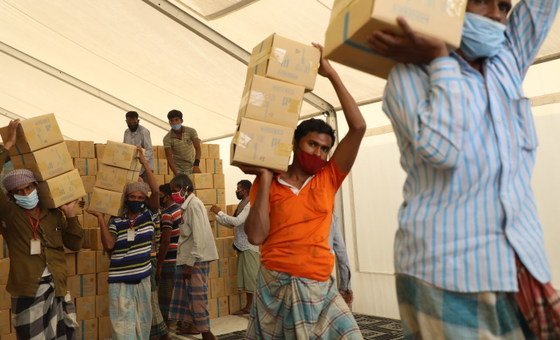
WFP engineering and field personnel, as well as food assistance teams have been on the groundsince the fire was first reported.
The agency also deployed light and heavy machinery, including water tanks and volunteers to help contain the fire and support site management agencies. It also distributed about 6,000 cartons of high-energy biscuits to affected families the night of the fire.
On Tuesday, the day after the fire, WFP is providing 62,000 hot lunches and 62,000 hot dinners to the affected.
IOM deployed ambulances and medical teams to respond to injuries and to provide mental health and psychosocial support. It is also distributing emergency shelter kits, as well as blankets, solar lights, mosquito nets and jerry cans.
The UN Children’s Fund (UNICEF) also mobilized first aid teams and volunteers to evacuate refugees from their shelters. The agency’s child protection personnel and partners are also assisting children in need, including those separated from their families.
“Our priority is to secure the immediate safety, security and protection of children in coordination with the concerned authorities, first responders and partner organizations in the UN and NGO community”, Tomoo Hozumi, UNICEF Representative in Bangladesh, said in a statement.
Government agencies, NGOs and humanitarian partners are also engaged in the response, delivering emergency supplies and clean drinking water, and providing additional assistance.
The Rohingya refugee crisis
The complex Rohingya refugee crisis erupted in August 2017, following attacks on remote police outposts in western Myanmar by armed groups alleged to belong to the community. These were followed by systematic counter attacks against the minority, mainly Muslim, Rohingya, which human rights groups, including senior UN officials, have said amounted to ethnic cleansing.
In the weeks that followed, over 700,000 Rohingya – the majority of them children, women and the elderly – fled their homes for safety in Bangladesh, with little more than the clothes on their backs.
Prior to the mass exodus, well over 200,000 Rohingya refugees were sheltering in Bangladesh as a result of earlier displacements from Myanmar.
*SOURCE: UN News.
2021 Human Wrongs Watch
Discover more from HUMAN WRONGS WATCH
Subscribe to get the latest posts sent to your email.
 Baher Kamal
 HUMAN WRONGS WATCH
Leave a comment