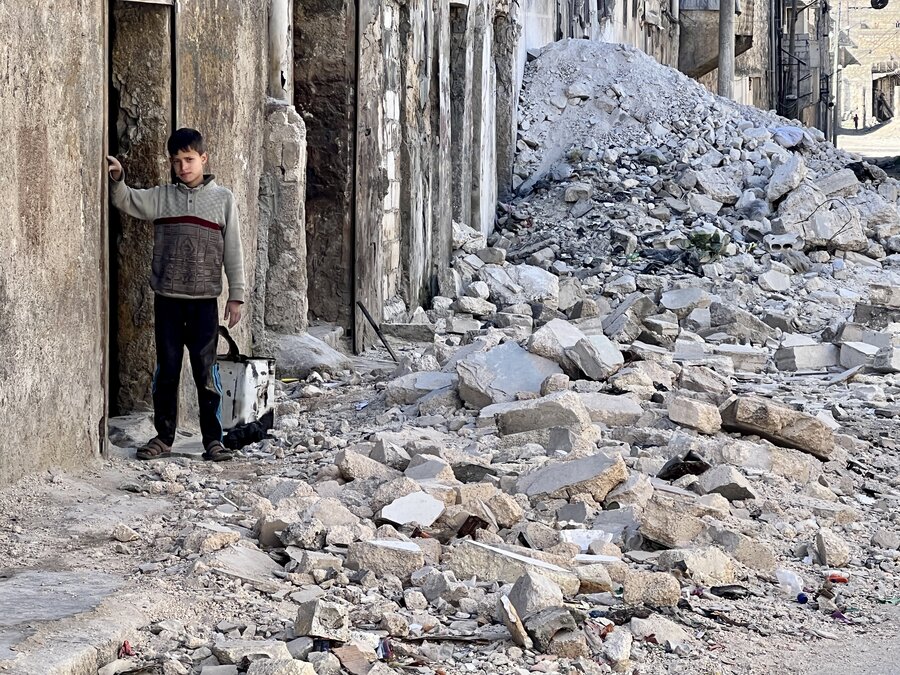
(WFP)* — Before the deadly earthquakes on its border with Türkiye, in February, Syria was a largely forgotten crisis – now, as the country marks 12 years of conflict, the unprecedented hardships people continue to face there are thrown into sharp relief.
.
.
A boy in Aleppo amid the rubble of an earthquake-hit building. Many families continue to occupy dangerous structures in Syria. WFP/Jonathan Dumont
More than half of Syria’s population, or 12.1 million people, are food-insecure with a further 2.9 million on the brink of food insecurity. Food and fuel prices are at their highest in a decade.
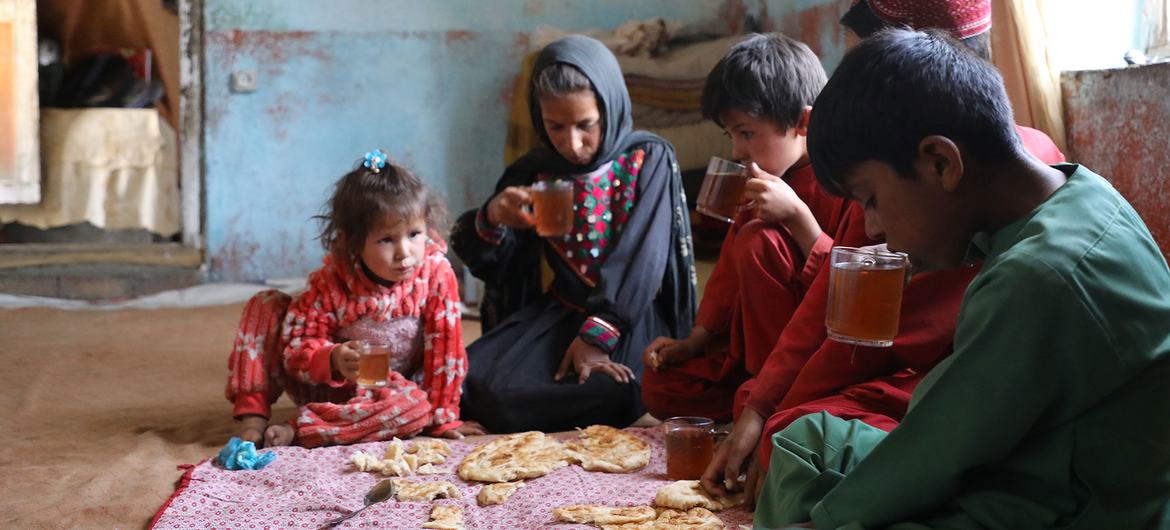
(UN News)* — The UN food agency in Afghanistan announced on Friday [] that a lack of funds has forced deep cuts to life-saving assistance in March for at least four million people.
The World Food Programme (WFP) appealed for urgent funding for its operations in the country, where families are battling crisis after crisis, including growing hunger, since the Taliban takeover of 2021.
Catastrophic hunger could become widespread across Afghanistan, and unless humanitarian support is sustained, hundreds of thousands more people will need assistance to survive, the agency said in an alert.
‘Half of what they need’
Due to funding constraints, at least four million people will receive just half of what they need to get by in March. Ss food stocks have run out before the next harvest is due in May, this is traditionally the most difficult time of the year for rural families, WFP said.
In the lead up to the US-led invasion of Iraq on March 20, 2003, proponents of the war spoke of the Iraqi people as helpless victims of a dictatorial regime. Yet the Iraqi people paid the heaviest price of the invasion.
Almost half a million people lost their lives, millions lost homes, and countless civilians suffered abuses by all parties to the conflict.
Then and now, Human Rights Watch urged parties to the conflict to compensate victims and hold perpetrators accountable, but impunity prevails.
Soon after military operations began, evidence emerged of coalition laws of war violations. Coalition forces, including the United States and United Kingdom, dropped thousands of inherently indiscriminate cluster munitions in populated areas and conducted indiscriminate airstrikes that killed civilians.
MADRID, Mar 17 2023 (IPS)* – Three-quarters of a century ago, the world adopted the Universal Declaration of Human Rights, emphasising that all human beings are born equal in dignity and rights. The 2023 theme of its 75th anniversary focuses on the urgency of combating racism and racial discrimination.
More: nearly a quarter of a century ago, the world adopted in South Africa the Durban Declaration to combat racism, racial discrimination, xenophobia, distrust, intolerance, and hate, globally.
Since then, these “contagious killers” not only continued unabated but are now more spread than ever in all societies, in particular in those under the dominance of the so-called ‘white supremacy.’
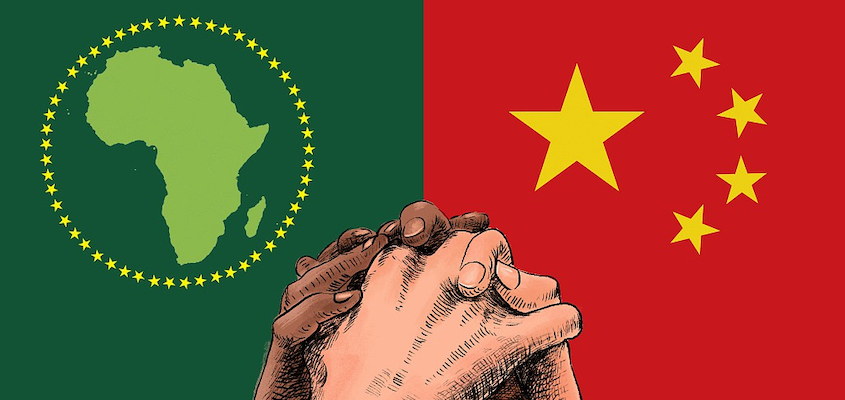
In Africa as in the rest of the world, US machinations undermine its goals and bring other nations together as they seek to protect themselves from a desperate empire.
.
The US can’t seem to understand that the rest of the world, including Africa, doesn’t like to be pushed around. African nations’ refusal to reinforce US foreign policy in the UN General Assembly is a case in point.
During the Assembly’s February 16 vote on a resolution “deploring” Russia’s action in Ukraine, nearly half the nations who abstained were African, 15 of the 32 , although only 54 of the UN’s 193 member nations are African.
No African nations were on the list of nations introducing the resolution, and two of the seven who voted no—Eritrea and Mali—were African.
“Terrorism and violent extremism cannot and should not be associated with any religion, nationality, civilization, or ethnic group.”
.
Hate speech – including online – has become one of the most common ways of spreading divisive rhetoric on a global scale, threatening peace around the world, says UN chief.
MADRID, Mar 13 2023 (IPS)* – Islamophobia is a ‘fear, prejudice and hatred of Muslims that leads to provocation, hostility and intolerance by means of threatening, harassment, abuse, incitement and intimidation of Muslims and non-Muslims, both in the online and offline world.’
Consequently, suspicion, discrimination and ‘outright hatred’ towards Muslims have risen to “epidemic proportions.”
It appears that the military-industrial complex has complete control of the government of the United States, which recently voted to give the Pentagon roughly a trillion dollars of the taxpayers money. This was done by cutting back on social programs that would have helped poor working families.
Recently Joan Roelofs published a book entitled “The Trillion Dollar Silencer: Why There Is So Little Anti-War Protest in the United States” (Atlanta: Clarity Press, 2022).
In this book, she points out that the U.S. military-industrial complex has located military bases in regions where the local economy is entirely dependent on them.
The vast river of money flowing into the pockets of the military-industrial complex implies that very many people earn their living, directly, or indirectly, from the manufacture or use of weapons.
March 13, 2023 — The Danish Immigration Service has announced that it deems two more areas of government-controlled Syria as “safe” for returns: Tartous and Latakia. In 2019, Damascus and Rif Damascus were also controversially declared “safe”.
March 13, 2023 — FIFA has been handed a letter supported by over one million petition signatures — and custom-designed football shirts — demanding that it provide compensation to migrant workers who suffered horrific human rights abuses while working on the 2022 football World Cup in Qatar.
The items were delivered to FIFA ahead of the organization’s annual conference on 16 March in Rwanda, where it will come under pressure from some of its own members to remedy these appalling abuses. The one million signatures were collected by Avaaz and Amnesty International in 190 countries.
“This meeting offers another opportunity for FIFA to make amends and establish a firm plan and timetable to directly and quickly recompense workers and their families, who suffered shocking human rights abuses to deliver a World Cup that was built on their sacrifice,” said Steve Cockburn, Amnesty International’s Head of Economic and Social Justice.
(Tunis) – President Kais Saied’s recent attempt to mitigate the serious harm that a speech he made on February 21, 2023, caused Black African migrants, asylum seekers, and refugees in Tunisia does not go far enough, Human Rights Watch said on 10 March 2023.
Measures announced on March 5 fall far short of the steps needed to end a surge in violent assaults, robberies, and vandalism by Tunisian citizens, arbitrary evictions by landlords, and job terminations by employers, that followed Saied’s speech.






 HUMAN WRONGS WATCH