Archive for February, 2019

22/02/2019

Pregnant, Nursing Women Can Now Be Given Ebola Vaccine – World Health Organization

Human Wrongs Watch

Reversing an earlier decision, the World Health Organization (WHO) now recommends vaccinating pregnant and breastfeeding women against the Ebola virus.

© UNICEF/UN0264160/Hubbard | An Ebola survivor cares for her six-month-old son at a UNICEF-supported crèche in Beni, eastern DR Congo, December 2018.
.
The announcement was issued on Wednesday [] from Beijing after a consultation meeting by the Strategic Advisory Group of Experts (SAGE) on Immunization, which the WHO Director-General established in 1999 to provide guidance on the UN health agency’s work.

Last August, the Democratic Republic of the Congo’s (DRC) Ministry of Health declared a fresh outbreak of Ebola virus disease (EVD) in North Kivu Province.

read more »

22/02/2019

World Youth Report: Addressing the Complex Challenges Facing Young People Today

Human Wrongs Watch

22 February 2019 (United Nations)* — Today, there are 1.2 billion young people aged 15 to 24 years, accounting for 16 per cent of the global population.

World Youth Report: Addressing the Complex Challenges Facing Young People Today

The active engagement of youth in sustainable development efforts is central to achieving sustainable, inclusive and stable societies by the target date, and to averting the worst threats and challenges to sustainable development, including the impacts of climate change, unemployment, poverty, gender inequality, conflict, and migration.

read more »

22/02/2019

Learning Foreign Languages in India

Human Wrongs Watch

By Dr Ravi P Bhatia – TRANSCEND Media Service*

India has much diversity — cultural, linguistic, geographic, religious, political and even from the point of cuisine — the food eaten. With its vast coastline and Himalayas, India has the world’s coldest, hottest and rainiest places. The country has all the prominent world religions in addition to the small faiths such as Parsee, Bahaai, Brahmo Samaj, Arya Samaj, Dev Samaj etc.

Ravi-P-Bhatia-e1471532294478

Dr Ravi P Bhatia

With several regions having different climates, the crops grown also vary from region to region. Wheat growing in colder regions of the North, rice being the principal crop in South India and vast varieties of fish found in the large Indian coastline, determine the Indian cuisine and people’s liking for particular foods.

Linguistically, India has 22 official languages including Hindi and English. Hindi, as well as its many dialects, has the largest number of speakers and English is being widely used in judiciary, parliament, science and technology, education, etc.

read more »

22/02/2019

‘At Least 43 Percent of the 7,000 Languages Spoken in the World Today Are Endangered; Many of Them Belong to Indigenous Peoples’

Human Wrongs Watch

By IWGIAInternational Work Group for Indigenous Affairs*

At least 43 percent of the 7,000 languages spoken in the world today are endangered. Many of these belong to indigenous peoples and if something doesn’t change soon, UNESCO predicts that we will lose as many as 3,000 indigenous languages by the end of this century.

Photo from IWGIA

In an effort to raise public awareness of this threat to the world’s cultural and linguistic diversity, the UN General Assembly has proclaimed 2019 to be the International Year of Indigenous Languages.

22/02/2019

‘Due to Globalization Processes, Mother Languages Are Increasingly under Threat, or Disappearing Altogether’ – International Day

Human Wrongs Watch

.

.

When languages fade, so does the world’s rich tapestry of cultural diversity. Opportunities, traditions, memory, unique modes of thinking and expression — valuable resources for ensuring a better future — are also lost.

read more »

22/02/2019

How Bangladesh Spearheaded Creation of International Mother Language Day

Human Wrongs Watch

Concerned that one language goes extinct every two weeks, the United Nations is honouring linguistic diversity and celebrating indigenous languages on International Mother Language Day. And the roots of the Day start in a South-Asian country with a bloody and historic connection to 21 February.

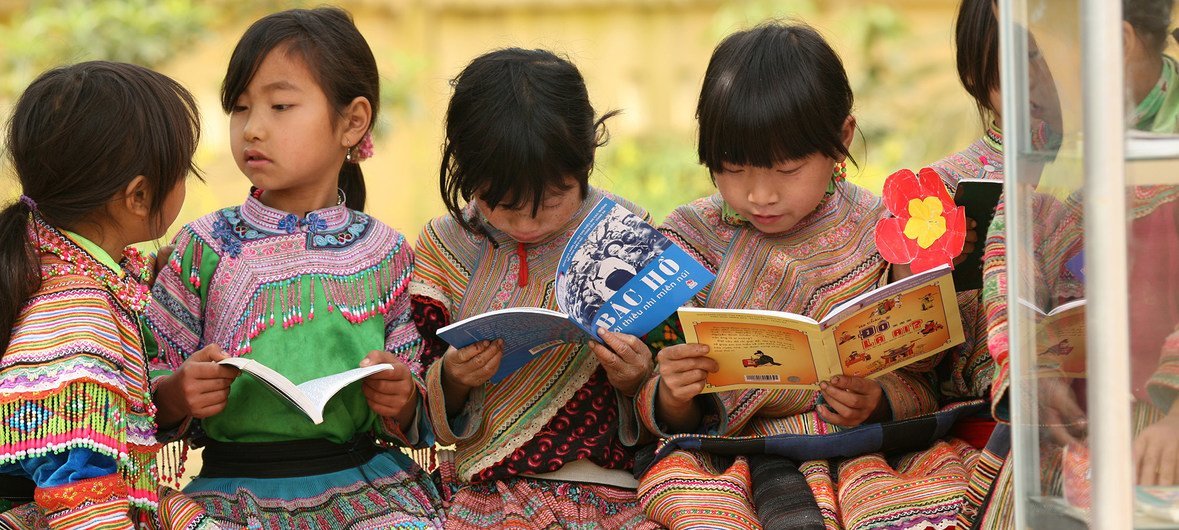
UNICEF/UNI10236/Estey | Girls from an indigenous community read outdoors at Ban Pho Primary School in Bac Han District in remote Lao Cai Province, Viet Nam.

“We have to protect our heritage, our culture, our existence,” said Ambassador Masud Bin Momen, of Bangladesh, the country which successfully lobbied the UN Educational, Scientific and Cultural Organization (UNESCO) in 1999 to create International Mother Language Day. The UN General Assembly formally recognized the Day in 2008.

read more »

21/02/2019

Wake Up and Smell the Organic Coffee

Human Wrongs Watch

BULAWAYO, Zimbabwe, Feb 20 2019 (IPS)* In 1992, the idea of replanting her father’s ruined coffee farm seemed foolhardy at the time. But in retrospect it was the best business decision that Dorienne Rowan-Campbell, an international development consultant and broadcast journalist, could have made.

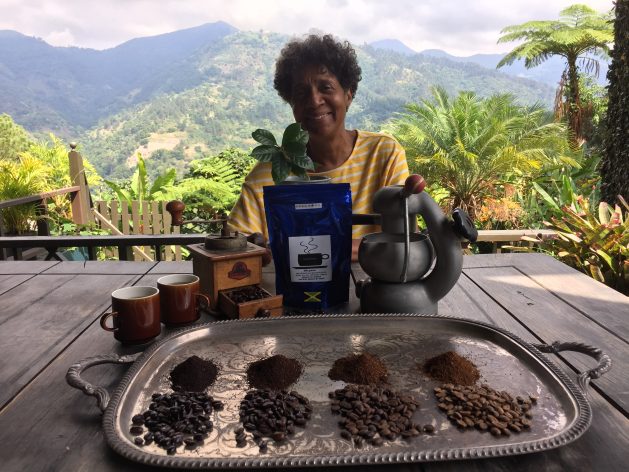
Dorianne-Rowan-Campbell-is-an-organic-coffee-farmer-in-Jamaica-credit-Dorienne-Rowan-Campbell-629x472.jpg

Dorianne Rowan-Campbell is an organic coffee farmer in Jamaica. Taking over her father’s farm in 1992 and turning it into an organic one was a huge risk at the time. However, she sustainably grows 1,800 coffee trees and harnesses nature to deal with pests, rather than using pesticides. Courtesy: Dorienne Rowan-Campbell

read more »

21/02/2019

A World Party

Human Wrongs Watch

By Roberto Savio*

Rome, Feb., 2019 (Other News)*  – I  have been a member of the first international party: the Transnational Radical Party, founded in 1956 by Marco Pannella and Emma Bonino. Then in 1988, I was a wetness of the large protest, in Berlin West, against the meeting of the International Monetary Fund and the World Bank, a precursor of the “Battle of Seattle” in 1988, where 40.000 protesters disrupted the annual meeting of the two world’s financial institutions. I was even detained for a day by the police, even if was just a witness: my condition of foreigner made me automatically suspect.
Savio-small1

Roberto Savio

And I was a witness of the Nobel prize Joseph Stigliz address to the protesters of “Occupy Wall Street”, in 2001. In the same year, I was part of the creation of the Word Social Forum, in Porto Alegre.

And I have been carefully following the arrival of the new International nationalist and populist wave, since Orban’s arrival in Hungary in 2010, Kaczynski in Poland in 2015, Brexit in 2016, Trump in 2016, and totally different movements like now the Yellow Jackets in France.

Therefore, I have decided that I can be more useful as a practitioner than as a theoretician in the cultured an interesting debate that Paul Raskin has opened on a world political party.

read more »

21/02/2019

Prospect of Lasting Peace ‘Fading by the Day’ in Gaza and West Bank, Senior UN Envoy Warns

Human Wrongs Watch

The spectres of violence and radicalism in the Occupied Palestinian Territory are growing, and the prospect of sustainable peace is fading by the day, a senior UN envoy in the region told the Security Council on Wednesday [20 February 2019].*

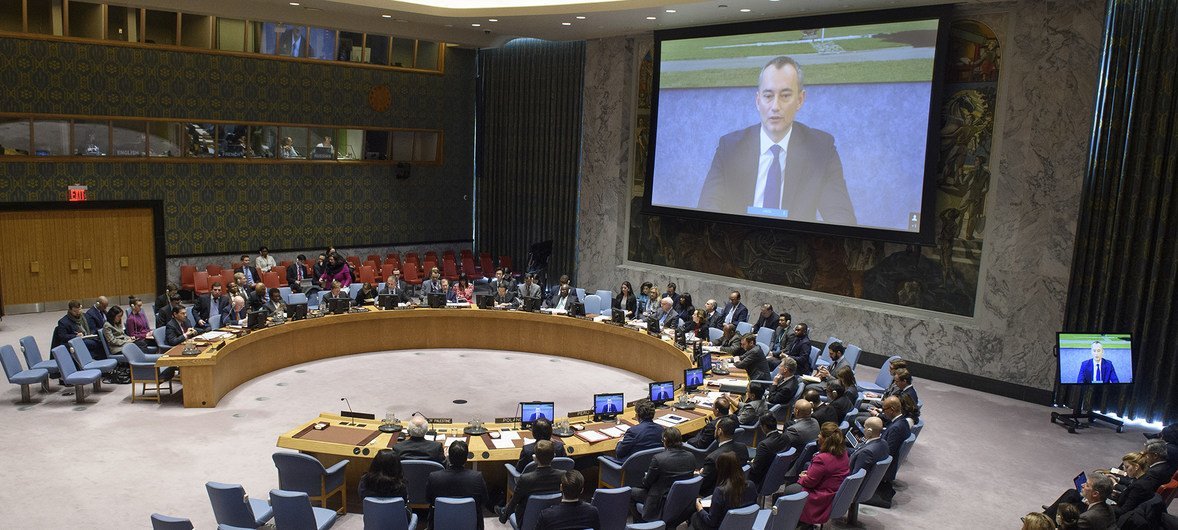
UN Photo/Loey Felipe | Nickolay Mladenov (on screen), UN Special Coordinator for the Middle East Peace Process, briefs the Security Council on the situation in the Middle East, including the Palestinian question. (file)

The Council was briefed by Nickolay Mladenov, Special Coordinator for the Middle East Peace Process, as well as Ursula Mueller, Assistant Secretary-General for Humanitarian Affairs. In a sombre assessment, Mr. Mladenov characterized the hope of a peaceful two-state solution as “slim.” Extremists are on the rise and that the risk of war looms large, he explained.

read more »

21/02/2019

UN Investigators Denounce a Raft of Gross Human Rights Violations in South Sudan; Rape, Abductions, Sexual Slavery and Brutal Killings “Have Become Commonplace”

Human Wrongs Watch

United Nations investigators on Wednesday [20 February 2019] denounced a raft of gross human rights violations being perpetrated in South Sudan, where over the past year, incidents of rape have surged and abductions, sexual slavery and brutal killings “have become commonplace.”

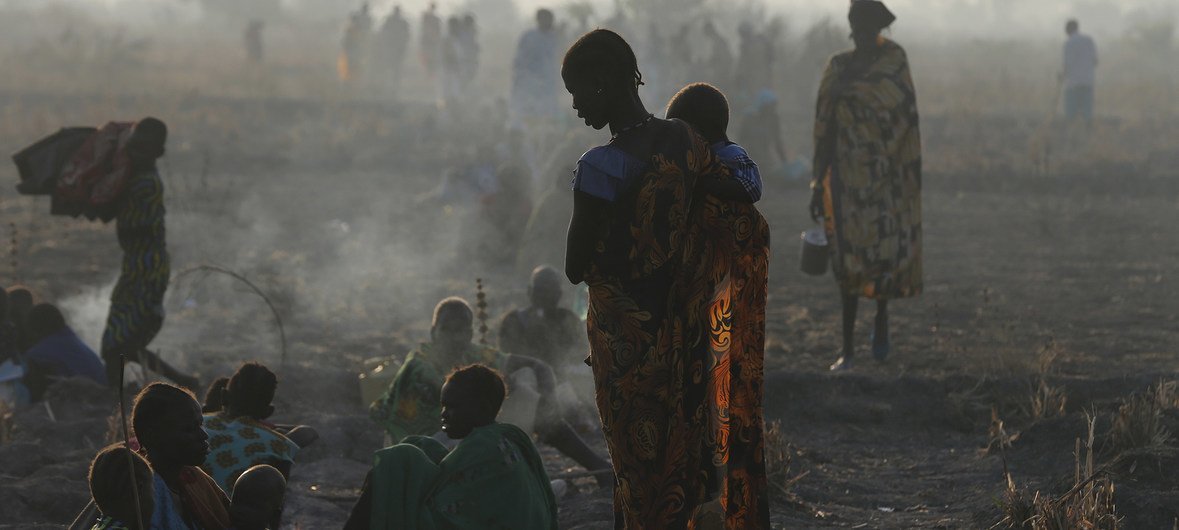
© UNICEF/UN0234655/Modola | Families wait in the early hours of the morning to be registered prior to a food distribution carried out by the United Nations World Food Programme (WFP) and partner agencies, in Thonyor, Leer county, South Sudan.
“There is a confirmed pattern of how combatants attack villages, plunder homes, take women as sexual slaves and then set homes alight – often with people in them,” Yasmin Sooka, Chair of the Commission on Human Rights in South Sudan said in Nairobi at the launch of the launch of the three-member expert-body’s third report.