This video story is part of a series titled, “A true story, my story” produced by UN Women Europe and Central Asia Regional Office for the 16 Days of Activism campaign.
.
.
16 November 2018 (UN Women)* –– Kyrgyzstan has the highest prevalence of bride kidnapping in the world—a traditional practice that allows Kyrgyzstani men to pick a bride whom he wants to marry and arrange her kidnapping. The bride in question has no say in the matter.
Although the practice has been declared illegal for years, bride kidnapping remains a widespread, socially accepted practice.
Life hangs in the balance in Tsitongambarika, Madagascar’s anti-extinction frontline
UN Environment / Lisa Murray
14 November 2018 (UN Environment)* – It’s nearing midnight, when our guide, Andry, darts into the undergrowth.
In the velvet dark of the forest, lit only by the sharp stabs of our torches and the gentle glow of the waning moon filtering through the canopy, it’s hard to see what the excitement is all about until he crouches down, pointing.
“Chameleon,” he says, barely louder than a whisper
Only four centimetres long, and the mottled light brown of a fallen leaf, it’s only the deep green of a seedling pushing through the leaf litter beside it that lets us see it—tiny and immobile except for a single eye swivelling back to observe us.
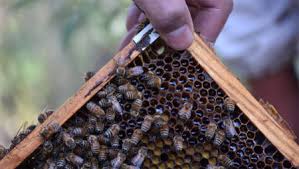
16 November 2018 (FAO)* — What does William Shakespeare have in common with Mexican beekeeper Francisco Lenin Bartolo Reyes? Both men understand the importance of the honey bee, a small but invaluable ally of the human race.
16 November 2018 (UNHCR)* – The city of Boa Vista in northern Brazil, near the border with Venezuela, was different from what 18-year-old Jefferson* expected after leaving his home country due to the lack of food and job opportunities.
Since 2015, 2.3 million people have left Venezuela. Over 150,000 Venezuelans have entered Brazil through the remote northern state of Roraima, and more than 65,000 requested asylum thus far.
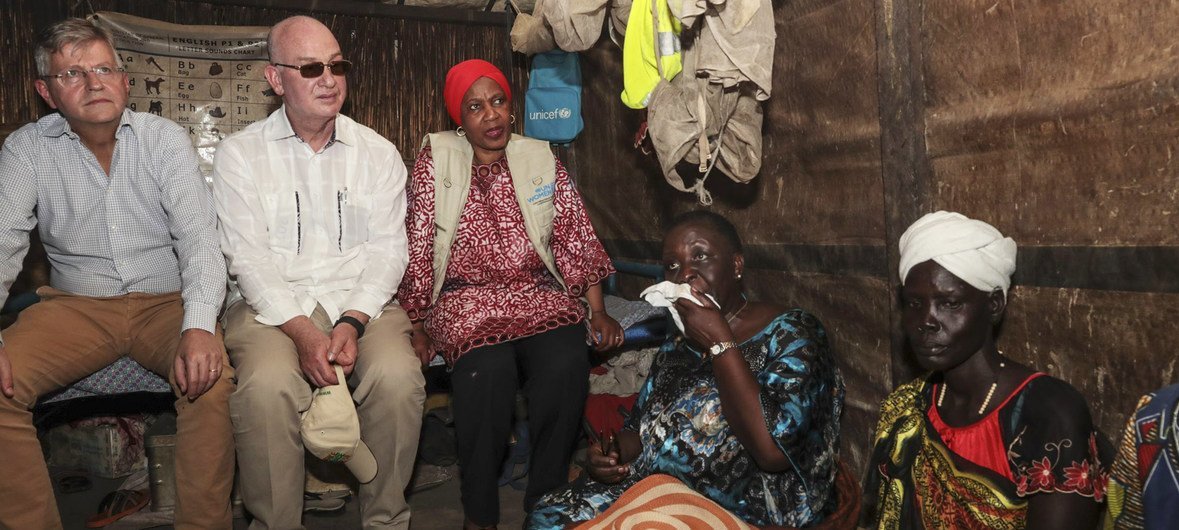
The women of South Sudan are leading calls for political and militia leaders to honour the recent revitalized peace agreement, and end what they regard as a “futile man’s war”, the head of the UN gender equality agency, UN Women, told the Security Council on 16 November 2018.
UNMISS/Isaac Billy | A high-level delegation from the United Nations and African Union meets Nyamile Malual Jiech (far right) who walked with her children through violent clashes to reach the safety of the United Nations protection site in Bentiu in the north of South Sudan.
Executive Director, Phumzile Mlambo-Ngcuka, told the 15-member Council that following September’s agreement between President Salva Kiir and his rival Riek Machar, who is due to be reinstated as Vice President, fighting was continuing.
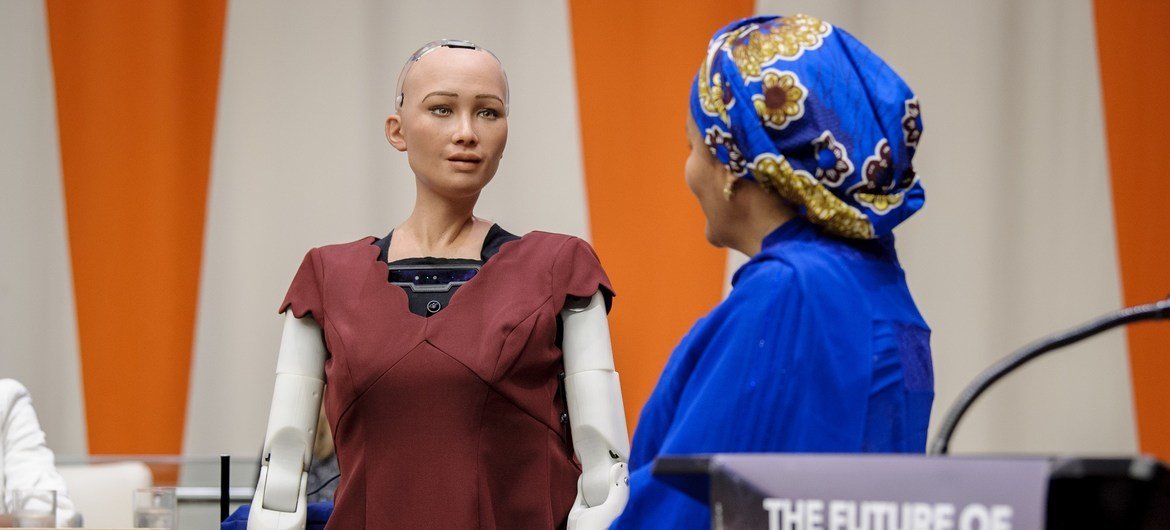
16 November 2018 – Digital solutions are transforming lives: Think of robots that help the elderly, a mobile phone app that identifies crop pests, or surgical robots in hospitals. These advances are all due to Artificial Intelligence and an extraordinary new era of machine learning.
UN Photo/Manuel Elias | Sophia the Robot speaking to UN Deputy Secretary-General Amina Mohammed at UN Headquarters in 2017.
While these bring tremendous benefits, AI also raises concerns, ranging from security, to human rights abuses. Speaking in Paris last weekend, Secretary-General Antonio Guterres praised AI but cautioned that “technology should empower not overpower us” and that the world needs to set policies that contain unintended consequences or malicious use of frontier technologies.
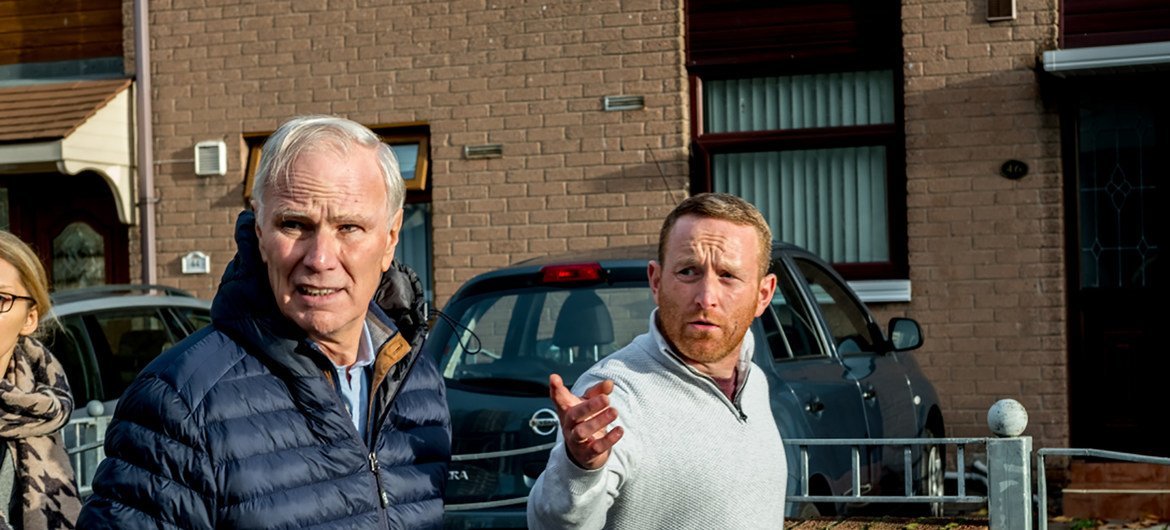
Brexit – the United Kingdom’s impending exit from the European Union – will drive more UK citizens into poverty unless the Government takes action to shield the most vulnerable, warned Philip Alston, the UN Special Rapporteur on extreme poverty and human rights, in a damning statement released on Friday [16 November 2018].*
Bassam Khawaja | Philip Alston, UN Special Rapporteur for Extreme Poverty and Human Rights visits New Lodge in North Belfast, UK. (2018)
The UN envoy’s comments came at the end of a 12-day visit to the UK, which saw him travel to nine cities across the country, meeting members of civil society, front line workers, and officials from a range of political parties in local, devolved and UK Governments.
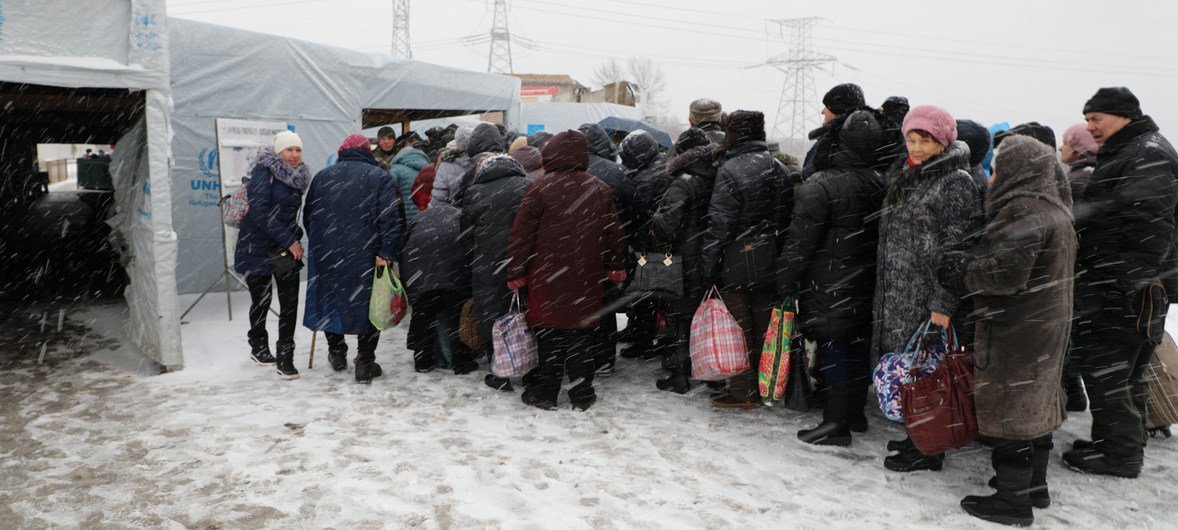
Amidst an ongoing active conflict that seems to have fallen off the international community’s radar, temperatures in eastern Ukraine dropping well below zero and leaving millions are in need of urgent humanitarian assistance, said the United Nations, calling for support.
OCHA Ukraine/O.Gaskevych | People wait in line at Maiorske Entry/Exit Checkpoint in eastern Ukraine
In Geneva on Thursday [15 November 2018], Osnat Lubrani, the UN Humanitarian Coordinator in Ukraine, briefed UN Member States on the human cost and consequences of the severe humanitarian crisis and called on international donors to urgently increase funding to help vulnerable families through the long harsh winter.
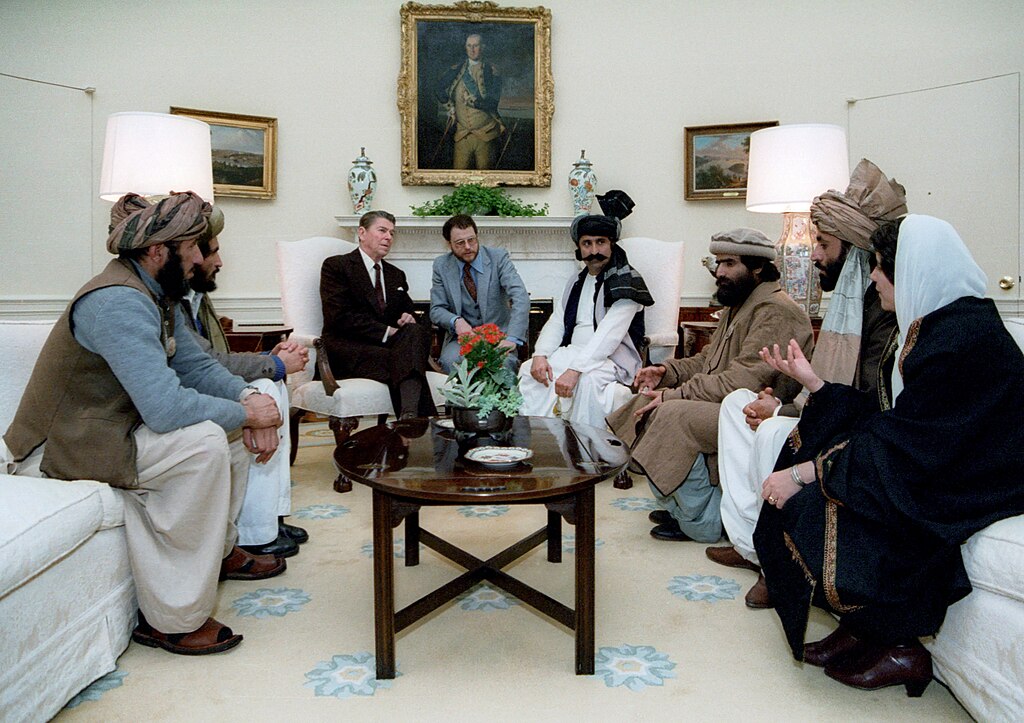
15 November 2018 (openDemocracy)* — The current war in Afghanistan has just entered its nineteenth year. Almost two decades after the United States-led invasion overthrew the Taliban regime in Kabul and dispersed Osama bin Laden’s al-Qaida network from mountainous Tora Bora in the country’s south-east, a reconfigured Taliban is once more driving the conflict.
UK Prime Minister Theresa May was defiant on Thursday (15 November), as she dismissed claims from government ministers that her draft withdrawal agreement does not deliver the Brexit that the British public voted for.
British Prime Minister Theresa May, delivers a statement during a news conference inside number 10 Downing Street in London, Britain, 15 November 2018. [EPA-EFE/DAVID LEVENSON]
“I believe with every fibre of my being that the course I have set out is the right one for our country and all our people,” May said, addressing journalists at a Downing Street press conference on Thursday afternoon.
Her comments came on a tumultuous day for the prime minister, who was hit with two cabinet resignations in the form of Brexit secretary Dominic Raab and Work and Pensions Secretary Esther McVey.



 HUMAN WRONGS WATCH