Human Wrongs Watch
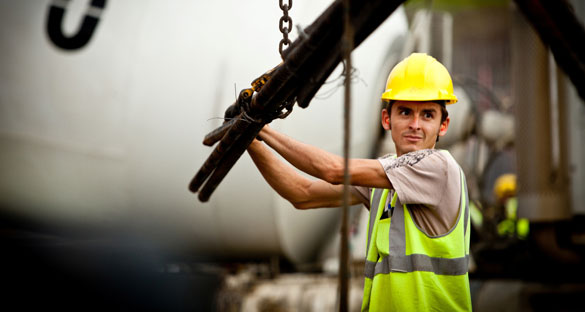
Photo from ILO
- Wage growth has significantly lagged behind productivity growth in most G20 countries, while wage and income inequality either remains high or has widened.
- Real wages have stagnated, or even fallen, for many in advanced G20 economies.
- In emerging G20 economies, high levels of under-employment and informality are constraining both current output and future productivity.
“Jobs are a foundation for economic recovery,” the report says. “G20 countries need more and better jobs as a foundation for sustained growth and wellbeing of their societies”.

An unemployed youth. Photo: ILO
Despite overall slower growth, a number of emerging economies have made major progress in reducing absolute poverty, and some have also reduced income inequality.
However, informal employment remains a major obstacle to improving job quality, particularly in emerging and developing countries.
Looking ahead, the report says that achieving sustainable, equitable and inclusive growth requires policies across all relevant sectors that improve productivity and wages, employment opportunities and outcomes, particularly for those groups most affected by the crisis or who are vulnerable.
Demographic changes, such as rapid population ageing in some countries and rising youth populations in others, also mean that governments need to promote the labour market participation of women, youth and other under-represented and vulnerable groups, enhance their skills and provide job-search support.
The report also highlights social protection, social dialogue, rights at work, and workplace safety as areas in need of further action.
Quality job creation and robust, equitable growth are intertwined goals, the study concludes. “Policy interventions that address both the demand and supply sides of the labour market are essential to reverse the current self-reinforcing cycle of slow growth, low job creation and low investment. Such policies would be much more effective if taken collectively and coordinated at the G20 level.”
Other reports prepared for the G20 labour ministers’ meeting:
Informality and the quality of employment in G20 countries
For many G20 countries, structural underemployment, informality and qualitative indicators of employment are more significant measures of the challenges they face in achieving inclusive growth and decent employment for all than unemployment rates alone.
Achieving stronger growth by promoting a more gender-balanced economy
G20 countries have much to gain from increased female labour force participation in terms of economic growth and increased welfare. But merely increasing labour force participation among women will not be enough to ensure that gender gaps in economic empowerment are eliminated. (Joint ILO, IMF, OECD, World Bank report)
Creating Safe and Healthy Workplaces for All
Every year, almost 1.3 million people die from a work-related disease in the G20 countries and about 221,000 suffer a fatal occupational accident. The G20 also experienced around 196 million non-fatal occupational accidents (with at least four days absence) in 2010.
See also:
For more information and to arrange interviews please contact:
- Sophy Fisher, Senior Communications Officer –ILO
fisher@ilo.org – T: +66 (0) 8989 50912 - Spencer Wilson, Media Relation Officer – OECD
Spencer.Wilson@oecd.org – T. +33 (1) 4524 8118 - Camille Funnell, External and Corporate Relations – World Bank Group
cfunnell@worldbank.org – T: +61 (0) 2 92356564 (office); +61 (0) 423606850 (mobile)
*Source: ILO Release.
2014 Human Wrongs Watch
Discover more from HUMAN WRONGS WATCH
Subscribe to get the latest posts sent to your email.
 Baher Kamal
 HUMAN WRONGS WATCH
Leave a comment